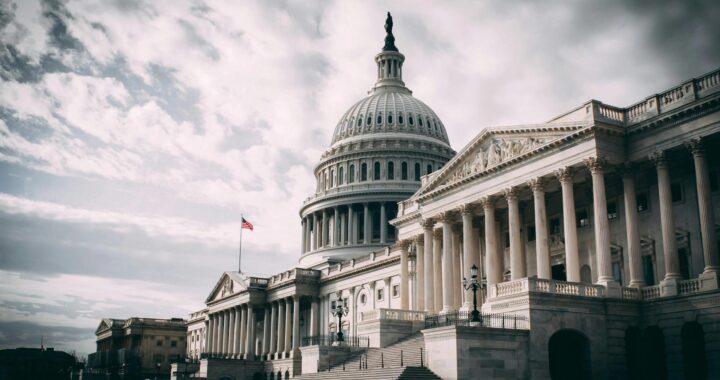
When a market structure bill arrives in Washington on Tuesday, Wall Street may finally secure the definitive crypto rulebook it has awaited for years. Yet, even if the legislation stalls, major financial institutions will likely press forward with their digital asset initiatives.
The anticipated Senate vote on the Digital Asset Market Clarity Act (CLARITY) could grant banks, asset managers, and brokers greater predictability regarding how they trade and design digital asset offerings. Although approval would likely accelerate these endeavors and draw additional mainstream firms into the space, a legislative failure might not act as the severe barrier it once would have.
Chris Crawford, a digital-assets partner at the law firm Fenwick, noted that while adoption would receive a massive boost and benefit tremendously from the legislation, the bill is by no means an absolute requirement.
Despite years of ambiguity surrounding the application of commodities and securities laws, traditional financial giants have already penetrated the crypto sector via exchange-traded funds, tokenization networks, and alternative digital asset offerings. Although CLARITY could streamline those strategic choices, it would not be marking the inception of Wall Street’s involvement.
Crawford explained that the legislation could establish sharper boundaries determining which digital assets qualify as commodities and outlining their trading procedures. Establishing these definitive perimeters would simultaneously supply brokers and trading platforms with enhanced clarity regarding what classifies as a digital security during asset management.
Any establishment dealing with crypto in any capacity would find internal compliance much simpler, Crawford observed, making it easier to ascertain the governing regulatory framework.
Wall Street isn’t waiting
What happens if the Clarity Act falls short of securing the required votes on Tuesday?
Brian Vieten, senior research analyst at Siebert Financial, suggested that enactment could grant U.S. financial institutions an effective green light to ramp up blockchain investments, roll out tokenized assets, and pursue corporate takeovers to secure a foothold in digital assets.
Conversely, a defeat could trigger an unexpected motivation: accelerating operations.
Vieten remarked that domestic corporations already possess economic incentives to fast-track product deployments and tokenization initiatives heading into 2027 and 2028 while the current regulatory climate remains accommodating. Under that outcome, a failure to ratify CLARITY might actually pull certain activities forward instead of canceling them.
He added that, regardless of the legislative outcome, the construction of digital asset infrastructure by Wall Street is expected to persist.
The prevailing view is that companies already recognize commercial viability within tokenization and digital assets. Should Congress fail to codify this new regulatory direction into federal law, certain entities may choose to unveil products immediately while the short-term landscape remains relatively hospitable, avoiding delays tied to potential shifts by future administrations or regulators.
As an illustration, the SEC and CFTC are actively formulating digital asset regulations designed to assist institutions independently of congressional action on the Clarity Act.
Robinhood, which has aggressively scaled its presence in crypto and tokenized securities, affirmed its backing for the bill while advocating for bipartisan support.
Michael Ahern, vice president of U.S. government affairs at Robinhood Markets, stated that the company has long campaigned for transparent regulatory guidelines governing digital assets to foster innovation while preserving essential consumer safeguards. He described the Clarity Act as a constructive advance and confirmed plans to continue fostering bipartisan backing within the U.S. Senate.
Nevertheless, the legislative journey to enactment remains politically challenging.
Securing passage during tomorrow’s vote requires substantial Democratic participation to clear the Senate’s 60-vote hurdle. An ethics provision that bars the U.S. President and other high-ranking government officials from engaging in commercial activities within the digital asset sector previously stood as a major roadblock to the bill’s advancement. However, Trump agreed to accept most of the ethics stipulations outlined in the revised text published on Sunday.
Additional complications persist. A primary sticking point involves the division of regulatory authority over crypto and the trading mechanisms for digital commodities. Furthermore, the legislation has encountered disputes regarding stablecoin rewards, with banking coalitions urging lawmakers to impose stringent limitations due to anxieties that interest-like payouts could drain traditional bank deposits. On Monday, eight banking trade organizations reaffirmed those exact worries via a formal letter addressed to Senate leadership.
Institutions have already crossed the line
Meanwhile, for professional investors, the legislative outcome may carry even fewer immediate consequences.
Ryan Rasmussen, a research analyst at Bitwise, noted that while the vote matters, its impact is limited for individual professional investors or large platforms utilizing model portfolios that already incorporate bitcoin.
Although investors frequently inquired about CLARITY over the preceding three months, Rasmussen pointed out that uncertainty surrounding the bill has not emerged as the primary impediment halting their crypto allocations.
He emphasized that investors will not purge bitcoin from their portfolios simply because CLARITY fails to pass.
This sentiment highlights a broader transformation within institutional crypto integration.
Spot bitcoin ETFs established an alternative gateway to the asset class for professional investors beginning in 2024, while major financial enterprises consistently expanded their digital asset operations.
Crawford suggested that a legislative failure could temporarily shelter crypto-native firms accustomed to functioning within regulatory gray zones. Nevertheless, he anticipates that this competitive edge will eventually fade.
Ultimately, he concluded, Wall Street catches up.
Originally published at https://www.coindesk.com/policy/2026/09/14/even-if-clarity-fails-wall-street-s-crypto-push-is-unlikely-to-stop.