
Summary
- CME FedWatch indicates four quarter-point increases arriving by June 2027.
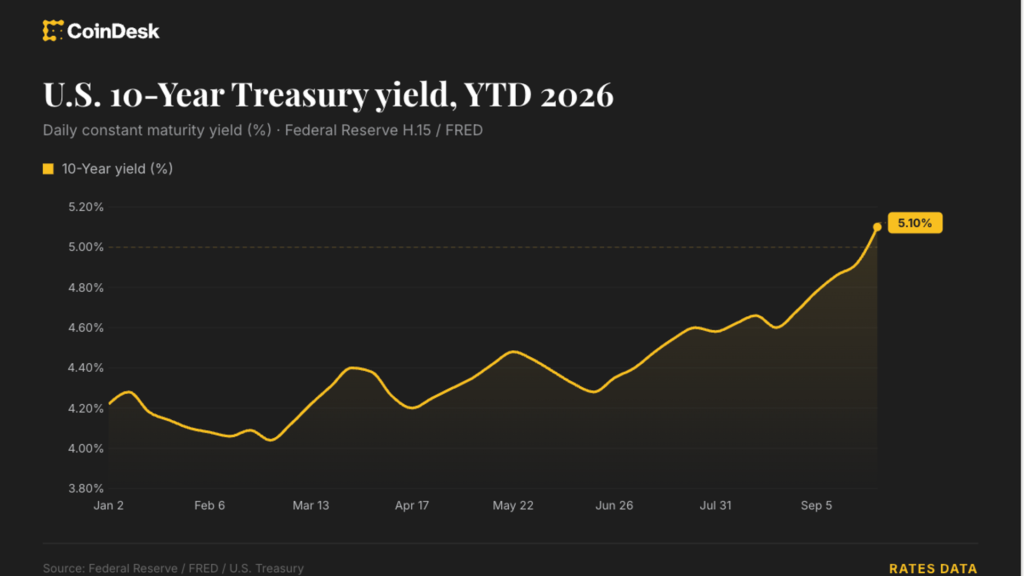
- The United States 20-year Treasury yield stays close to 5.5%, with the 10-year yield surpassing 5.1%.
- Speculative instruments face downward pressure as bitcoin drops past $83,000, while gold hovers just above $4,200.
American government bond yields across the entire curve are scaling new peaks as market participants steel themselves for a prolonged era of restrictive monetary policy. The CME FedWatch indicator highlights a federal funds bracket of 4.75% to 5% as the most probable outcome by June 2027.
This scenario implies four separate quarter-point bumps from the current 3.75% to 4% corridor. Meanwhile, the Federal Reserve has already lifted the fed funds rate by 25 basis points over the course of this month.
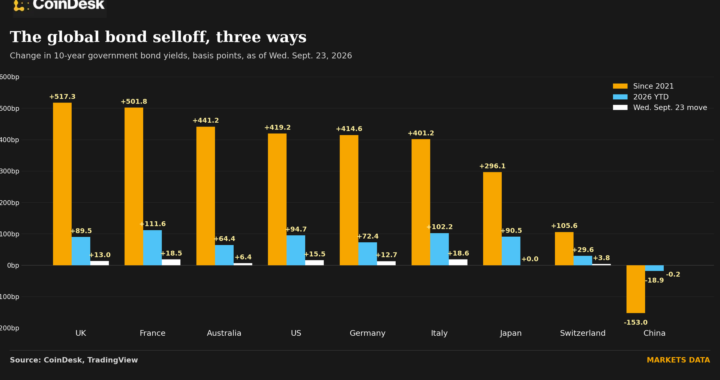
The selling pressure affects the broader sovereign debt spectrum. The 20-year yield is nearing 5.5%, driving the long-term bond ETF (TLT) down to historical troughs below $80. Simultaneously, the 10-year yield sits above 5.1%, reaching heights not witnessed since 2007. Financing expenses are climbing outside of America as well, with sovereign debt yields experiencing strain across France, Germany, the United Kingdom, and Japan.
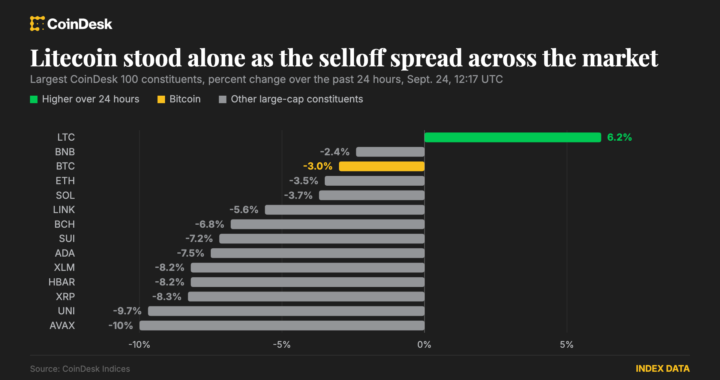
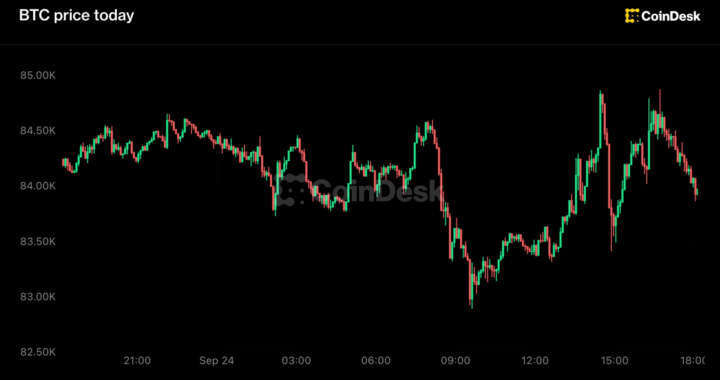
Elevated yields alongside a robust greenback continue to burden risk-on assets. The U.S. dollar index has ascended past 101, marking a 3% gain for the year. Concurrently, bitcoin has retreated below $83,000 from a local top of $87,500, whereas gold stays positioned slightly above $4,200, representing a 25% drop from its January peak.
A combination of catalysts is driving U.S. Treasury yields upward. The national economy maintains strong momentum: the S&P Global composite purchasing managers’ index, tracking both manufacturing and services, surpassed expectations during September by climbing roughly 4.3% to reach 58.4.
Geopolitical friction in the Middle East has additionally cast uncertainty over the inflation trajectory, fueling gains in petroleum and diesel prices.
In parallel, heavy debt issuance required to bankroll artificial intelligence infrastructure expands the aggregate supply of bonds competing against Treasuries for investor capital. Together, robust economic expansion, inflationary threats, and elevated capital demand combine to push yields upward.
The Japanese yen persists in its depreciation versus the U.S. dollar, returning to a rate of 159 yen. This movement erases a significant portion of the currency’s recovery back toward 153 following reported currency market interventions by the U.S. and Japanese authorities last month.
The central question moving forward is whether the prospect of upcoming central bank hikes will sustain upward momentum for both yields and the dollar.
Originally published at https://www.coindesk.com/markets/2026/09/24/traders-are-pricing-in-4-fed-rate-hikes-as-bitcoin-slides-below-usd83-000.