Cathie Wood has spent years advising investors to “follow the developers” when trying to anticipate where technological innovation is heading next. Today, the ARK Invest CEO suggests that market participants may need to track a different entity: the agents.
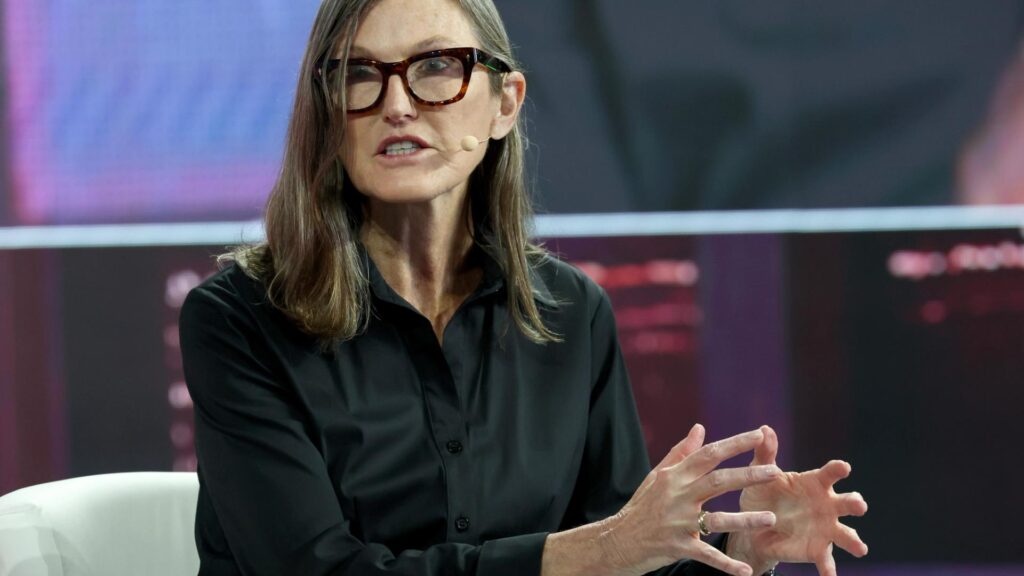
“We are likely going to be discussing ‘follow the agents’ more and more frequently,” Wood remarked during a panel appearance at the Robinhood Summit in Houston on Wednesday. She was referencing artificial intelligence agents, which are software applications capable of executing tasks on a user’s behalf rather than simply replying to queries or producing text.
Wood’s remark was brief, occurring near the conclusion of a broader conversation covering artificial intelligence, private markets, and technology investing. Nevertheless, it underscores a pressing question that gains importance as businesses race to create AI agents: What happens when artificial intelligence ceases merely offering answers to humans and begins disbursing their funds?
Developers have historically helped reveal which technologies are gathering momentum because engineers naturally gravitate toward tools they find practical. If millions of autonomous AI agents start making individual decisions regarding the software, services, and networks they employ, their behavior could supply another metric for tracking demand trajectories.
However, these agents will also require a mechanism to settle payments.
In a post last month, Joseph Chalom, co-chief executive officer of SharpLink and former head of digital assets at BlackRock, asserted that the financial architecture utilized by AI agents ought not to fall under the control of a select group of banks or technology firms.
“A universe saturated with intelligent agents is pointless if a small group of corporations dictates where your capital can flow,” Chalom wrote within the final installment of a three-part publication focusing on agentic finance.
From Chalom’s perspective, the primary concern is not merely whether an AI agent possesses the capability to spend money. Rather, it centers on the extent of authority granted to that agent and the identity of the entity governing the underlying monetary system. For instance, an individual might permit an agent to spend up to $500 for hotel reservations without granting unlimited entry to a bank account. Furthermore, the user should retain the ability to revoke that authorization while reviewing an audit trail detailing the agent’s actions.
Chalom additionally contended that users ought to possess the capacity to migrate their agents across financial service providers rather than getting locked into a single corporation’s ecosystem. An agent should be able to transport its identity, financial credentials, and permissions to an alternative provider much like a consumer ports a telephone number from one telecom carrier to another.
This scenario highlights a potential utility for cryptocurrency.
Chalom pointed out that decentralized blockchains such as Ethereum ETH $2,689.36 could establish a universal monetary framework utilized by diverse agents, applications, and enterprises. Instead of every artificial intelligence firm constructing a proprietary closed payment mechanism, agents could transfer value across a shared network without relying on a single tech corporation or bank to intermediate every single transaction.
This framework also introduces a financial dimension to Wood’s concept of “following the agents.” Should agents execute an increasing volume of tasks independently, investors could monitor not only the specific AI models and software they select, but also their payment methods and preferred financial networks.
BlackRock highlighted a comparable connection in a September publication exploring the intersection between artificial intelligence and digital assets. The asset management firm argued that AI agents might generate fresh demand for payment rails engineered specifically for machines. An agent might need to compensate for an API call, acquire data from a separate utility, or rent computational capacity without waiting for human approval on every individual transaction.
Stablecoins and blockchain networks could serve as effective solutions for processing those settlements, according to BlackRock.
Stablecoins operate continuously around the clock, whereas blockchain-driven payment frameworks allow software programs to transmit micro-transactions directly to other software. For instance, Coinbase’s x402 protocol is engineered to enable machines to pay for online services like data retrieval or API access.
Early indicators show agents making inroads into other sectors of the crypto ecosystem. Coinbase CEO Brian Armstrong shared on X that “Grok is the leading client for agentic traders on Coinbase currently,” though he omitted specific metrics or further operational details.
Crypto will not maintain exclusive domain over this market. Enterprises including Stripe, Visa, Google, and OpenAI are actively designing methods for agents to execute purchases, and BlackRock emphasized that legacy payment infrastructures will continue playing a vital role.
Such competition could render Wood’s guidance to “follow the agents” especially pertinent for cryptocurrency investors. If artificial intelligence agents emerge as dominant economic participants, tracking their transaction destinations could deliver a novel approach to evaluating whether stablecoins and blockchains achieve mainstream utility or if the majority of agent activity remains confined to traditional settlement rails.
Originally published at https://www.coindesk.com/markets/2026/10/01/cathie-wood-says-smart-investors-need-to-start-watching-where-ai-agents-spend-money.