Oct 3, 2026, 9:00 a.m. EDT
3 min read
The deities punished Sisyphus by forcing him to roll a massive boulder up an incline, only to watch it tumble back down continuously. Following years of striving for clear regulations, the digital asset industry seems destined for an identical fate. The most recent attempt—spanning all 635 pages—has crashed back down the slope once again.
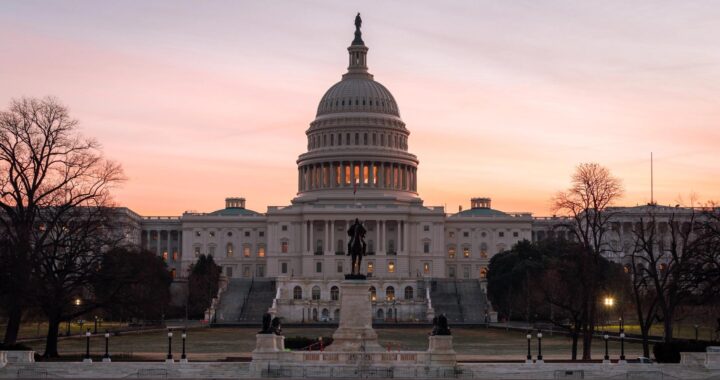
The Senate recently failed to advance the Digital Asset Market Clarity Act, also referred to as the Clarity Act, and with midterm elections rapidly approaching, no realistic possibility remains to resurrect it before year-end.
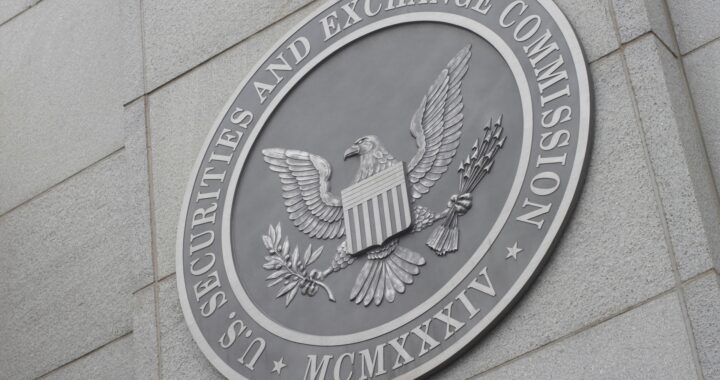
True to its title, the Clarity Act aimed to build a market structure framework: a regulatory rulebook that classifies cryptocurrency tokens into appropriate legal definitions, issues licenses to trading entities, and dictates how supervisory jurisdiction should be split between the Securities and Exchange Commission and the Commodity Futures Trading Commission.
Ryan Chan-Wei is a research fellow at the Cato Institute’s Center for Monetary and Financial Alternatives.
Had it been passed, the legislation would have unleashed crypto’s vast potential, such as its capacity to broaden financial inclusion and decrease cross-border payment expenses. Achieving any of those benefits on a large scale requires more than mere technological creativity, because licensed institutions naturally hold back from deploying capital while guidelines remain undefined, and everyday citizens have little motivation to trust a marketplace lacking comprehensive oversight.
Congress has long recognized the necessity for a thorough regulatory system. Legislative initiatives trace back to the Token Taxonomy Act of 2018, and subsequent efforts across four separate congressional terms have continuously stumbled, although none approached the finish line quite like the Clarity Act.
Momentum will essentially start over when the incoming Congress takes office, since principal senators who championed the bill will not return to the ballot. Cynthia Lummis (R-WY), who heads the Senate Banking Subcommittee on Digital Assets, is stepping down, alongside Thom Tillis (R-NC), who helped forge the bipartisan compromise on stablecoin rewards that successfully cleared the Clarity Act out of committee.
What makes the downfall of this bill particularly aggravating is that the most difficult work was already finished. Core inquiries regarding market structure had largely been settled, which accounted for the uniquely expansive coalition uniting behind the legislation. Wall Street and the crypto sector formed an unexpected alliance, with major institutions like Goldman Sachs and BlackRock also lending their support to the Clarity Act.
Complete consensus on every minor point is uncommon for bills of this magnitude, meaning a few loose ends inevitably persisted. However, what ultimately stalled the legislation was ethical concern, specifically the danger of conflicts of interest at the highest echelons of government. The United States gains very little from a digital asset industry widely viewed as plagued by corruption and self-serving behavior, making the protection of public confidence essential.
Nevertheless, it was a mistake to sacrifice the Clarity Act on the altar of ethics, because alternative legislative pathways for addressing those worries would have remained accessible even if the measure had passed.
Underpinning all these challenges is a matter of equity. Nearly every other sector of American finance functions inside a well-defined regulatory perimeter, where corporations understand which rules apply and which agency enforces compliance. Crypto features no such statutory perimeter. Elsewhere, numerous developed jurisdictions—from the European Union and the United Kingdom to Japan and Singapore—have already implemented one. International examples should not dictate U.S. policy, yet it is telling that so many global peers have already resolved this issue.
The upcoming Congress must finish what preceding lawmakers left undone. For nearly ten years, cryptocurrency regulation has been laboriously hauled upward, only to tumble right back down. Sisyphus, at the very least, had earned his punishment, having betrayed the deities and cheated death on two occasions. Regardless of its flaws, the crypto ecosystem does not deserve a sentence like his.
Note: The views expressed in this column are those of the author and do not necessarily reflect those of CoinDesk, Inc. or its owners and affiliates.
Originally published at https://www.coindesk.com/opinion/2026/10/03/crypto-s-sisyphean-struggle.