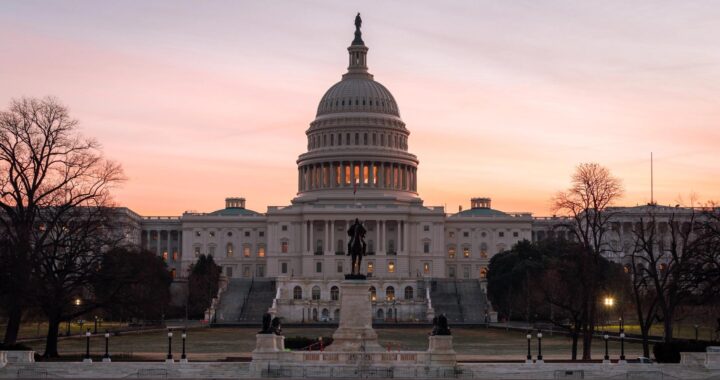
The cryptocurrency market spent years waiting for Congress to introduce a permanent American regulatory framework for virtual coins, which would explicitly define whether specific digital assets fall under the jurisdiction of the Securities and Exchange Commission (SEC) or the Commodity Futures Trading Commission (CFTC).
Such clarity would offer enterprises and backers within the crypto sector far greater predictability than depending on federal watchdogs whose directives can shift between political administrations.
However, those aspirations encountered a major roadblock on September 15.
The Clarity Act bill failed a procedural vote in the Senate, gathering 49 supportive votes and 50 opposed, failing to reach the 60 votes required to pass. Discussions broke down over ethics restrictions targeting senior officials’ personal crypto holdings—including those of President Donald Trump—alongside worries regarding investor safeguards and illicit financial activities.
With November midterms drawing near and minimal legislative calendar time remaining, this defeat severely diminished the likelihood of the bill passing during the current year, leaving regulatory agencies to bridge the gap.
This situation introduces an important question for an additional rapidly growing sector of cryptocurrency: corporate dealmaking.
Fewer deals?
At first glance, one might assume that the inability of the Clarity Act to move forward would naturally suppress merger and acquisition activity in the crypto space.
After all, lingering regulatory ambiguity would create challenges for potential purchasers, particularly traditional financial institutions, making them hesitant to pursue buyouts inside the United States, especially if a target company’s operations rely heavily on tokens or activities subject to unpredictable regulatory interpretations.
Nevertheless, bankers and investors interviewed by CoinDesk do not anticipate that the stumble of the Clarity Act will grind crypto M&A to a halt. Instead, they foresee a fragmented impact: transactions involving sectors where regulators have already established clearer guidelines will likely proceed, whereas companies tied to unresolved regulatory gray areas will remain difficult to acquire.
“The Clarity Act’s setback doesn’t change the trajectory,” stated Paul McCaffery, who leads digital assets at investment banking firm KBW.
His central argument is that Capitol Hill is not the only source of rules.
“The SEC and CFTC are already moving proactively to provide the regulatory certainty markets need, and that’s unlocking a wave of M&A across digital assets, traditional financial services, and fintech alike,” McCaffery noted.
As proof, merely two days following the Senate vote, the SEC endorsed a temporary “Innovation Exemption” permitting restricted trading of tokenized American equities on select onchain platforms. Subsequently, on October 1, the commission proposed a fresh directive to specify how investment firms ought to manage and safeguard client crypto assets. Meanwhile, the CFTC has likewise dismantled specific regulatory hurdles, offering relief to particular software providers and updating guidance concerning tokenized investments alongside blockchain-based bookkeeping methods.
“We’re in the early innings of a tokenization and digital payments supercycle that’s building internationally first, but it will inevitably come back to the U.S., and those who wait for Congress will miss the boat,” he explained. “It’s taken a long while to get here, but the convergence is real and buying vs. building is the more efficient route.”
Todd White, a partner at advisory practice Architect Partners, similarly anticipates that regulatory actions originating outside of Congress will sustain momentum, particularly surrounding asset tokenization.
“SEC’s decisive move in the wake of legislative failure feels poised to catalyze activity around tokenization, for both commercial traction and strategic transactions. We’d already seen significant shifts toward more liquid assets and institutional finance. The new ‘Innovation Exemption’ should bolster that momentum.”
So, what do the metrics indicate?
Deal activity within the digital asset market hit a record-breaking $9.7 billion in publicly announced transaction values throughout the first half of 2026, marking a 44% surge compared to the previous year, as reported by CryptoRank Research. Still, an important caveat exists: the count of declared acquisitions dropped 8% year-over-year to 87, with the four largest transactions representing 76% of total disclosed volume, demonstrating a market steered by a handful of massive deals rather than a widespread surge in transaction frequency.
Payward, the parent organization of Kraken, serves as a prime illustration of what motivates several of these transactions.
The business agreed to purchase payments firm Reap for $600 million alongside derivatives venue Bitnomial for up to $550 million, while Nasdaq committed a $100 million investment into Payward alongside an expanded strategic partnership.
Such agreements underscore the strong demand for licenses, proprietary technology, and distribution networks capable of maintaining momentum even while broad U.S. crypto legislation remains stalled.
Clarity still matters
Not all observers believe that administrative actions by the SEC and CFTC can completely replace formal legislation.
“Clearer legal framework would absolutely result in more deals, more partnerships permeating across financial services and beyond, and ultimately more economic prosperity for both citizens in the U.S. as well as abroad,” remarked Dmitriy Berenzon, partner at venture capital firm Archetype.
“We have already seen how much of a positive impact the GENIUS Act has had on stablecoin adoption, so the more clear and informed the rulemaking, the better,” he added.
Jake Brukhman, founder and chief executive officer of venture fund CoinFund, presented a more balanced perspective on the fallout of the Clarity Act’s defeat: it does not inherently worsen the regulatory landscape, but rather means that the improvements buyers anticipated have simply not materialized.
“Failure of Clarity does not create a new drag so much as preserve the regulatory uncertainty already weighing on the sector,
Originally published at https://www.coindesk.com/business/2026/10/04/the-clarity-act-stalled-crypto-dealmakers-aren-t-hitting-the-brakes-yet.