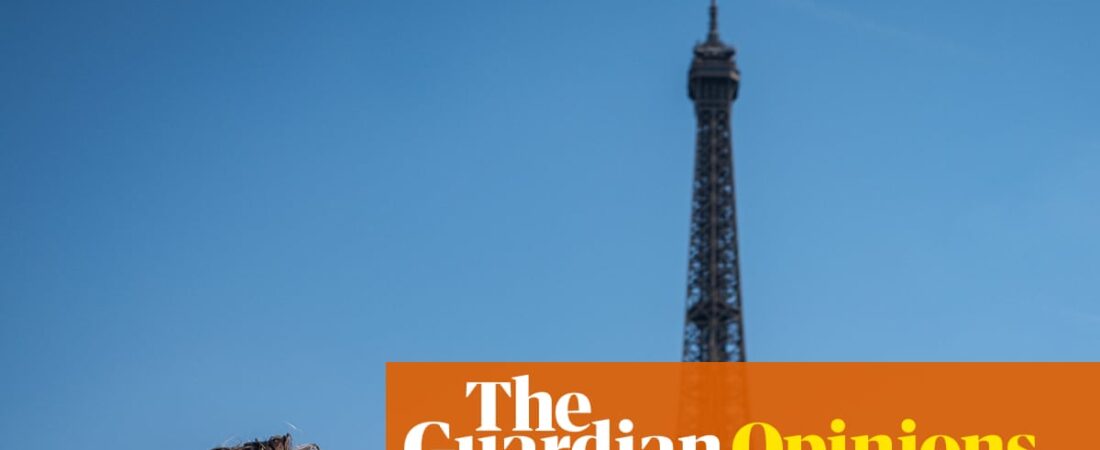
This week marks the conclusion of the European summer, bringing with it an end to a particular aesthetic of Instagram updates.
Standing under a chilly winter dawn at a transit stop, while driving rain dampens your trousers, you might comfort yourself by browsing social feeds showing Australians savouring their European getaways. The familiar imagery returns: turquoise bays in Greece, plates piled with grilled sardines, hourly yacht rentals, and balcony snapshots from Parisian holiday rentals, sipping wine late into the azure evening.
Yet throughout this year, just off camera but constantly present, was the blistering heat. While soaring temperatures are difficult to capture in photographs, the oppressive conditions dominated the entire season so thoroughly that they may have permanently shattered the fantasy of the European summer.
Beginning as early as late May, extreme conditions shattered historic heat records across western Europe, creating a grueling ordeal for hundreds of millions of travellers.
Who longs for a European getaway today when lodging in a centuries-old, un-airconditioned historical quarter feels equivalent to sleeping inside a wood-burning pizza oven? Where is the glamour or aspiration in sheltering all day inside an air-conditioned retail mall (provided you can locate one) because visiting a historic cathedral or monument means risking heatstroke?
Visiting classic European tourist hubs during the peak travel window now demands mere endurance. It requires arranging itineraries specifically to avoid stepping outdoors during midday hours. It involves seeking out accommodations equipped with air conditioning—when available—and paying significant surcharges just to remain cool.
It involves iconic landmarks and historical sites shutting their gates because operating them has become excessively hazardous. (During June, Notre-Dame Cathedral curtailed entry to its towers, while the Eiffel Tower, typically accessible late into the evening, implemented a 4pm shutdown, matched by the Louvre.)
It entails sweltering metropolises giving off the scent of medieval eras—rotting waste, perspiration, and overcrowded bodies. It means feeling utterly fatigued, disoriented by time zones, and perpetually clammy, lying across a firm bed in a darkened room with your face positioned near a portable fan while heavy air circulates.
It reflects an exhausted populace driven to extremes by the climate, plunging into public canals at 2am because trapped heat inside residential buildings prevents them from cooling down and getting rest.
Vacations are intended to offer pleasure and rejuvenation. However, prolonged heatwaves of this magnitude are fundamentally incompatible with leisurely travel, transforming leisure into danger.
Consider the young trees planted to offer shade within Rome’s Piazza Risorgimento, adjacent to St Peter’s Basilica. These saplings ended up completely scorched, as reported by CNN, while surrounding benches constructed from dark plastic and timber became scalding hot and entirely unusable.
Throughout the European continent, vital transport networks failed: signalling equipment overheated, softening tarmac disrupted tram routes, and railway tracks warped under the intense thermal stress.
Beyond making outdoor environments hostile and hazardous, such extreme weather triggers severe bodily disorientation. During an episode of heatstroke, your system needs perspiration to regulate temperature, yet skin becomes dehydrated and dry. The body desperately needs hydration, yet cognitive confusion sets in, causing individuals to neglect drinking water.
A minimum of 35,000 excess fatalities were recorded across Europe this summer as a consequence of consecutive heatwaves, with heatstroke serving as a primary driver.
Human psychology exhibits a curious tendency: once summer concludes, we clearly recall that conditions were scorching and dreadful, yet the precise physical and psychological distress we endured quietly dissipates. Our bodies let go of the physical memory until the cycle repeats, retaining the intellectual awareness of extreme heat while losing the visceral sensation.
Nevertheless, the present moment is when preparations for the coming year must begin, as it might bring even greater heat.
Australia’s own climate adaptation record remains far from flawless, frequently relying on reactive, fragmented, and ad hoc measures. Still, having endured prolonged and intensifying warm seasons over decades, certain strategies have proven effective.
Governments can launch public education drives regarding solar radiation and sun safety. Shade sails should be erected across educational institutions and public zones. Broad-brimmed hats ought to be mandated as standard elements of summer school uniforms. Work-from-home guidelines should be reconsidered for staff without domestic cooling, or work schedules could be divided so uncooled staff are spared working through the hottest peak hours.
Substantial capital should be directed toward urban planning designed around extreme temperature thresholds (massive stone plazas common across Europe are poorly suited for our changing climate, as stone absorbs and radiates heat fiercely). Mass transit networks, commercial offices, and civic facilities must be fitted with air conditioning and active cooling systems. Urban tree canopy coverage should be expanded. Drinking fountains should be widely installed across indoor and outdoor public areas. Stringent, legally binding labor regulations must be established to safeguard construction workers and outdoor personnel in extreme weather. Heat-alert frameworks with enforceable legal outcomes—such as the cancellation of school sessions, outdoor labour, and open-air events—need to be introduced. Normalising wearing shorts in professional work environments is another practical measure.
And what other significant adjustment should be considered? Australian travellers could forgo their annual European summer trek entirely, opting instead to appreciate the crisp winter weather at home.
-
Brigid Delaney has authored five books, among them The Seeker and the Sage
Originally published at https://www.theguardian.com/environment/commentisfree/2026/sep/01/has-climate-crisis-killed-instagrams-euro-summer.