Nov 18, 2026, 10:23 a.m. EST
3 min read
Summary
- Hong Kong’s central bank is pressing lenders to implement artificial intelligence for financial crime detection, featuring solutions that connect blockchain transactions with user profiles.
- Criminal cryptocurrency wallets accumulated a minimum of $154 billion during 2025, marking a 162 percent surge compared to the preceding year, with stablecoins representing 84% of the aggregate amount, as reported by Chainalysis.
- Financial institutions encounter security and liability challenges when deploying AI agents, and specialists emphasize that choices to freeze accounts, block transactions, or file suspicious activity reports ought to stay with human bank personnel.
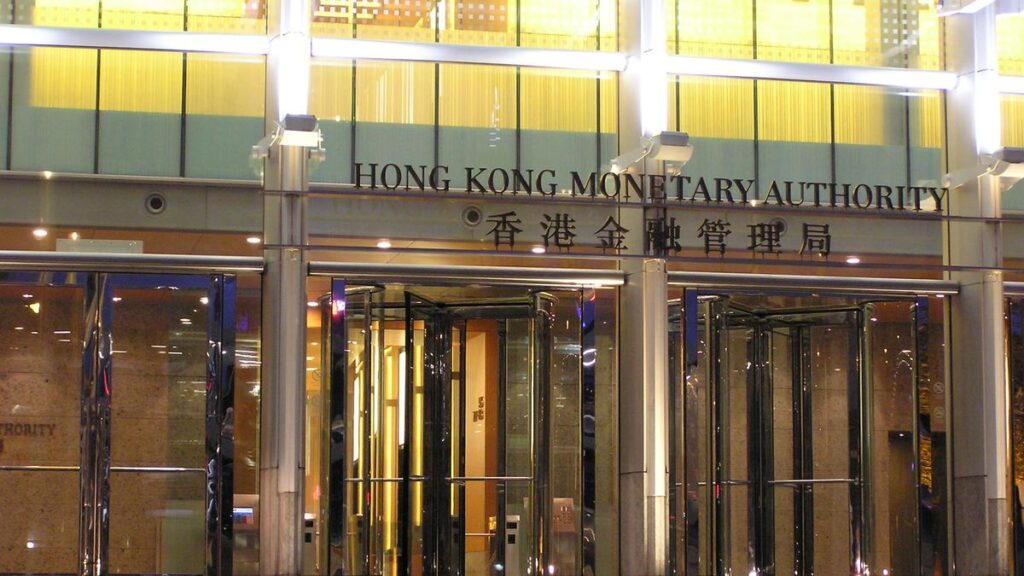
Hong Kong’s central bank is speeding up initiatives to encourage financial institutions to embrace artificial intelligence for spotting financial crimes, given that the expansion of stablecoins and alternative digital assets makes illicit capital movements more difficult to monitor.
Raymond Chan, who serves as the executive director for enforcement and anti-money laundering at the Hong Kong Monetary Authority, stated on Tuesday that the regulatory body is working to fast-track AI integration among banks, which includes exploring how autonomous AI agents might merge blockchain activity with client profiles to spot financial wrongdoing.
Chan referenced Chainalysis research indicating that unlawful crypto addresses collected at least $154 billion through 2025, which is a 162% elevation over the prior year, primarily propelled by activity linked to sanctioned parties, where stablecoins made up 84% of the overall sum. The organization estimated illegal activity accounted for under 1% of the total crypto transfer volume evaluated in its study.
While lenders are capable of tracking transfers across a public ledger, determining the actual owners behind the digital wallets presents a greater obstacle.
“The core challenge obviously lies in linking wallet activities to real-world identities quickly enough to prevent fund dissipation,” Chan remarked.
Abdul Rafay Gadit, a co-founder of ZIG Finance, suggested that financial institutions ought to evaluate AI agents against historical fraud cases and operate them alongside existing surveillance mechanisms prior to granting them autonomous control.
“Compare what it catches, what it misses and how long investigations take. Fewer alerts only helps if you’re still catching suspicious activity,” he noted.
Autonomous agents possess the capability to perform multiple functions with minimal human oversight. According to Chan, they are able to identify trends, such as swift conversions between cryptocurrencies and fiat cash, which might obscure the origin of capital. Identity verification tools designed to clarify who controls a specific wallet are also undergoing trials, he mentioned.
The HKMA has supplied technical assistance and workshops to aid lenders in implementing artificial intelligence, according to a release published Tuesday by the Hong Kong Institute for Monetary and Financial Research. The document highlights a specific bank utilizing generative AI to examine potential money laundering via transaction histories, images, and user digital engagement. That institution documented quicker, more precise fraud probes while omitting specific metrics.
The evaluation revealed that 90% of participating financial institutions had either adopted or intended to implement generative AI. Among various business applications, 13% had already deployed AI agents, while 56% expressed intentions to do so. The survey, executed from January through March, encompassed 39 banking entities and eight technology vendors.
Institutions additionally voiced worries regarding data security and the challenge of explaining choices driven by artificial intelligence.
Gadit noted that agents could compile transaction ledgers, cross-reference sanctions directories, and assemble case files for investigators, yet decisions regarding freezing accounts, declining payments, or escalating suspicious behaviour must remain the responsibility of human bank workers.
Dominik Clemente, a research engineer associated with the World Foundation, stated that institutions should also confirm the identity of anyone authorizing a flagged transfer, particularly during remote approvals.
“If I’m asking a colleague to sign off on a flagged wire over Zoom, for example, I want to know it’s really them on camera,” he explained.
Federal Reserve Governor Michael Barr cautioned on Monday that AI agents might hasten bank runs by transferring deposits devoid of human authorization. He mentioned that banks had already observed agents attempting to execute actions on accounts without successfully verifying customer consent.
In a separate move, the HKMA initiated Project SAGE on November 2 to investigate how financial AI agents ought to validate their identity and operational authority, alongside determining accountability when errors occur.
Originally published at https://www.coindesk.com/business/2026/11/18/hong-kong-wants-banks-to-use-ai-to-catch-crypto-crime-before-money-disappears.