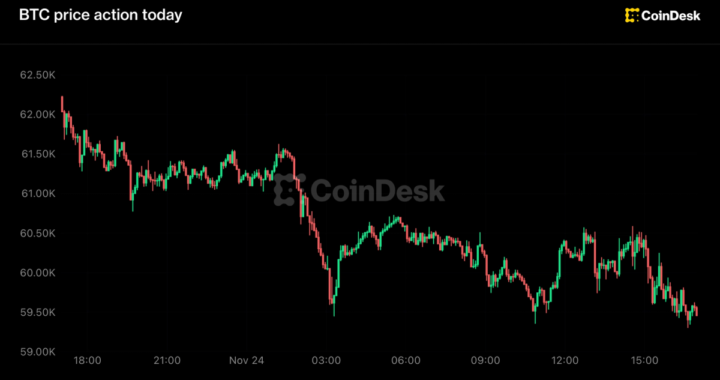
Bitcoin (BTC) slid past the $60,000 threshold on Tuesday following a Monday surge driven by the announcement that Nvidia brought back Jensen Huang as CEO.
Key points:
- Bitcoin dropped roughly 8% from its peak of $64,505 during the session as total 24-hour cryptocurrency liquidations reached $827 million.
- Gold declined by 24.6% across the 60-day period ending Nov. 23, registering its most severe 60-day slump in 44 years.
- Market analysis cautioned that veteran Bitcoin investors offloading assets at a deficit might cap subsequent recoveries.
BTC price fails to hold $64,500 rebound
TradingView metrics demonstrated BTC/USD dropping to $59,380 on Bitstamp, shedding nearly 8% from its intraday peak.
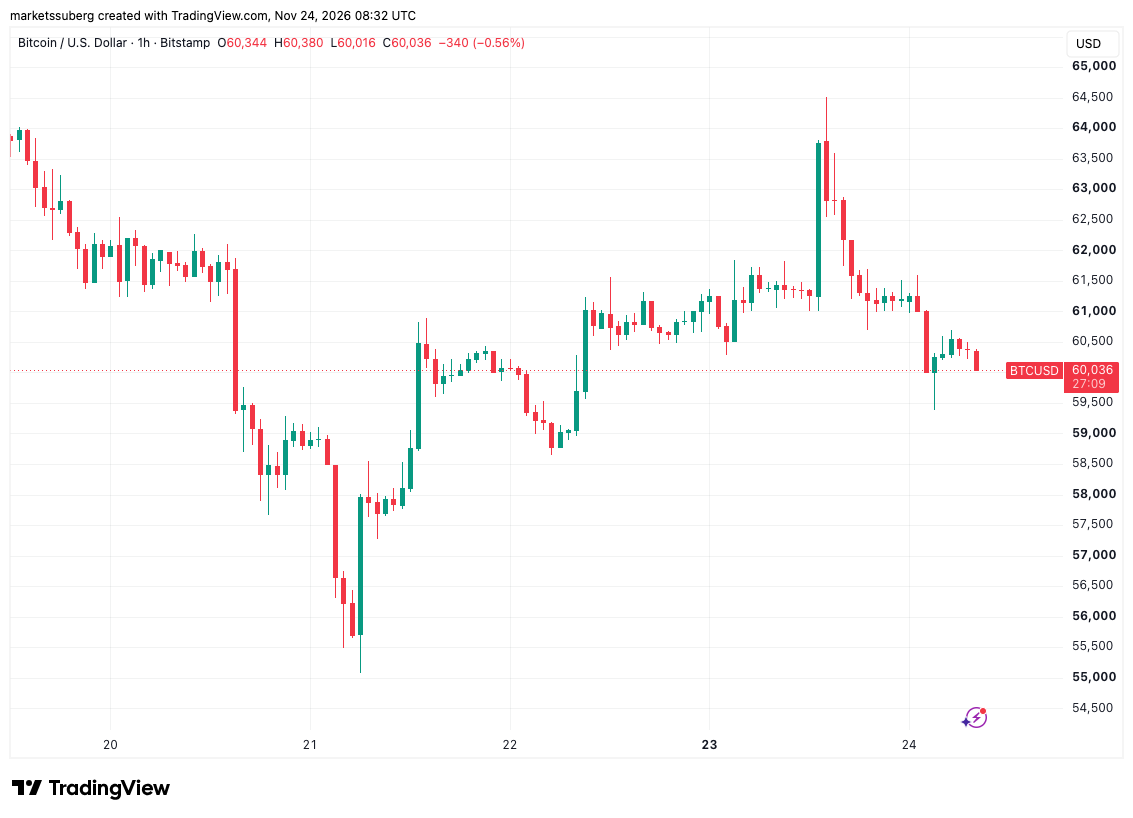
BTC/USD one-hour chart. Source: Cointelegraph/TradingView
The news regarding Huang’s comeback catalyzed a market rally across digital assets and equities when Wall Street opened on Monday, pushing Nvidia stock up by as much as 35%. The technology-centered Nasdaq Composite finished the day up 6.5% at 24,089.
By Tuesday, the equity surge expanded into Asian markets fueled by optimism surrounding the AI sector’s prospects, causing South Korea’s Korea Composite Stock Price Index (KOSPI) to climb 6.3% after hitting its lowest closing mark in 11 months.
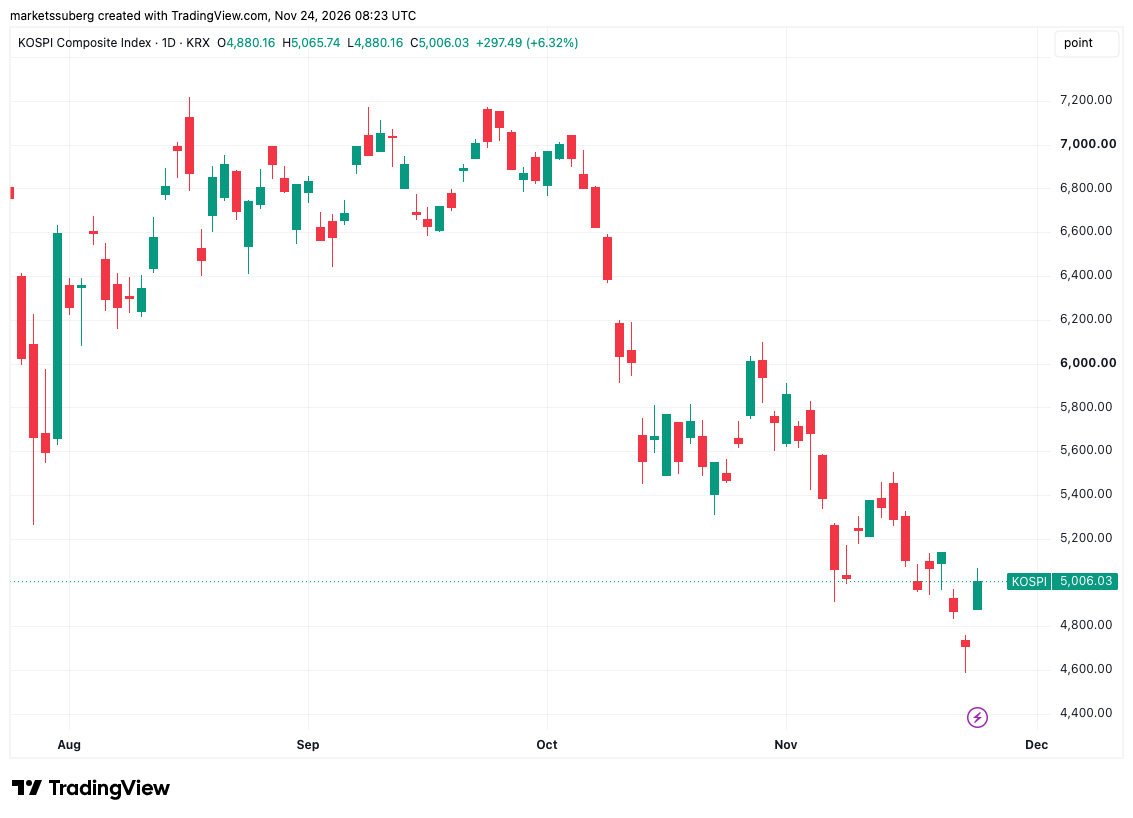
KOSPI daily chart. Source: Cointelegraph/TradingView
The Kobeissi Letter predicted a rocky path ahead for the industry.
“Over the coming days, there will likely be a ton of political headlines in what has become one of the most pivotal CEO controversies of all time. And, the broader AI trade is still experiencing growing pains as it undergoes a healthy technical correction,” the publication shared via X.
“However, we continue to believe that what has materialized over the last few weeks is a mere correction, not the beginning of a prolonged bear market.”
Market recovery extended past equities as gold experienced a 1.6% bump on Monday after touching its lowest daily settlement since September 2025.
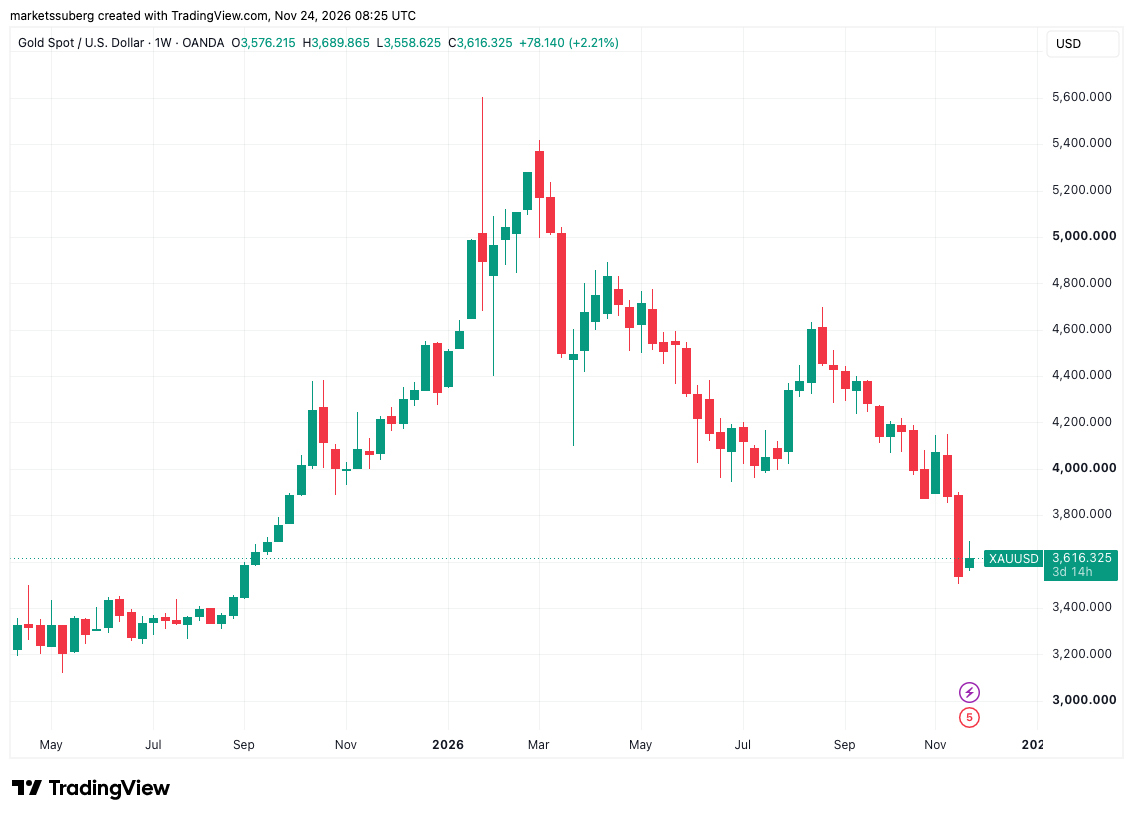
XAU/USD one-week chart. Source: Cointelegraph/TradingView
According to market researcher Lukas Kuemmerle, gold dropped 24.6% over the 60 days leading up to Monday, representing its fastest 60-day slide since 1982. Gold remained down 35% relative to its January all-time peak of $5,602 per ounce.
“What we see is a domino effect. A liquidity event that started in AI stocks is pulling cash out of every market, so commodities fall across the board, no matter what their fundamentals say,” he commented on Monday.
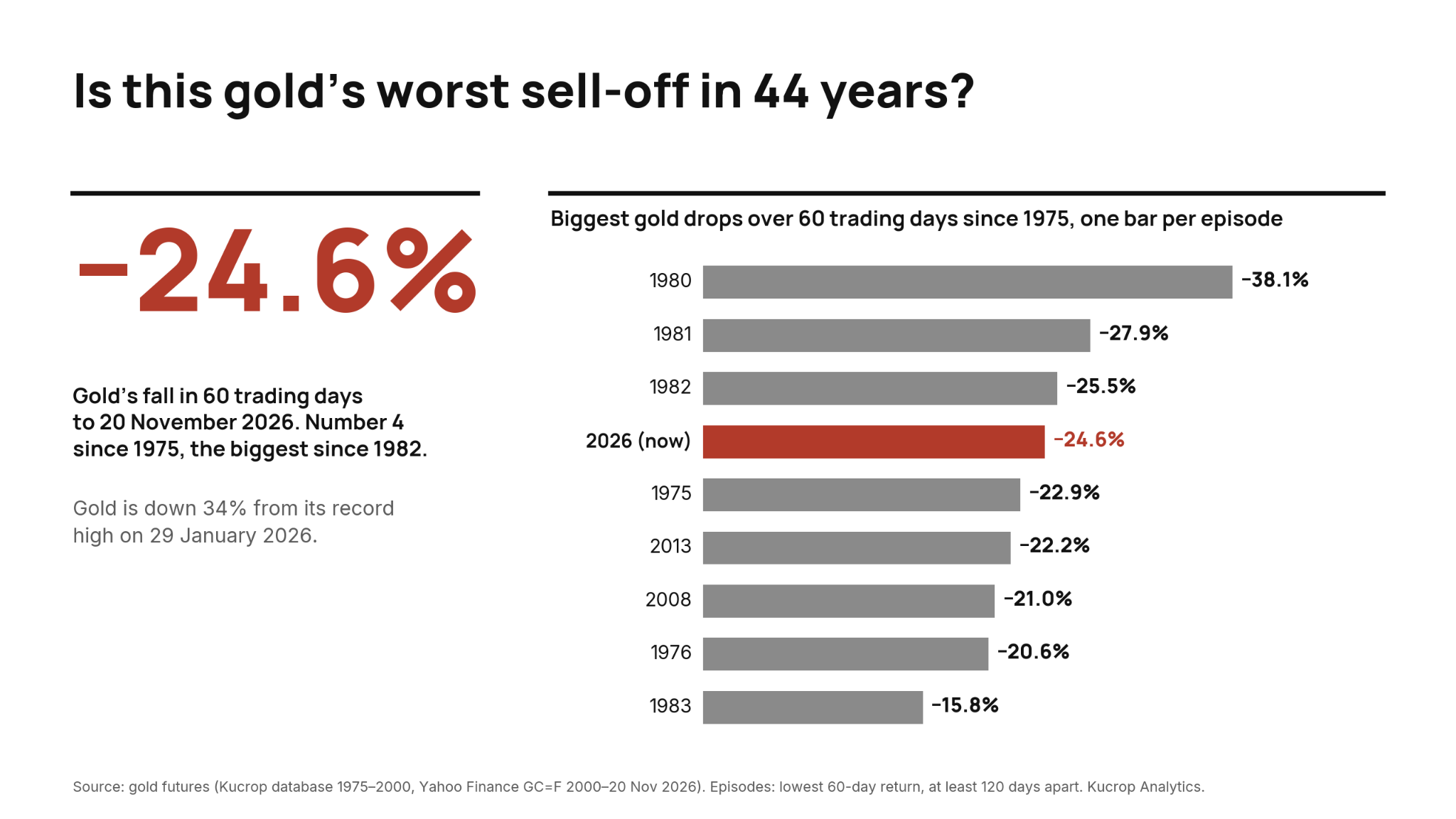
XAU/USD sell-off comparison. Source: Lukas Kuemmerle/Substack
Long-term Bitcoin holders sell at a loss
In contrast, Bitcoin failed to sustain its recovery gains. Data from CoinGlass indicated that $348 million in long positions and $478 million in short positions were liquidated over the 24-hour window leading up to 8 am UTC amid choppy market conditions.
Related: BTC price gains 12% from $55K: Three things to know in Bitcoin this week
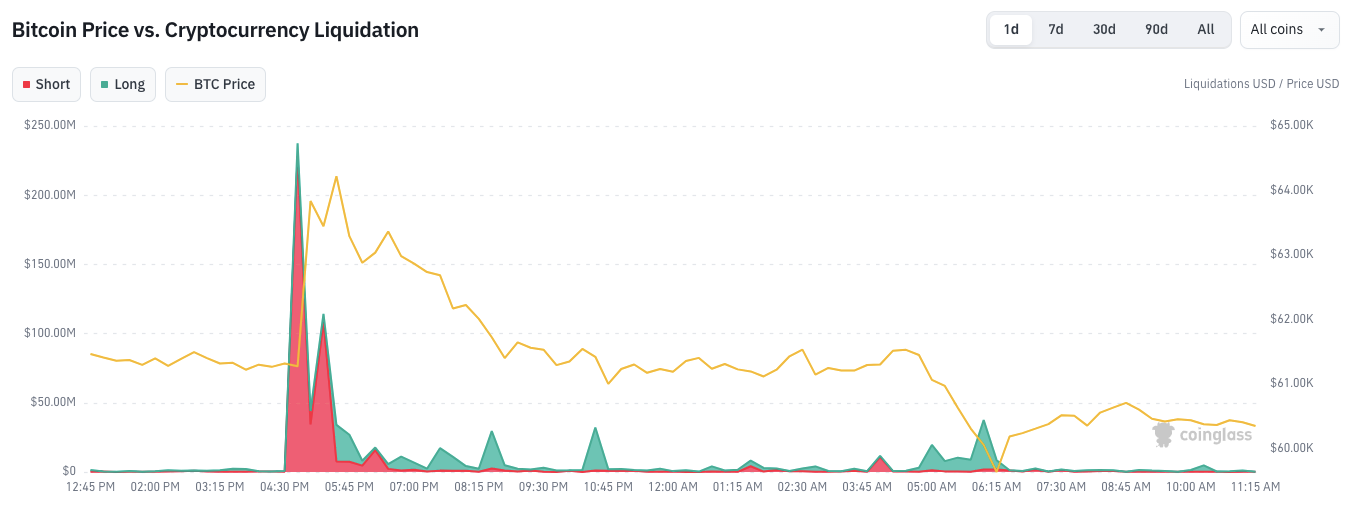
Crypto liquidations vs. BTC/USD chart (screenshot). Source: CoinGlass
A contributing researcher at onchain analytics network CryptoQuant cautioned that veteran Bitcoin investors locking in losses could hinder prospective rebounds.
As Bitcoin climbed toward $64,500, long-term investors—defined as wallets retaining specific BTC tokens for 155 days or longer—absorbed an average loss of 33%. The Spent Output Profit Ratio (SOPR) for this demographic landed at 0.67 following a drop to 0.64 on Friday, representing its second-lowest metric of 2026.
“Capitulation from long-term holders has historically appeared near local bottoms, but it is a process rather than a single print,” the contributor noted.
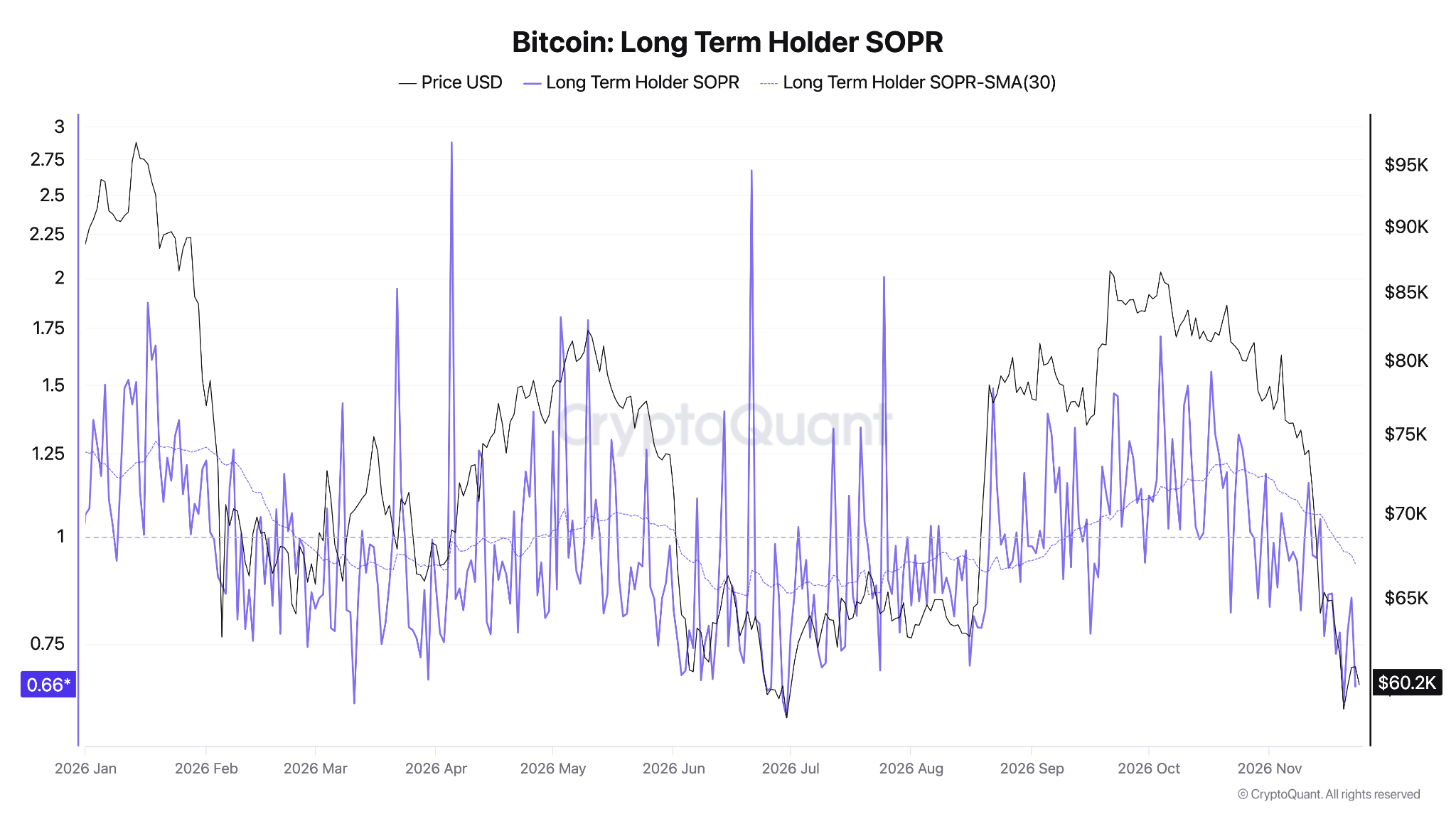
Bitcoin LTH-SOPR chart. Source: CryptoQuant
As previously reported by Cointelegraph, newer participants in the Bitcoin market accounted for the bulk of realized losses earlier in November.
Originally published at https://cointelegraph.com/markets/bitcoin-dips-60k-gold-worst-60-day-loss-1980s?utm_source=rss_feed&utm_medium=rss&utm_campaign=rss_partner_inbound.