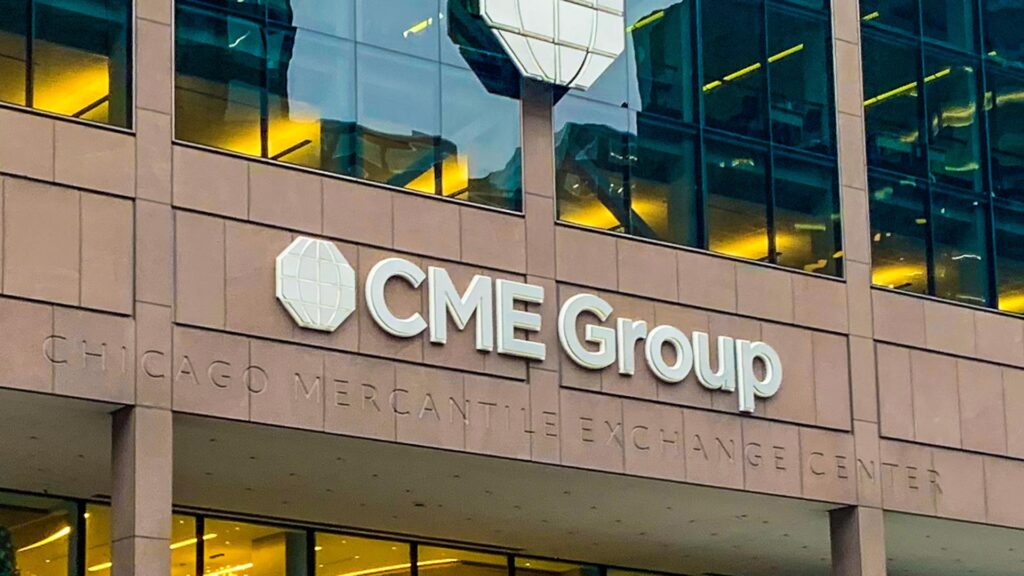
The Commodity Futures Trading Commission has petitioned a federal judge to throw out CME’s legal challenge against its authorization of digital asset perpetual futures, claiming that the derivatives exchange has failed to demonstrate any actual injury.
In a motion submitted on Wednesday, the regulatory body characterized the conflict as “much ado about nothing” and asserted that CME lacks constitutional standing because it has not documented a tangible financial damage.
The CFTC emphasized that the challenged directive permits any registered designated contract market, including CME, to offer comparable structured instruments.
Furthermore, the commission maintained that any detriment resulting from CME’s choice not to provide these contracts is self-inflicted, especially since CME has publicly acknowledged that its clientele has not requested perpetual futures.
According to the agency, a verdict favoring CME would not eliminate competing products from the marketplace. Kalshi and alternative designated contract markets could persist in providing them as swaps, meaning that a reclassification of the contracts would fail to resolve CME’s claimed competitive disadvantage.
The CFTC also argued that CME’s attempt to shield itself from market rivals falls outside the scope of protections intended by the Commodity Exchange Act.
CME initiated legal action against the regulator in June following the CFTC’s greenlighting of Kalshi’s BTCPERP contract as a futures instrument. This cash-settled offering follows the spot price of bitcoin, operates continuously around the clock, and features no maturity date. Regular funding rate transfers between long and short participants are utilized to align its valuation with the spot market.
The May 29 directive also encompasses similarly designed perpetual instruments tied to alternative digital commodities possessing robust, liquid, and ongoing spot markets. Perpetuals connected to other asset categories remain subject to individual evaluations via an associated policy statement.
CME contends that instruments lacking an expiration date or delivery requirement, which continuously transfer funding payments among traders, satisfy the legal criteria for swaps rather than futures.
Additionally, the exchange accused the CFTC of failing to justify a deviation from past enforcement actions wherein the agency categorized crypto perpetuals as swaps.
U.S. District Judge Colleen Kollar-Kotelly last week denied the CFTC’s motion to withhold the administrative record until the dismissal request was resolved, noting that the documents might include proof of CME’s asserted competitive harm. She instructed both sides to submit a unified briefing timeline by September 4.