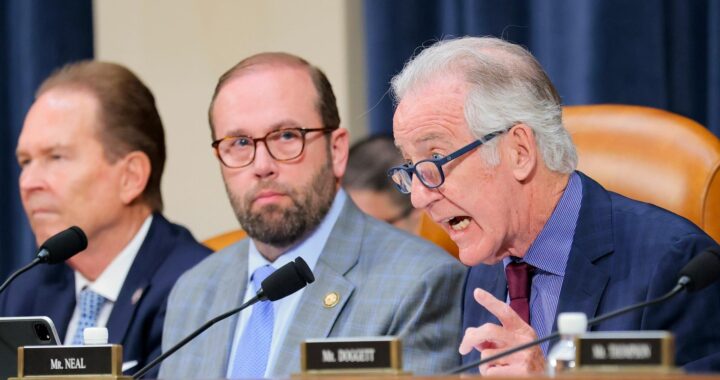
The crypto Clarity Act failed to secure the 60 votes necessary to move forward in the U.S. Senate on Tuesday, as a 49-50 outcome fell significantly short of advancing and failed to achieve even a simple majority.
The sector has dedicated years and hundreds of millions of dollars attempting to push Congress toward enacting market structure legislation. Although this Senate vote represents the furthest such initiative has advanced to date, the loss serves as a major setback for the vast network of lobbyists, advocacy groups, political action committees, and prominent digital asset executives pushing for new statutes.
This defeat for the digital asset sector’s primary policy objective could force stakeholders back to square one, barring any unlikely long-shot maneuvers during the concluding weeks of the legislative session following the November midterms. The failure to secure even a majority—compounded by multiple Republicans voting against the measure—places the legislative effort in a difficult position.
Bipartisan negotiators had previously ironed out over 600 pages of legislative compromise, yet a handful of final sections—such as ethics rules intended to prevent high-ranking government officials from holding crypto business affiliations—proved to involve irreconcilable divides. Furthermore, as the process dragged closer to the elections, political pressures increasingly undermined the prospects of a bipartisan agreement.
Chief Republican negotiator Senator Cynthia Lummis made a final appeal prior to the vote, though she was unable to persuade a sufficient number of peers to support her stance.
“Do not let this day be the day we handed our future to someone else because we were too afraid to finish what we started,” she stated on the Senate floor. “Let’s vote yes. Let’s not only join the 21st Century economy. Let’s not only join the digital age. Let’s lead it. Let’s define it.”
So what now?
The industry will now shift its focus toward U.S. market regulators who are already actively working to establish rules for the sector.
The Securities and Exchange Commission and the Commodity Futures Trading Commission have commenced initiatives that the sector hopes will deliver sufficient regulatory clarity and stability to encourage additional investors and corporations to enter the market.
The SEC recently put forward its inaugural major digital asset rule—Regulation Crypto Assets, or Reg Crypto—designed to create a pathway for crypto projects to raise capital and launch without immediately facing burdensome regulatory requirements. Additionally, the commission is prepared to begin clearing a limited version of securities tokenization that might ultimately transform how securities transactions are processed in the United States.
Nevertheless, even agency head Chairman Paul Atkins has noted that novel crypto regulations and exemptions from registration requirements lack permanence without foundational legislation. Much of the commission’s commentary regarding digital asset policy to date has taken the form of easily reversible guidance, and even a formal rule can be rescinded in the exact manner it was drafted.
Looking further ahead, industry super PACs—spearheaded by Fairshake—must determine how to respond to the politicians who opposed the bill on Tuesday. An individual familiar with the political action committee’s strategy indicated that Fairshake has not yet finalized its approach for the final weeks leading up to the November 3 election, which will determine the composition of the upcoming Congress, including the majorities wielding jurisdiction over future digital asset legislative initiatives.
Industry political action committees will persist in supporting pro-crypto members of Congress with the expectation that a threshold of legislative inevitability will eventually be attained.
The fundamental premise of the Clarity Act is to explicitly establish how the government treats various categories of cryptocurrencies and blockchain initiatives, while assigning specific mandates to regulatory bodies, including expanded authority for the CFTC to oversee crypto spot markets.
While the defeat of the Clarity Act represents a setback for digital asset proponents, the legislative term featured a significant prior triumph in 2025 when the Guiding and Establishing National Innovation for U.S. Stablecoins (GENIUS) Act secured overwhelming bipartisan backing and was enacted into law. The sector evolved from a troubled 2022 marked by failures and prominent scandals into achieving major legislative success within just three years, and that statutory framework for stablecoin issuers is currently being implemented by regulatory authorities.
The existing Congress will conclude its term at year’s end, and a newly elected Congress will take office at the beginning of January. If Democrats secure a majority in either chamber—an outcome viewed as probable in the House of Representatives—bills will not progress without their approval, and they are anticipated to direct time and resources toward investigations likely intersecting with ties between the Trump administration and crypto leadership and enterprises.
Cryptocurrency market structure is unlikely to rank as a primary focus for Representative Maxine Waters if she reassumes leadership of the House Financial Services Committee. Similarly, should Democrats capture the Senate majority, crypto adversary Elizabeth Warren would likely assume control of the Senate Banking Committee.
Originally published at https://www.coindesk.com/policy/2026/09/15/crypto-clarity-act-flames-out-in-failed-u-s-senate-vote.