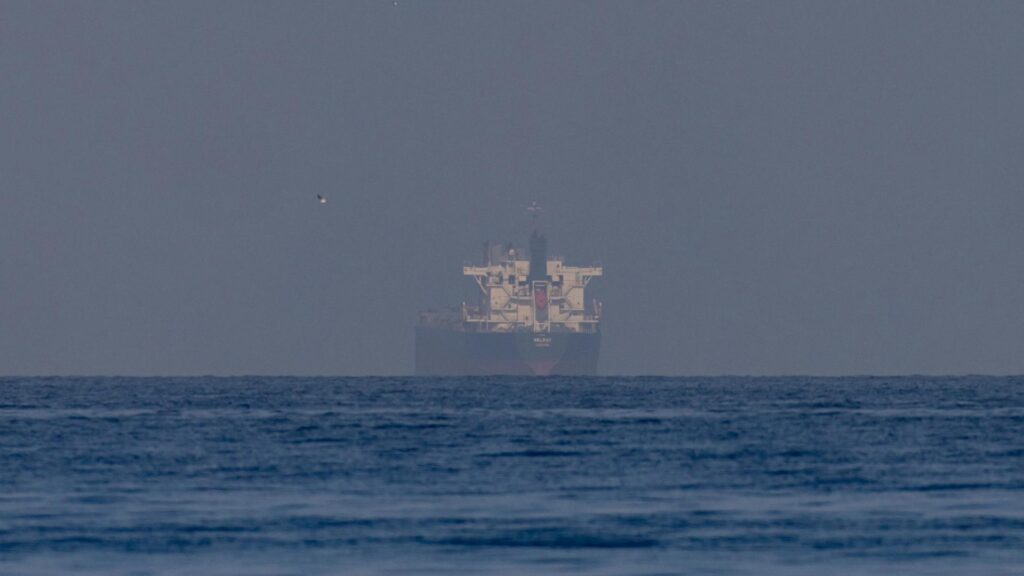
Throughout this year, Iran has required cargo ships to pay between $1 million and $2 million for permission to navigate the Strait of Hormuz, and the U.S. Treasury reported that beginning in June, a portion of these funds flowed through a Tehran-based digital asset exchange.
A publication on Thursday revealed that the Office of Foreign Assets Control has blacklisted BitBank, a crypto trading platform established in Tehran in 2024, alongside Pishtaz Simorgh Electronic Trade Company, the software development firm responsible for its creation.
“Today’s designations of Iranian digital asset infrastructure make perfectly clear that efforts to finance the Iranian regime using cryptocurrencies are not beyond OFAC’s reach,” stated Treasury Secretary Scott Bessent.
The OFAC asserted that BitBank transferred hundreds of millions of dollars in bitcoin to the Islamic Revolutionary Guard Corps, the military faction that directs a significant portion of Iran’s economy and is classified as a terrorist group by the United States.
During that identical timeframe, the Hormuz Safe Marine Services Authority—the agency Tehran utilizes to market “safe passage” insurance to vessels, which itself received sanctions on July 29—began leveraging BitBank to channel its collections toward government bodies.
HormuzSafe was engineered by the Iranian economy ministry and offers protection, traffic management, and emergency response services to ships that submit payment. Maritime legal experts have characterized this scheme as an infraction against transit freedoms outlined in the Law of the Sea, according to the OFAC.
Read More: Iran may be turning the Strait of Hormuz into a bitcoin-based insurance market, local reports say
An official designation implies that BitBank assets falling under U.S. authority are frozen, and U.S. citizens are prohibited from engaging with it. The more severe component involves the secondary sanctions attached to every entity included in Wednesday’s enforcement.
This broadens the liability to international businesses: a trading platform in Dubai or a banking institution in Istanbul that handles BitBank transactions risks losing access to the U.S. financial network entirely, even if no American citizens participate in the movement of funds.
For foreign entities servicing Iranian clientele, the primary danger is the forfeiture of dollar accessibility rather than prosecution in an American courtroom.
Nevertheless, the measures announced on Wednesday omitted any specific blockchain wallet addresses. The OFAC has previously disclosed bitcoin and tron addresses during past cryptocurrency penalties—such as the inclusion of seven tron wallets when targeting Zedcex in January—and those precise strings are what compliance departments typically integrate into monitoring software.
Originally published at https://www.coindesk.com/policy/2026/09/18/iran-s-strait-of-hormuz-toll-booth-ran-through-a-bitcoin-exchange-u-s-says.