The European Central Bank rolled out Pontes on Monday, creating a venue that permits banks and other authorized financial entities to clear tokenized asset trades using central-bank funds.
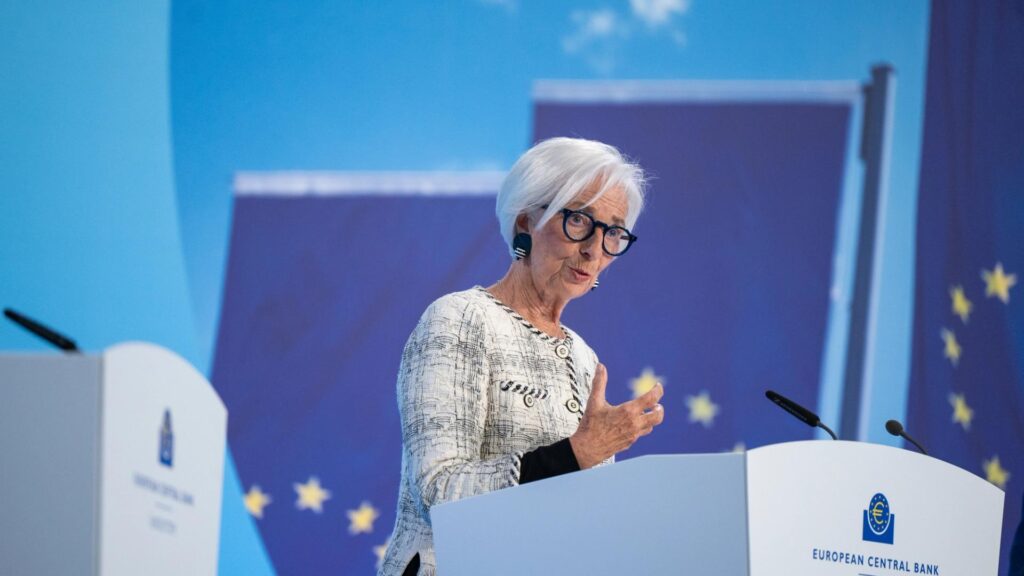
ECB President Christine Lagarde revealed the operational launch during a Eurogroup session on Friday.
“Now, Pontes is, to summarize it quickly for you, it’s a digital euro made available for banks so that they can transact amongst themselves using tokenized assets and distributed ledger technology,” stated Lagarde throughout a Eurogroup conference on Friday.
Pontes connects commercial distributed ledger technology systems with the Eurosystem’s TARGET Services, empowering participating lenders to finalize tokenized wholesale operations in central bank money. Access will remain restricted strictly to qualified financial institutions and market infrastructure operators.
Tokenized bonds, investment funds, and various other digital financial instruments require a dependable mechanism for clearing the monetary leg of a transaction. Pontes provides European organizations with a central bank money alternative, removing the sole reliance on stablecoins or tokenized commercial bank deposits.
This network forms part of the ECB’s wider strategy to maintain central bank currency at the heart of Europe’s expanding tokenized financial markets. The ECB noted that Pontes will evolve in phases, running parallel to its longer-term Appia project focused on wholesale tokenization.
The consumer-facing digital euro operates as a completely distinct undertaking. The ECB chose 36 banking and payment organizations to take part in a twelve-month digital euro trial back in July. This test run is set to begin in the latter half of next year while readying the central bank digital currency (CBDC) for potential rollout by 2029.
The one-year testing period will evaluate a beta version of the digital euro across the ECB alongside 19 euro area national central banks. It will encompass digital and offline peer-to-peer transfers, physical retail payments, and e-commerce transactions. The ECB appealed for merchants to participate in the trial during the previous week.
Although regulatory frameworks authorizing the digital euro remain under discussion within the EU legislature, the central authority is moving ahead with the program because it views rising usage of private dollar-pegged stablecoins like Tether’s USDT and Circle Internet’s USDC as a danger to Europe’s monetary independence.
A digital euro requires sufficient acceptance locations if everyday users are to adopt it, turning merchant integration into a commercial challenge just as much as a regulatory one, Isadora Arredondo, global policy vice president at Hedera, explained to CoinDesk.
Originally published at https://www.coindesk.com/business/2026/09/21/ecb-deploys-pontes-platform-to-settle-wholesale-tokenized-assets-in-central-bank-money.