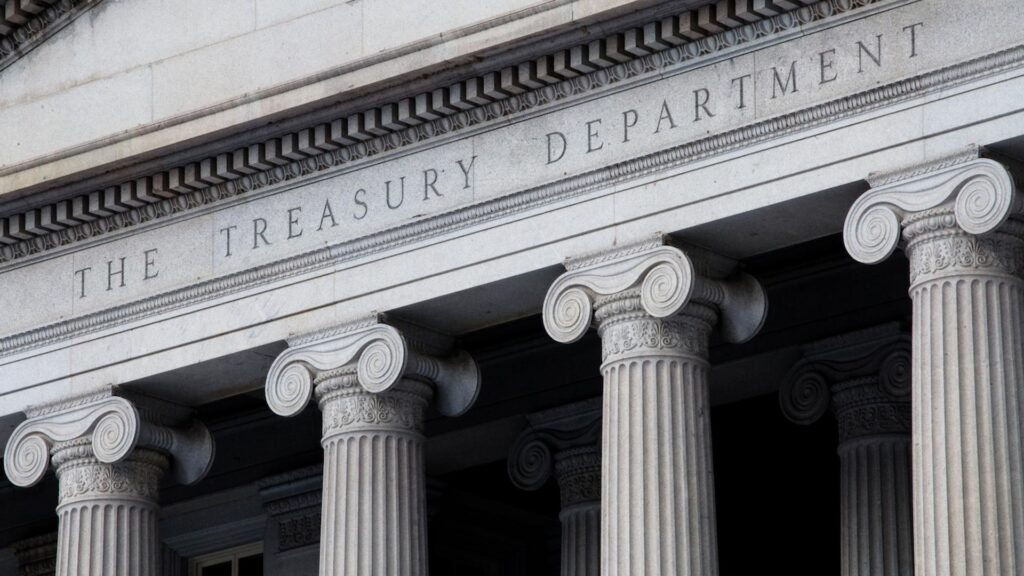
The United States Treasury Department has imposed sanctions on multiple entities linked to the collection of more than $2 million for the Islamist militant faction Hamas.
Specifically, the Treasury designated a member of the Hamas military wing, two individuals residing in France, and two charitable organizations accused of channeling over $2 million to Hamas via a sophisticated six-year financial scheme that leveraged digital assets alongside fake humanitarian contributions.
According to the department, Faouzi Barika and Amel Oualid solicited money in France under the guise of supporting humanitarian initiatives before redirecting those funds to Hamas, an entity classified as a terrorist organization across numerous jurisdictions which has maintained control over the Gaza Strip since 2007.
The Treasury noted that this network accumulated upwards of $2 million between 2020 and 2026, which included $1.5 million gathered following the October 7, 2023 assault on Israel by Hamas. Officials clarified that not the entire $2 million was transmitted via cryptocurrency, but separately asserted that Barika and Oualid channeled hundreds of thousands of dollars worth of crypto to al-Zaq, identified as Saleem Abdallah Saleem al-Zaq, a Gaza-based deputy battalion commander within the Al-Qassam Brigades of Hamas.
This enforcement action highlights ongoing efforts by American regulators to target the utility of digital assets within broader financial and payment networks, rather than labeling crypto as the primary funding mechanism for Hamas. Treasury officials have previously clarified that Hamas and similar factions continue to depend mostly on traditional financial systems, notwithstanding past crypto-focused sanctions and seizures.
This development also follows media reports from the previous month indicating that the Al-Qassam Brigades instructed contributors to bypass direct transfers from Binance, directing them instead to alternative virtual asset platforms prior to routing capital into a TRON-based wallet.
Under the newly announced sanctions, all assets and interests in property belonging to the targeted individuals and groups within U.S. jurisdiction are frozen. Furthermore, American citizens are generally barred from conducting transactions with them, while international financial institutions that knowingly process substantial transactions for them risk facing secondary penalties. These restrictive measures also apply to any business entities owned directly or indirectly by 50 percent or more by any of the designated parties.
“Terrorist organizations like Hamas rely on sophisticated financial facilitators and fraudulent schemes designed to exploit the public,” stated Treasury Secretary Scott Bessent.
Originally published at https://www.coindesk.com/policy/2026/10/05/treasury-crackdown-exposes-crypto-s-role-in-usd2-million-hamas-fundraising-network.