Oct 28, 2026, 3:01 p.m. EDT
3 min read

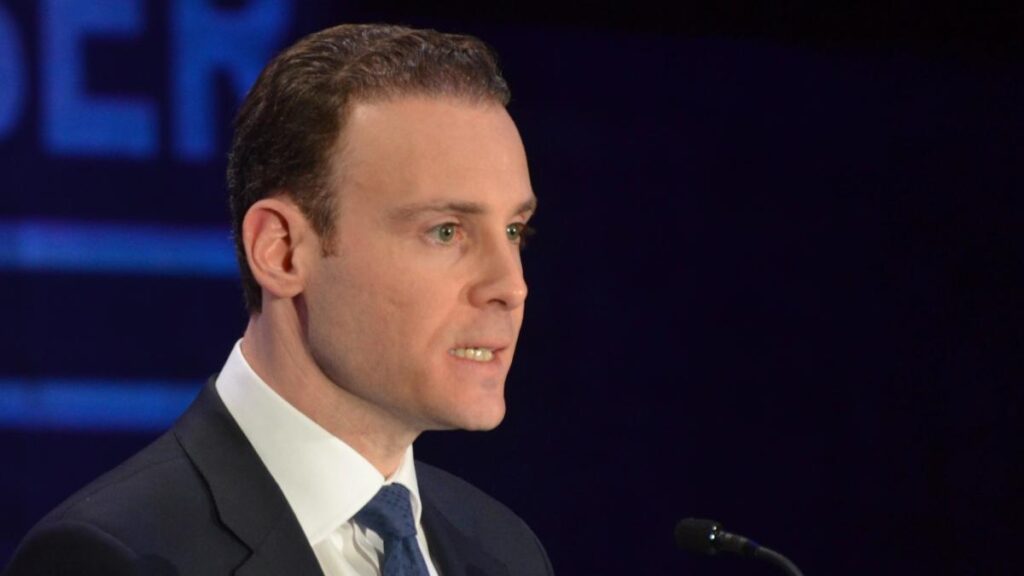
Chairman Mike Selig’s U.S. Commodity Futures Trading Commission has opened its regulatory arms to several modern financial technology innovations, encompassing digital assets, prediction markets, and artificial intelligence during a forum held on Wednesday.
Selig noted that the combination of superintelligence, cryptocurrency, and contemporary financial infrastructure has the potential to completely reshape financial markets, expand entry to sophisticated financial tools, help corporations handle risk with greater accuracy, and generate entirely fresh categories of economic activity.
Attendees from the AI sector at the event seemed obligated to follow President Donald Trump’s directive to call machine intelligence “super intelligence” or SI, a convention adopted by the panelists even though their own enterprises and social feeds still use the conventional terminology outside government offices. Selig remarked that the word “artificial” should be abandoned because it fails to accurately portray the technology.
He stated that it is just as genuine as the printing press, the steam engine, and the internet, adding that much like those generational technologies that came before it, superintelligence is set to transform financial markets by advancing a decades-long progression toward increasingly autonomous trading architectures.
Speaking from the standpoint of a derivatives market regulator, he mentioned that agency personnel are already utilizing AI heavily to monitor those markets, yet he raised important unresolved concerns regarding how regulators will manage the influx of software agents participating in trade.
He asked whether the creator of an SI agent that discovers trading opportunities and executes trades on behalf of a user would become subject to registration, and who would bear liability if that agent malfunctioned.
Additionally, the regulator could face difficulties in determining the identities behind non-human trading participants.
He questioned how regulators can ascertain whom an agent or collection of agents is representing, and whether a new form of identification like know-your-customer, know-your-agent, or KYA is necessary.
Selig suggested that the cryptocurrency sector could serve as a template for this endeavor.
He noted that the CFTC benefits from previously navigating similar challenges within digital asset markets, explaining that software creators and entrepreneurs spent years facing uncertainty over whether publishing code or building user interfaces would trigger regulatory mandates meant for conventional financial intermediaries, while his administration has worked to bring greater clarity to these issues.
The chairman presented a vision of the novel environment he envisions:
He stated that imagining a refrigerator autonomously purchasing grocery items using funds earned from launching a memecoin or staking ether is no longer science fiction, and emphasized the need to carefully consider how to regulate sensibly in the era of superintelligence.
The opening panelist, Architect CEO and AI derivatives exchange head Brett Harrison, explained that consumer-grade tools like Claude, ChatGPT, and Gemini grant individuals the capability to take unstructured information, such as news reports, and parse it to execute a trading choice.
Harrison, who previously served as president of FTX’s U.S. division before that exchange collapsed amid a global fraud scandal, pointed out that the technology enables major corporations to scale their analyses exponentially while lowering barriers to entry for smaller businesses.
He observed that with SI providing coding tools to build market-access algorithms, ingest data, and generate fair-value signals, a much larger proportion of market players—from retail investors to institutions—are now employing these black-box algorithms to trade assets like derivatives.
The CFTC is hosting multiple roundtables addressing emerging trends, announcing on Wednesday that another gathering on round-the-clock trading will take place soon. Its sister agency, the Securities and Exchange Commission, conducted a comparable roundtable on the subject last month, whereas the CFTC event is scheduled for December 15.
Originally published at https://www.coindesk.com/policy/2026/10/28/cftc-chief-poses-questions-about-policing-ai-but-calls-it-a-road-to-autonomous-trading.