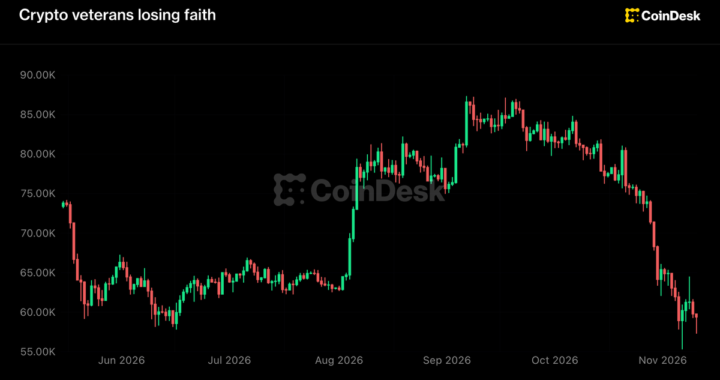
Bitcoin (BTC) remained stable above $75,000 on Friday while a sell-off hitting American technology equities extended into Asian markets.
Key points:
- Bitcoin stabilized following a dip of up to 6.6% on Thursday, landing at $75,109 on Bitstamp.
- South Korea’s KOSPI triggered trading suspensions after plunging over 8% right after Friday’s opening bell. The administration revealed a three-month suspension of margin-loan collateral requirements for brokerages starting Monday.
- Market commentary pointed to anxiety over stricter US artificial intelligence regulations following Democratic victories in the elections. Furthermore, the Philadelphia Semiconductor Index dropped 12.2% on Thursday.
South Korea Relaxes Collateral Mandates While KOSPI Dips 6%
TradingView metrics indicated that BTC/USD traded close to its 50-week simple moving average (SMA), resting at $75,733.
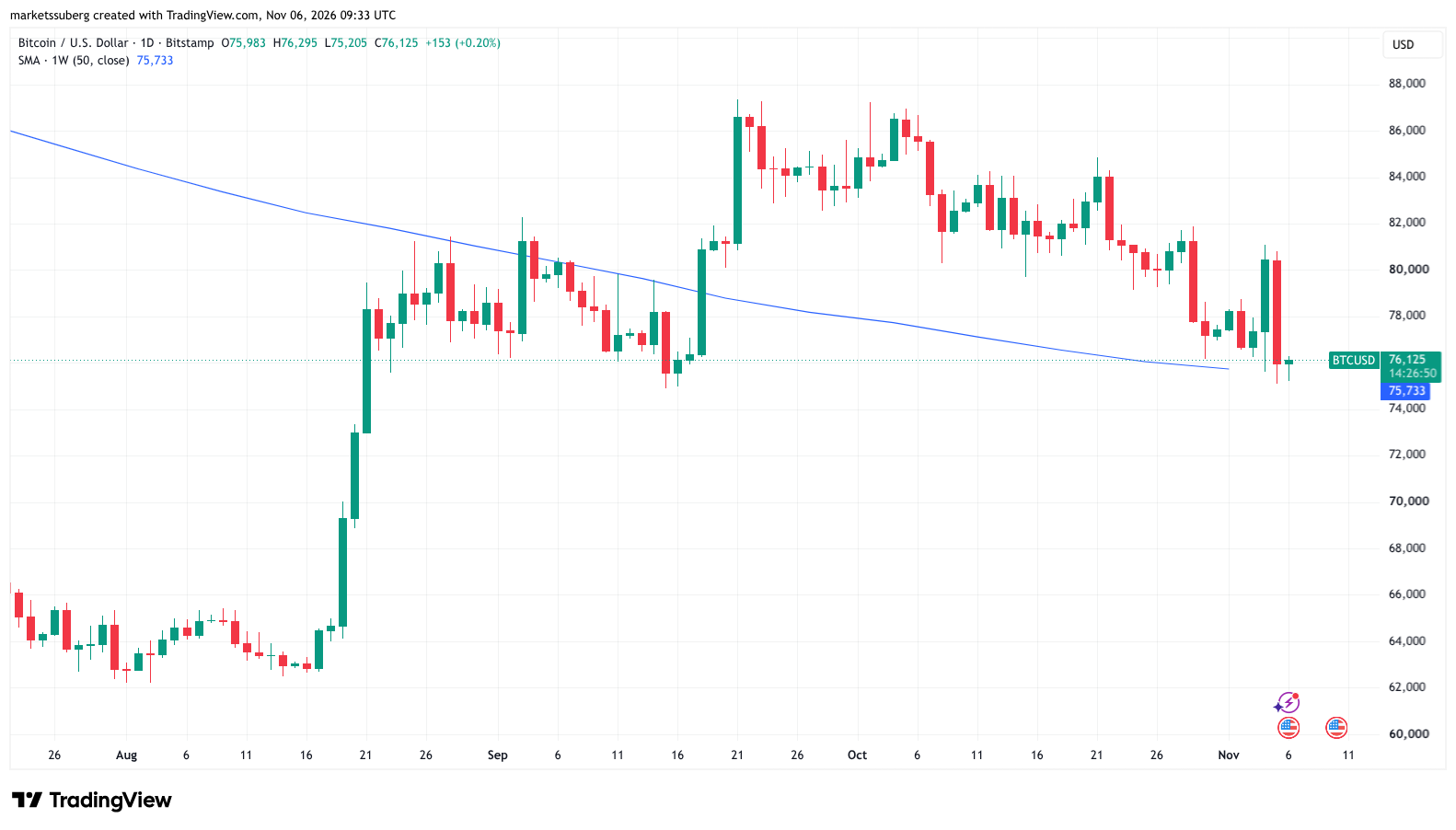
BTC/USD one-day chart with 50-week SMA. Source: Cointelegraph/TradingView
The cryptocurrency pair declined as much as 6.6% on Thursday as US equities experienced continuous selling pressure throughout the Wall Street trading hours. Both the S&P 500 and the tech-heavy Nasdaq Composite finished the session down by 4.4% and 5.5% respectively.
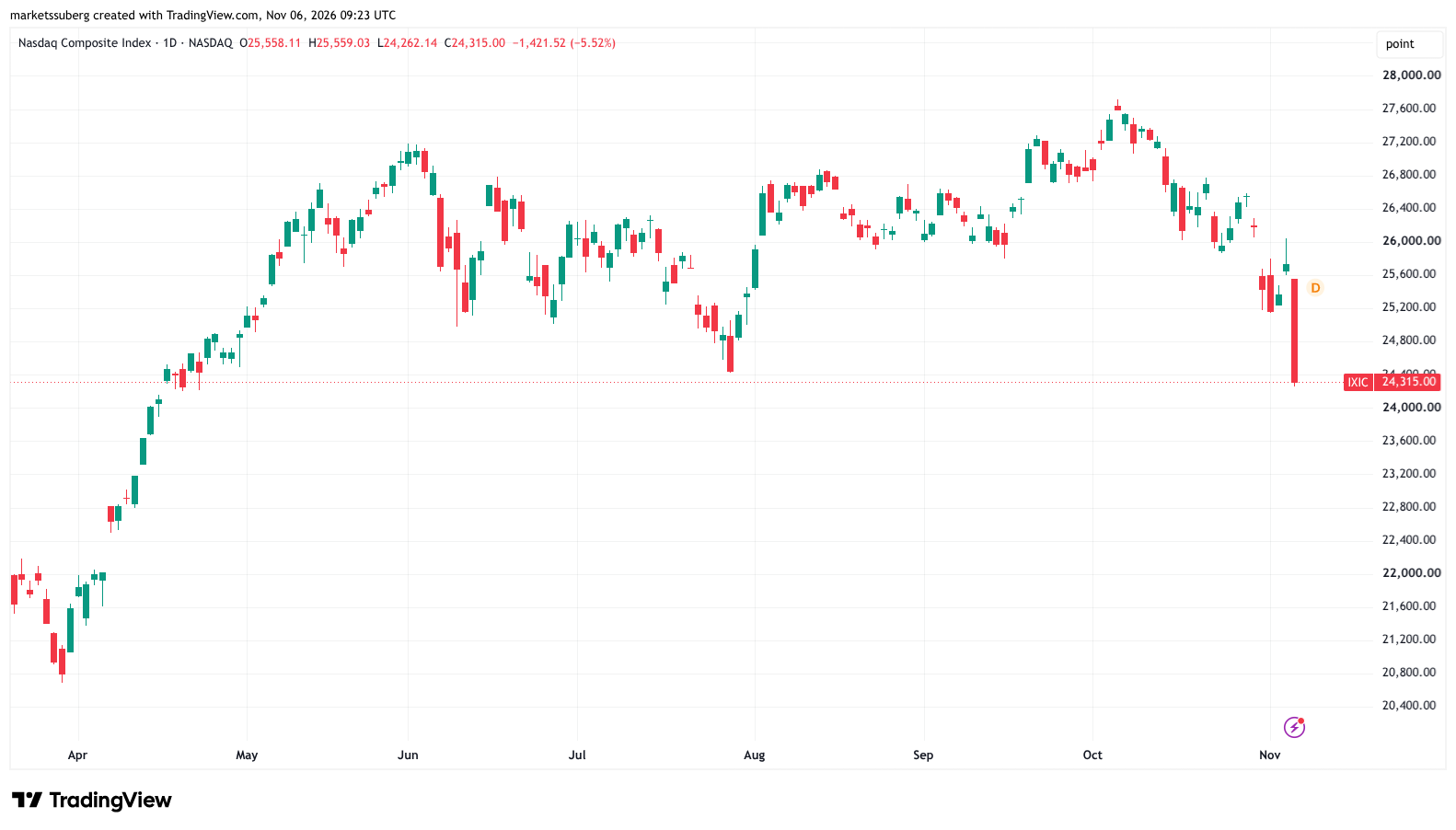
Nasdaq Composite Index one-day chart. Source: Cointelegraph/TradingView
During Friday trading, Asian equities prolonged the downward movement. The KOSPI Composite Index in South Korea plummeted over 8% shortly following the open, initiating a circuit breaker that paused transactions for twenty minutes. The index later reduced its losses to conclude 6% down at 5,059.69 points, marking its weakest close since March 31.
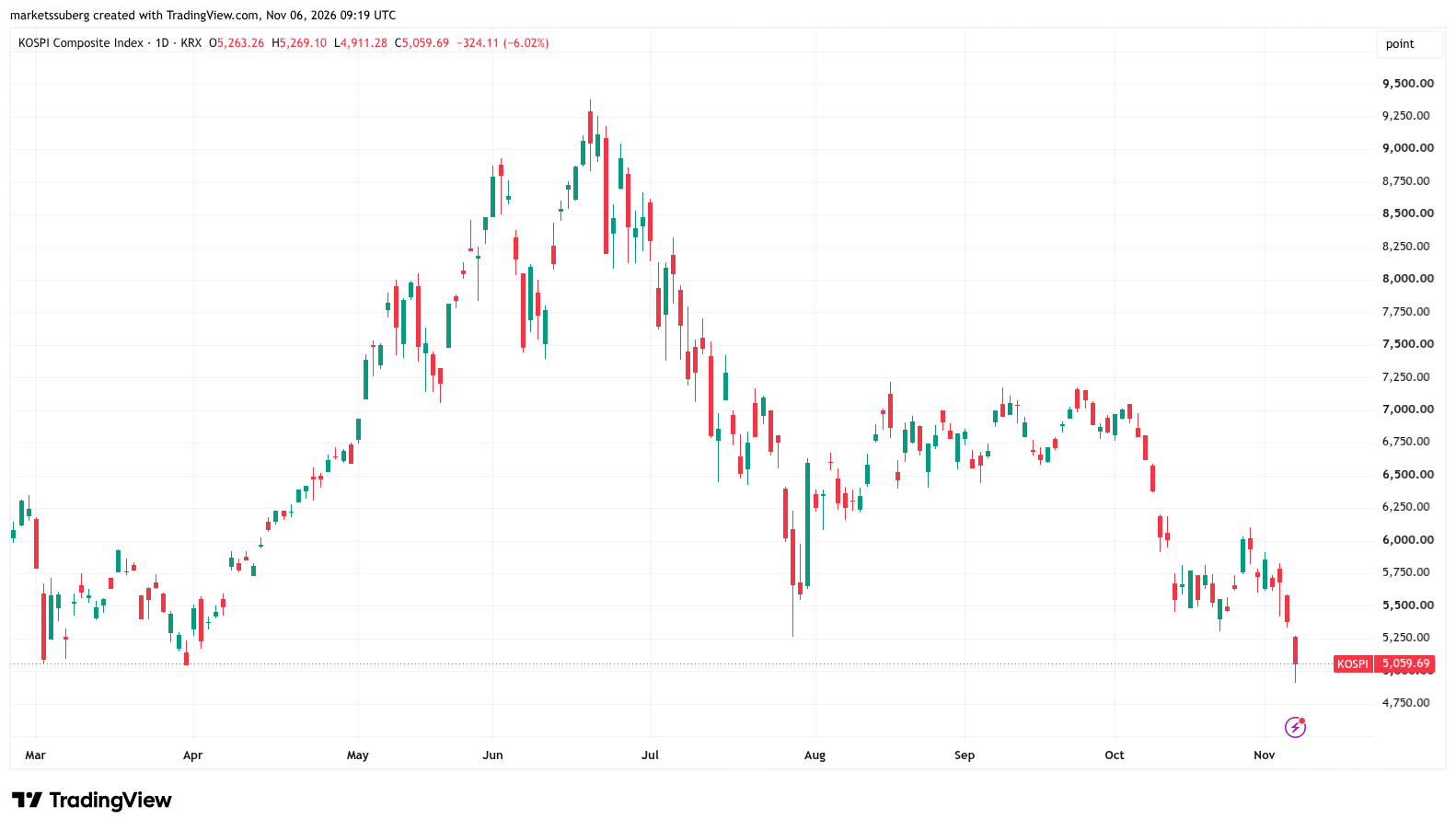
KOSPI one-day chart. Source: Cointelegraph/TradingView
In an emergency gathering, South Korea’s First Vice Minister of Economy and Finance and Finance Minister Lee Hyoung-il unveiled strategies aimed at curbing forced liquidations.
Financial institutions will receive a waiver from the mandate requiring a 140% collateral threshold on margin credit lasting three months starting Monday, domestic news outlets indicated. Officials stated they would formulate additional defenses should market fluctuations escalate.
“We view with great seriousness the widening turbulence across international stock exchanges subsequent to the United States midterm elections,” Chosun quoted an anonymous official.
“Still, the local market has reacted excessively to external catalysts.”
Analysts Label US Stock Decline “More Technical Than Fundamental”
Market observers tied Thursday’s Wall Street drop to anxieties regarding intensified artificial intelligence oversight after Democrats secured control of the House and Senate. These worries added to
existing market concernsregarding corporate capital expenditures within the industry.
Related: Bitcoin, Ether ETFs post $530M outflows as election gains evaporate
Highlighting a social media post by Democratic Representative Yassamin Ansari urging a “freeze on advanced AI progress,” research publication The Kobeissi Letter suggested that a complete US prohibition on artificial intelligence remains improbable.
“From our perspective, an AI ban will not occur inside the US (with near-absolute certainty). Such a prohibition, assuming it could even be enforced, would amount to the US handing over its leadership in the worldwide AI competition to China. That will not happen,” the publication stated via an online post.
“We maintain that today’s contraction was driven more by technical mechanics than underlying fundamentals.”
Kobeissi emphasized that Thursday’s drop was heavily concentrated within the tech sector, given that the S&P 500 slipped roughly 2.5% when excluding that industry. The Philadelphia Semiconductor Index, following thirty semiconductor enterprises, concluded Thursday down 12.2%.
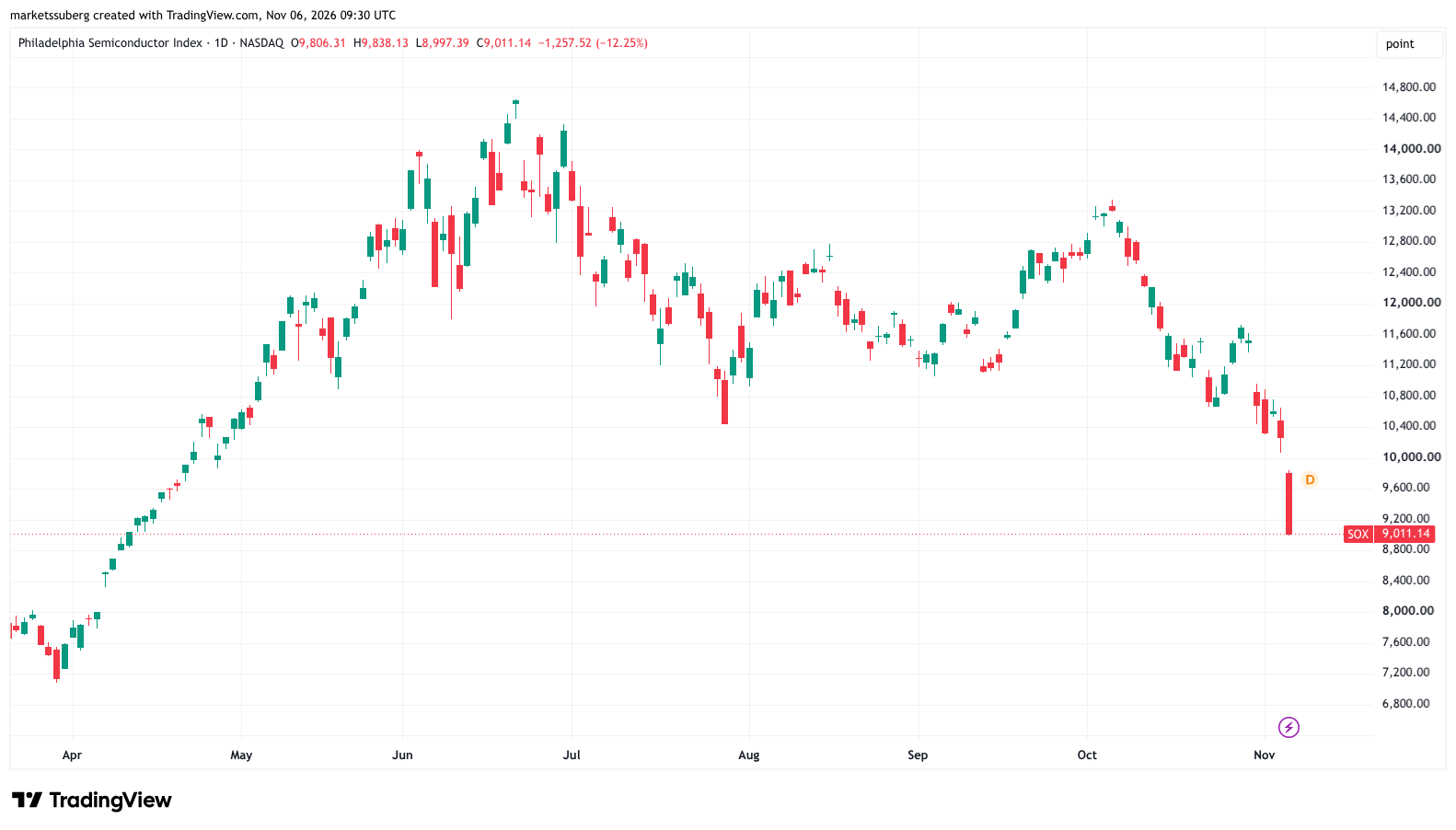
Philadelphia Semiconductor Index one-day chart. Source: Cointelegraph/TradingView
Economist Mohamed El-Erian similarly advocated for consensus regarding artificial intelligence regulation, noting that legislators must establish common ground on AI policies.
“America’s laissez-faire strategy toward artificial intelligence corresponds with the innovation’s productivity capabilities and strategic defense requirements. Yet, it has fallen short regarding safety standards, distribution, and bringing the public along,” he noted inside a Substack publication.
El-Erian pointed out that the public pushback stems from “legitimate worries,” information breakdowns, and behavioral influences.
Cointelegraph previously documented that Democratic midterm majorities under Republican administrations have historically preceded robust equity performance. Meanwhile, the statistical correlation between Bitcoin and the S&P 500 has strengthened over recent months.
Originally published at https://cointelegraph.com/markets/bitcoin-holds-ai-regulation-fears-kospi-halted?utm_source=rss_feed&utm_medium=rss&utm_campaign=rss_partner_inbound.