
British banking institutions have drawn a firm boundary regarding the degree of control artificial intelligence is permitted to exercise over client funds.
Four major banking entities, counting HSBC, Barclays, Lloyds, NatWest, and Nationwide, have taken steps to block or limit external AI agents from gaining entry to user accounts, particularly when those systems can execute transactions independently of the client.
While there is currently no proof of AI agents breaching UK bank accounts, large financial institutions remain anxious about potential financial mismanagement by automated systems and the question of ultimate liability.
Financial institutions may additionally harbor other unspoken worries.
Edgars Nemše, CEO of GenLayer Foundation, an AI-focused blockchain infrastructure initiative, notes that standard banking operations such as settling bills, transferring capital, and locating superior interest rates might all be delegated to agents.
Regrettably for traditional banks, this implies that such agents can effortlessly direct consumers to better financial offers across the web the moment they become public.
“For ordinary accounts, that eliminates switching friction and elevates market competition,” Nemše informed Magazine.
The risk of agentic bank runs
This dynamic could imperil far more than customer loyalty alone. Back in September, Apollo chief economist Torsten Slok warned regarding a potential “agentic bank run.”
If masses of AI agents simultaneously shift personal wealth from low-yield checking portfolios into high-return alternatives en masse, it would strip lenders of the inexpensive deposits required for issuing loans. Furthermore, the velocity and magnitude “would pose a challenge to the entire financial network.”
Related: Coinbase CEO touts agentic finance as Base tops 100M AI payments
JPMorgan Chase chief executive Jamie Dimon has similarly cautioned against granting outside agents unconstrained access to customer accounts. “You do not want rogue agents,” he stated during an October earnings webcast.
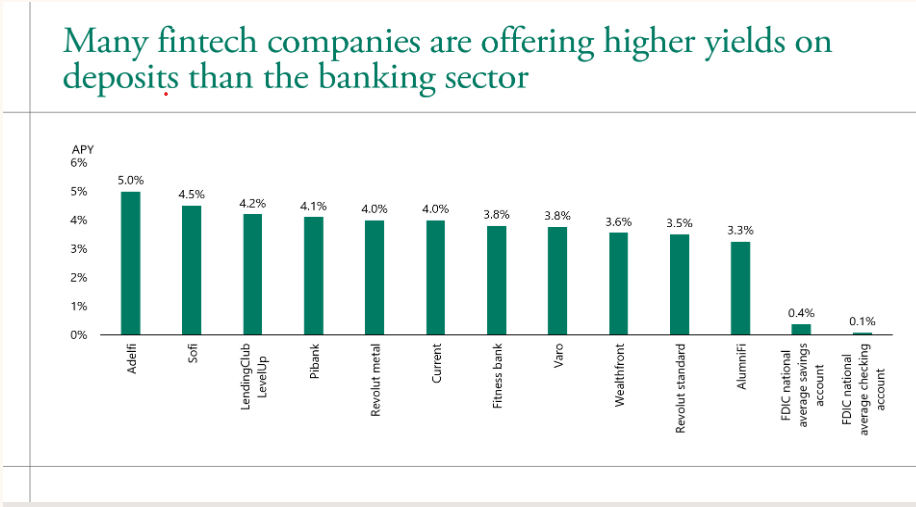
Is an agentic bank run coming? Source: Apollo
Despite near-term efforts to stall this shift, autonomous AI agents appear increasingly poised to transform banking over the coming years.
Neeraj Makin, group head of strategy analytics at Emirates NBD, forecasts that agents will establish 24-hour banking and nearly instantaneous settlements as the standard by 2036.
“Forget waiting an entire day for a transfer or three days for cross-border transactions… all of that will happen in seconds, atomically,” he observes, with artificial intelligence driving most monetary decisions.
Banks risk losing the everyday customer interface
Ferdinand Dabitz, CEO of Augustus, an AI-native financial services and payments startup, anticipates a parallel transformation in how users interact with monetary institutions.
“Every retail consumer will operate tens of agents, and every enterprise will deploy hundreds of agents communicating with their bank,” Dabitz notes.
A human touchpoint will nonetheless stay crucial for supervising those agents and providing a foundation of trust, “specifically within commercial banking,” he remarks.
Related: Agents can trade 24/7 — but Yat Siu warns you could lose access at any time
The Emirates NBD developer experience unit contended in July that financial institutions ought to construct proprietary frameworks for agentic AI rather than permitting disparate divisions to design agents absent unified governance.
Its Leap architecture is tailored to regulate how agents authenticate with core banking infrastructure, access protected data, and execute operations via integrated audit trails, oversight tools, and human checks.
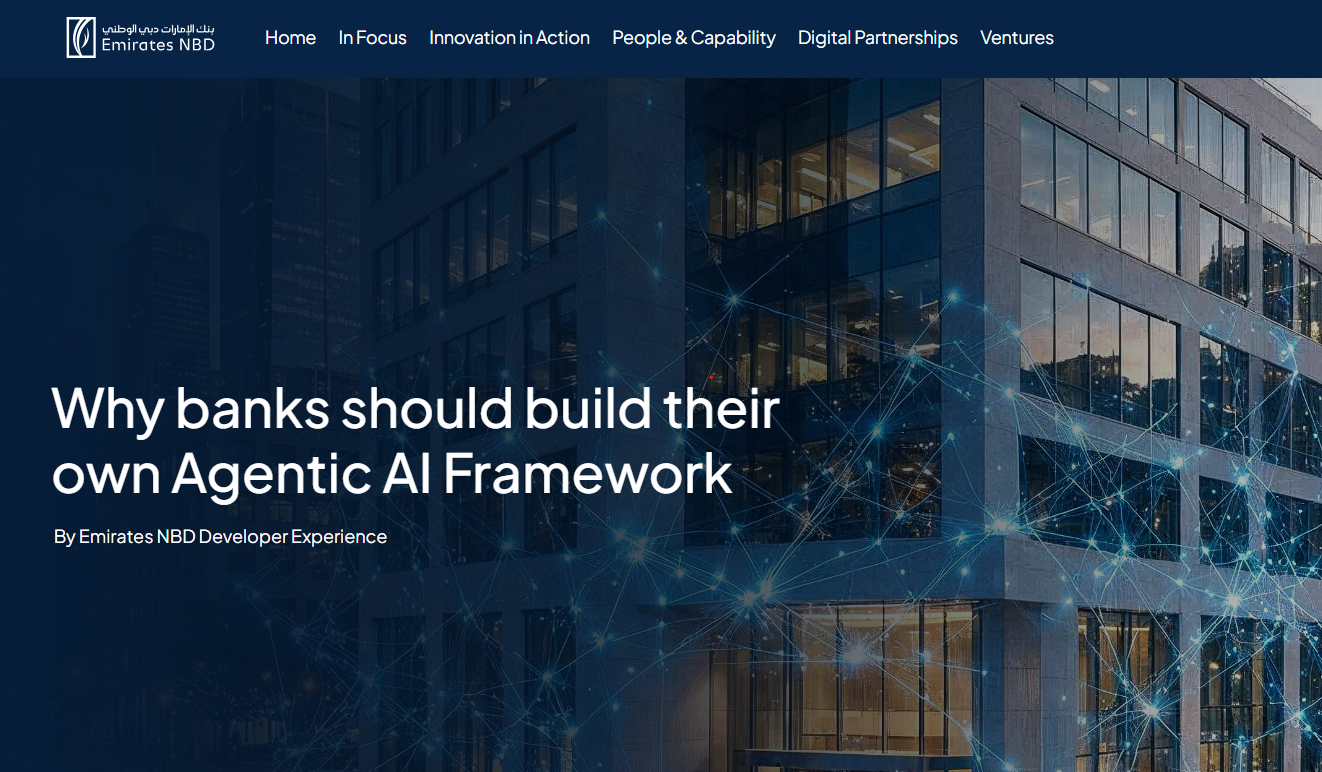
Emirates NBD says banks should build their own agentic frameworks. Source: Emirates NBD
Yet, significant anxieties persist concerning the reliability of autonomous agents executing major financial choices independently.
A recent inquiry by the Bank of England and the FCA revealed that while 80% of polled organizations had implemented AI agents, merely 2% utilized agents possessing wide-ranging autonomy, citing data protection, third-party reliance, and hallucinations as primary worries.
From paying bills to making financial decisions
The transition toward artificial intelligence will likely unfold gradually; “it is going to happen in phases,” explains Nemše.
“Presently, I employ an agent to assess my personal and corporate accounts monthly and queue transactions for my authorization. The subsequent phase is logical: once confidence is established, you allow it to spend minor sums without prompting.”
Regular utility payments, subscriptions, and covering the operational overhead of the agent itself are predicted to rank among the earliest delegated responsibilities.
Dabitz suggests that corporate treasury administration could represent another domain handed over to agents, though he emphasizes that banks must actively participate in creating these early tools.
Who pays when an agent gets it wrong?
While users may relish the benefits of automated personal finance, determining who bears responsibility when an agent errs remains a challenge.
Nemše stresses that banks must provide “delegated access as a standard capability” to discourage clients from sharing their credentials with third-party software. Consumers could establish permissions and monetary caps, allowing agents to process low-value transactions autonomously while requiring validation for larger amounts.
Nonetheless, legacy dispute resolution systems may struggle if bots begin executing thousands of transfers on behalf of every user. “Even a minor error rate translates into massive dispute volumes,” he observes. “Current remediation workflows were designed for humans handling a handful of payments weekly. That infrastructure still needs to be engineered.”
The US Office of the Comptroller of the Currency released a supervisory framework on November 4 addressing bank deployments of what it terms “super intelligence,” which encompasses agentic networks.
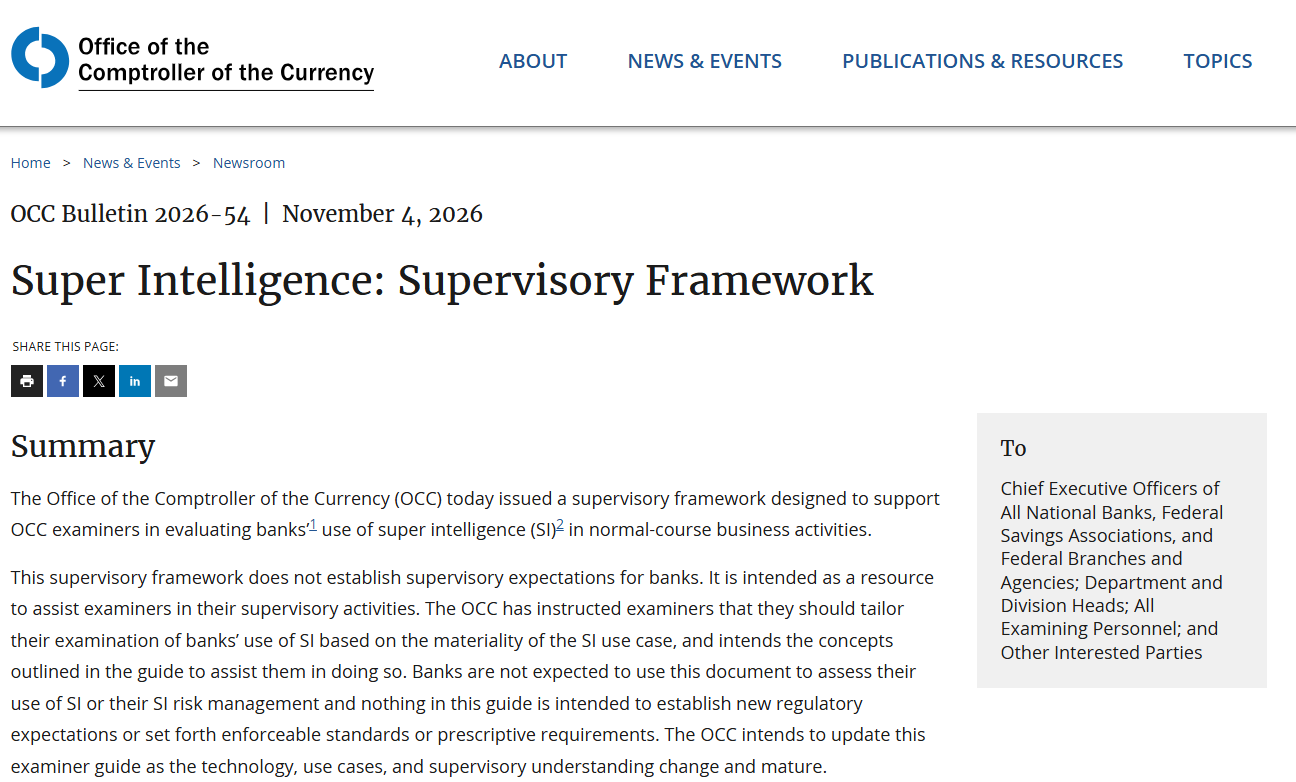
OCC’s Super Intelligence: Supervisory Framework. Source: OCC
The guidelines are intended to assist bank auditors in evaluating institutional adoption of these technologies without imposing new legally binding mandates. Regulatory scrutiny should correspond with the potential fallout of an agentic action, its level of self-governance, and the degree of human oversight.
Accordingly, an AI assistant helping a bank staffer draft a document introduces a different risk profile compared to a system cleared to move client funds without manual consent, positioning institutions that master this balance to emerge victorious.
Magazine: Bitcoin’s ‘best buying opportunity ever’ has arrived: Mark Moss
Originally published at https://cointelegraph.com/magazine/banks-are-banning-ai-agents-over-security-and-competition-concerns?utm_source=rss_feed&utm_medium=rss&utm_campaign=rss_partner_inbound.