November 13, 2026, at 6:30 p.m. EST
5 min read
Summary
- Paraguay’s state-owned electric company intends to let all specialized crypto energy agreements expire on December 31, 2027, as local electricity consumption rises and artificial intelligence firms compete for affordable hydroelectric power.
- Utility engineers have suggested limiting the combined power allocations for crypto mining, artificial intelligence, and data centers to 700 megawatts while auctioning energy at higher tariffs, putting miners currently controlling approximately 944 megawatts at risk.
- An enterprise connected to the proposed $12 billion Iguazú AI City has locked in a 15-year power agreement, whereas HIVE Digital Technologies confronts uncertainty regarding its Paraguayan facilities that account for nearly 77 percent of its active mining capacity.
For years, the steady hum of industrial cooling systems has resonated throughout this subtropical region of eastern Paraguay, where arrays of dedicated computers generate Bitcoin utilizing some of the most inexpensive electricity on the planet.
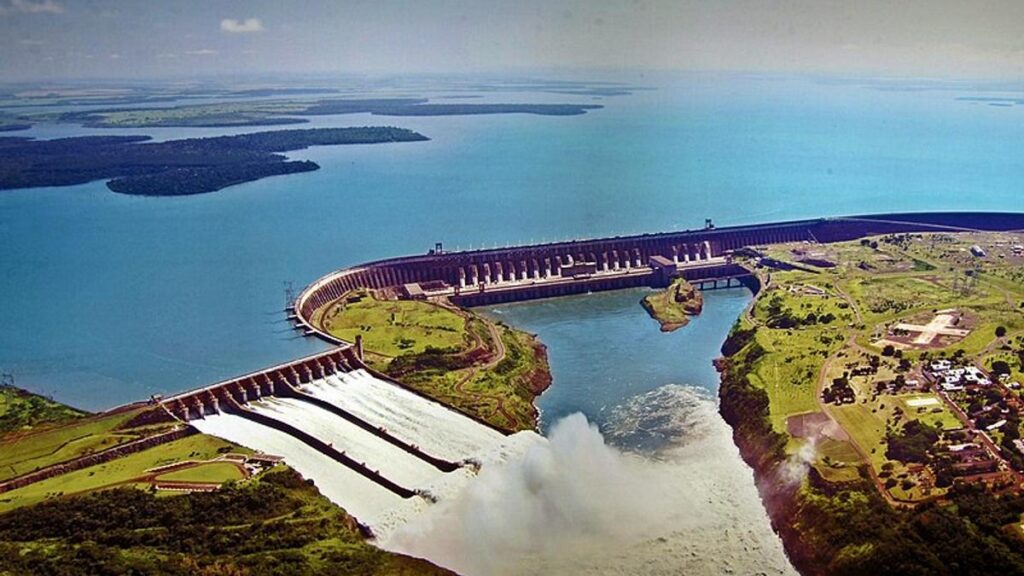
Attracted by surplus hydroelectric energy from the 14,000-megawatt Itaipu Dam situated on the Brazilian border, international crypto enterprises secured advantageous agreements with Paraguay’s state-run utility, converting excess power into roughly $350 million in yearly public revenue and transforming the nation into the world’s fourth-biggest Bitcoin mining center.
Nevertheless, that arrangement is currently breaking down. Paraguay’s national electricity provider, ANDE, intends to allow every specialized crypto agreement to expire on December 31, 2027—a deadline that officials have deemed absolute—as local energy consumption increases and a new, even more power-hungry rival emerges: Artificial intelligence.
Furthermore, the previously abundant electricity provided nearly 88% of the nation’s energy in 2025, and higher volumes will soon be demanded domestically. ANDE’s transmission master plan estimates that national demand will expand by nearly 8% annually through 2027 and approximately 5% annually thereafter.
Electricity represents the primary expense for miners, who receive newly minted bitcoin for operating specialized hardware continuously. Consequently, mining enterprises have historically searched for nations featuring inexpensive or surplus power alongside a favorable climate to maintain low machine temperatures.
Locations like Iceland and Scandinavia emerged as early centers, yet in subtropical Paraguay, the electricity was inexpensive enough to absorb the expense of cooling as well.
As of April, ANDE had approximately 944 megawatts contracted to miners, representing roughly 13% of Paraguay’s Itaipu allocation, according to statistics provided to the local publication ABC Color by the utility’s then-president Félix Sosa. Four businesses, namely Cademot, Zuns, Muiden, and W3X, accounted for 730 megawatts of that total.
In exchange, these miners pay ANDE a fixed rate of $44 per megawatt-hour, which is below 5 U.S. cents per kilowatt-hour, without annual adjustments. This accumulates rapidly, with ANDE forecasting $350 million from crypto miners in 2026, up from $295 million in 2025 and about $100 million in 2024. Miners operating here generated about 4% of worldwide mining power during the second quarter, establishing the nation as the fourth-largest mining jurisdiction, according to Hashrate Index.
Even so, ANDE is now discarding the sector that provides such substantial revenue, while three factions contend for its replacement.
The miner with the most at stake
HIVE Digital Technologies, the Nasdaq- and Toronto-listed mining firm, faces the greatest exposure regarding the expiration date. Its annual filing for the period ending March 31 indicates that both of its Paraguayan power contracts—comprising a 200-megawatt facility in Yguazú and a 100-megawatt facility in Valenzuela—extend through December 31, 2027.
The regulatory filing noted that “continued operation will rely on the Company’s ability to renegotiate this agreement.”
Paraguay accommodates the vast majority of HIVE’s mining capacity. Roughly 297 out of its 385 active megawatts were located across the two Paraguayan sites as of April 30, representing approximately 77%.
Gabriel Lamas, HIVE’s operations president in Paraguay, has publicly addressed more ambitious strategies. He stated in September that the enterprise seeks a minimum 10-year contract extension, could scale from 300 to 1,000 megawatts within 18 months, and anticipates paying ANDE $140 million during the current year.
When questioned concerning those figures, HIVE declined to address its negotiations with ANDE.
“We value that partnership, and out of respect for it, we don’t comment on ongoing commercial discussions,” Lamas informed CoinDesk this week. The organization likewise withheld its intentions for the Paraguayan fleet should the contracts expire, characterizing that scenario as “a hypothetical.”
Instead, he referenced HIVE’s previously announced initiatives—a 100-megawatt expansion in Yguazú that would elevate its local capacity to 400 megawatts, falling well short of the 1,000 megawatts he outlined in September.
HIVE also refrained from verifying the $140 million amount, explaining that it does not segregate electricity expenses by country.
The implications extend beyond cryptocurrency mining. HIVE leverages revenue generated from mining to finance its proprietary AI venture, BUZZ HPC, which administers a cloud service in the capital city of Asunción.
The engineers’ price
Engineers within ANDE advocate for downsizing and repricing the sector. In July, the Unión de Ingenieros de la ANDE, an association comprising utility engineers, recommended capping data centers, AI operations, and crypto mining at a combined 700 megawatts starting January 1, 2028. That represents roughly 10% of installed capacity.
Under this proposal, energy would be awarded to the highest bidders via an auction accessible to established miners and incoming AI enterprises alike, establishing a baseline price of $56 per megawatt-hour across three- to five-year agreements. This baseline incorporates an additional $12 over the current $44 rate to compensate for power ANDE presently supplies to Brazil.
Ubaldo Fernández, a representative for the coalition, described a 2,000-megawatt load applied to an electrical grid totaling approximately 5,000 megawatts as “una carga disruptiva,” meaning a disruptive load. He noted that domestic electricity consumption climbed roughly 50% over three years without a corresponding rise in economic expansion.
On October 21, the engineers escalated their efforts by petitioning ANDE president Miguel Báez for a sealed-bid procurement process. In their illustrative model, bids clear at $60, which across 700 megawatts would yield approximately $98 million more annually for ANDE than current miner remittances.
For HIVE, this recommendation entails a substantial financial burden. Even based on the engineers’ baseline floor, HIVE’s projected $140 million utility expenditure for this year would elevate to approximately $178 million, representing an extra $38 million annually prior to deploying any additional hardware, according to CoinDesk calculations. Concurrently, HIVE’s planned 400 megawatts in Paraguay alone would consume over half of the 700-megawatt auction pool intended to be distributed among every bidding miner and AI purchaser.
HIVE chose not to speculate regarding policy recommendations that have not yet been implemented.
“We support a transparent, durable framework for large power users that benefits Paraguay over the long term,” Lamas remarked.
The AI buyer with a contract
One day subsequent to the engineers’ correspondence, Araico Corporation, the sponsor behind an anticipated $12 billion artificial intelligence campus designated Iguazú AI City, secured its energy provision. The facility is located in Yguazú, the municipality hosting HIVE’s largest installation.
On October 22, ANDE concluded a 15-year agreement to deliver up to 286 megawatts to Kuntur, a Paraguayan enterprise associated with Araico. Delivery commences at 6 megawatts on December 1 and expands to 146 megawatts by April 2028, occurring three months after the expiration of the miners’ contracts.
The majority of that energy incurs an average cost of $48.91 per megawatt-hour, subject to annual increases tied to U.S. inflation of at least 2.5%. Araico director Alejandro Zuccolillo had informed ABC Color on September 30 that the corporation would remit $45 and that formalizing the agreement was “imminent.”
That final tariff surpasses the miners’ flat $44 rate by approximately $5, remains roughly $7 below the engineers’ July baseline, and falls considerably short of the $70 proposed by a competing bidder, Imperium. Founders Fund, co-established by Peter Thiel, acts as a primary backer for Araico, while U.S. AI cloud provider Crusoe announced last week that it will operate the computing infrastructure of the campus.
ANDE, Araico, and Zuccolillo did not reply to multiple inquiries for comment submitted by CoinDesk.
Meanwhile, ANDE has publicly characterized the 2027 deadline as “improrrogable,” indicating it cannot be prolonged, and Báez has disclosed pending applications for an additional 6,300 megawatts of capacity, an amount nearly equivalent to Paraguay’s entire Itaipu share.
Even prior to the fulfillment of those AI demands, the mathematical margins remain constrained. Miners presently control approximately 944 megawatts—roughly 240 megawatts in excess of the engineers’ total ceiling established for mining and AI combined—while Kuntur’s contract contributes another 146 megawatts in April 2028.
Should the proposed ceiling be enacted and Kuntur’s allocation applied against it, miners would be left competing for less than 560 megawatts, amounting to under three-fifths of their current holdings.
Originally published at https://www.coindesk.com/tech/2026/11/13/bitcoin-miners-pay-paraguay-usd350-million-a-year-but-ai-is-pushing-them-out.


