Bitcoin BTC $81,006.71 is past the halfway mark of its historically worst-performing month, yet September’s typical sell-off has remained relatively mild thus far, despite a recent wave of macroeconomic and policy obstacles.
Analysts indicate that this resilience points to underlying bullish momentum.
Following a 25% surge in August that brought bitcoin to approximately $81,000, market participants anticipated a sharp giveback of those gains because September has historically averaged a roughly 3% decline going back to 2013.
Instead, bitcoin has slipped by only 1.5% this month. With less than two weeks left, it retains a quarterly gain of roughly 32%, keeping it on track for its first positive quarterly finish since the third quarter of 2025.
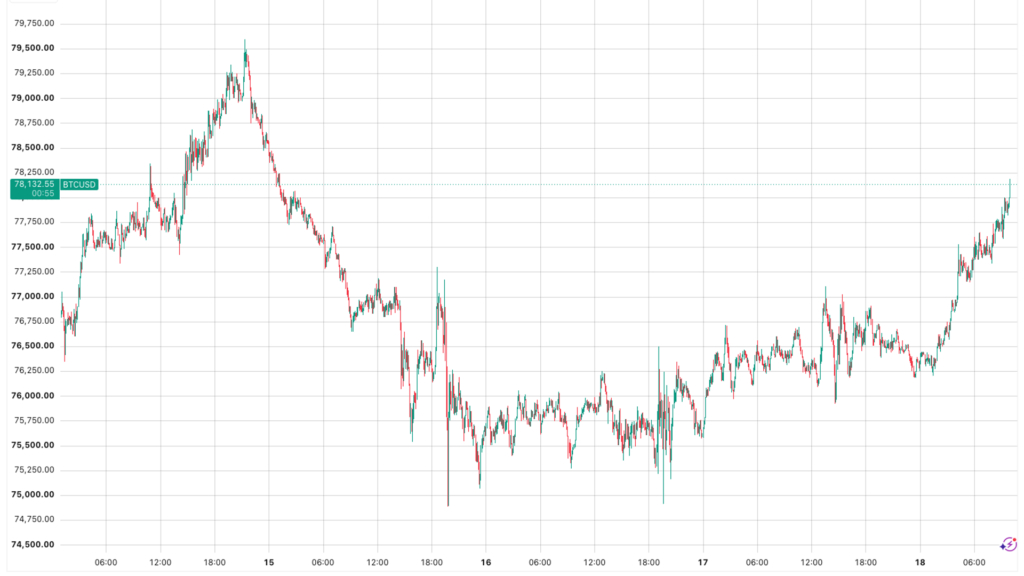
At the time of writing, bitcoin changes hands at $78,000, sitting close to its valuation prior to Wednesday’s Federal Reserve rate hike, which was widely viewed as a negative catalyst for crypto and alternative risk assets.
That is not the entire story. This week offered multiple triggers for a market downturn, yet prices held firm.
On Tuesday, the Clarity Act failed to muster the 60 votes necessary to progress through the Senate, capturing a mere 49 affirmative votes. Bitcoin briefly dipped below $74,887 on Tuesday before swiftly recovering. This relatively contained correction implied traders had already priced in a significant portion of the legislative defeat.
“What stands out to me is that Bitcoin has hardly budged at all in response to two objectively bad pieces of news. A 25-basis-point hike and the CLARITY Act failing to pass are both headlines that, in a different market environment, would have sent price meaningfully lower. Instead, we got basically nothing,” remarked Mitchell Askew, head of Blockware Intelligence at Blockware, via email.
Seller fatigue
She explained that when unfavorable news ceases to drive prices downward, it serves as an indicator of seller exhaustion.
“Anybody who was going to sell bitcoin based on events like these has already sold. They no longer have coins to sell. That is an incredibly positive sign for the medium to long term, and it is exactly what you tend to see in the later stages of a bottoming process,” she highlighted.
Energy markets compounded the downward pressure early in the week when West Texas Intermediate crude breached $106 per barrel on Tuesday, hitting a five-month peak amid ongoing Middle Eastern geopolitical friction.
As if that were not enough, the Dollar Index, tracking the greenback against a basket of prominent global currencies, crossed the 100 threshold to touch a multi-week high of over a month. Persistent dollar strength can tighten overall financial conditions and pressure risk-on assets, including bitcoin. Furthermore, the Bank of Japan elevated its primary borrowing rate to a 31-year peak.
Commenting on bitcoin’s ability to withstand these variables, Sygnum Bank noted that rising interest rates and bond yields are not universally bearish.
“It’s not a one-way street. You see yields rising, and at the same time Bitcoin and gold outperforming. If rising rates are an indication of debasement risk and sovereign counterparty risk, then for store of value assets that is actually a positive driver,” explained Fabian Dori, chief investment officer at Sygnum, in an email.
For bitcoin, the key takeaway is its ability to hold above $77,000 despite legislative setbacks, climbing oil prices, tighter monetary policies, and a firmer dollar. Put differently, the path of least resistance continues to slant upward.
“If the market has been this resilient when the news flow has been challenging, even a modest improvement in macro, geopolitical or regulatory conditions could provide the catalyst for the next major leg higher,” stated Joel Kruger, markets strategist at LMAX Group.
The regulatory horizon continues to brighten following the Senate’s rejection of the Clarity Act. On Thursday, the digital asset sector welcomed a more encouraging regulatory update when the Securities and Exchange Commission announced its long-awaited innovation exemption for tokenized security platforms, permitting eligible venues to support onchain equity trading under specific conditions.
“The failure to advance the legislation delays a statutory framework, but it does not prevent the SEC and CFTC from continuing to provide guidance under existing authority, leaving an important regulatory pathway open,” Kruger pointed out.
Certain observers remain apprehensive regarding the potential for further Federal Reserve rate hikes alongside climbing Treasury yields. Markets are currently factoring in three additional quarter-point bumps through April 2027, which would push the federal funds rate into a 4.50%–4.75% bracket.
Nevertheless, as Dori emphasized, this does not automatically spell danger.
“I do not fully agree that rates need to fall in order for digital assets to outperform,” he stressed.
The sole troubling element for bulls is that seasonal trends offer little reassurance heading into the upcoming week.
Historically, bitcoin has dropped by an average of 2.5% during the 38th week of the year, managing gains on only four past occasions, according to Coinglass metrics.
Still, historical precedent does not guarantee future outcomes. Moreover, that same seasonality shifts favorably as the final quarter of the year commences. On average, bitcoin rallies 77% during Q4, based on figures from data provider CoinDesk.
Originally published at https://www.coindesk.com/markets/2026/09/18/bitcoin-weathers-september-storm-as-rate-hikes-and-clarity-act-setback-test-bulls.