On Wednesday, Circle CRCL introduced its Arc blockchain, marking its most significant expansion beyond issuing the $74 billion USDC stablecoin.
Competition is intensifying among major blockchain firms to supply the infrastructure required for transferring money and financial assets onchain.
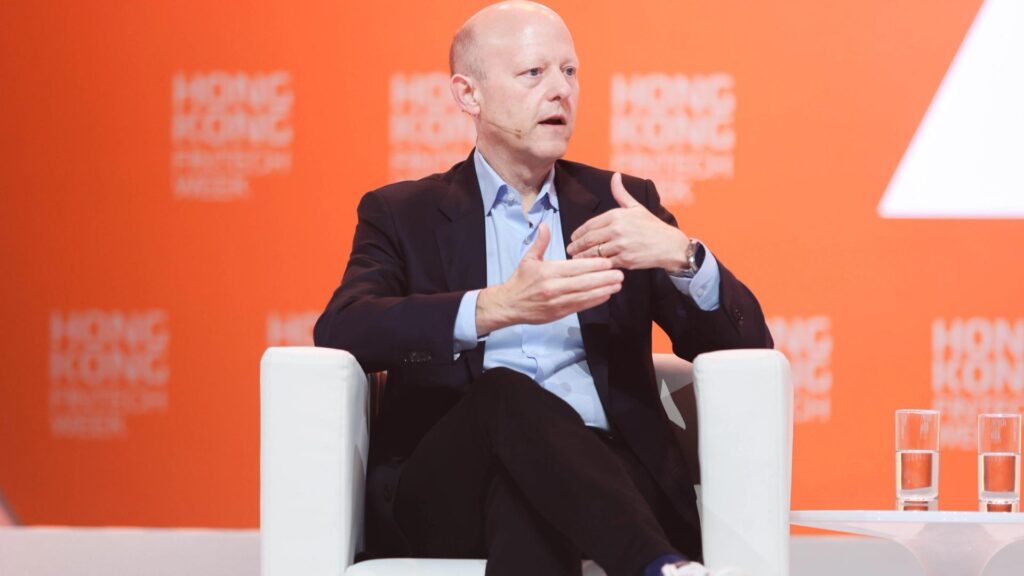
During a media briefing, Circle Chief Executive Officer Jeremy Allaire stated, “This is, I believe, the most consequential major platform launch in our history, and I think an even more consequential launch than USDC itself.”
The stablecoin industry, which serves as Circle’s primary business, faces growing rivalry as traditional banks and payment providers enter the space.
A coalition of 21 financial institutions, featuring Bank of America, Citi, and Goldman Sachs, is developing a dollar stablecoin scheduled for the first half of 2027, while the European banking consortium Qivalis is advancing a euro-pegged token. At the same time, payments giant Stripe is expanding its cryptocurrency footprint through Open Standard’s upcoming Open USD stablecoin as well as Tempo, a payments-focused blockchain developed alongside Paradigm.
Through Arc, Circle intends to compete beyond mere stablecoins. Allaire characterized the network as a versatile “economic operating system” intended for payments, tokenized financial markets, lending, trading, and eventually, automated transactions between artificial intelligence agents.
Wall Street joins Arc
Circle’s Arc launches with an extensive roster of prominent institutions extending far past traditional crypto-native enterprises.
Founding validators for Arc include BlackRock, DTCC, Intercontinental Exchange, Mastercard, Standard Chartered, and Visa, while BNY, HSBC, and State Street represent a portion of the more than 100 entities and ecosystem organizations already active on or investigating the network.
Decentralized exchanges Uniswap and Aerodrome serve as trading venues on Arc, with Aave and Morpho supplying borrowing and lending markets. Tokenized money market funds, such as Circle’s USYC and BlackRock’s BUIDL, are also scheduled to integrate into the network.
Allaire designated Arc a “canonical home for asset issuers,” allowing funds, equities, commodities, and currencies to be issued locally before transitioning to alternative blockchain networks via Circle’s cross-chain interoperability technology.
Furthermore, the Circle Payments Network is undergoing direct integration into Arc alongside StableFX, the firm’s foreign-exchange infrastructure designed for continuous 24/7 cross-border settlement.
According to Allaire, Arc was engineered specifically to address the barriers that have historically discouraged traditional financial institutions from utilizing existing public blockchains.
Circle is implementing customizable privacy controls for institutional participants needing to protect transaction details while preserving visibility for auditors and regulators.
Network transaction fees are denominated in USDC rather than an independent, volatile token, backed by sub-second transaction finality and a permissioned validator framework.
Balancing act
Allaire drew an analogy, suggesting that forcing corporations to acquire a blockchain’s native cryptocurrency just to access the network is comparable to requiring Netflix to purchase Amazon stock simply to settle an Amazon Web Services bill.
“That would be crazy,” he remarked.
Nevertheless, Arc still incorporates its own dedicated network token.
Circle confirmed the completion of the genesis block mint for the complete initial supply of 10 billion ARC tokens during the week. Allaire emphasized that these tokens remain unavailable to the public, and Circle noted that the generation event does not constitute a commitment to a public release.
The network currently operates on a proof-of-authority model, though Circle is evaluating a potential migration to proof of stake by 2027, which could assign ARC a functional role in security, governance, and network utility. Transaction fees will persistently be settled in USDC.
In May, Circle secured $222 million through a token presale based on a $3 billion network valuation, attracting participation from strategic backers including Apollo Funds, ARK Invest, BlackRock, and Bullish, the parent company of CoinDesk.
Arc introduces a novel strategic dynamic for Circle, which originally scaled USDC by distributing it widely across multiple competing networks.
Allaire likened this approach to Google managing proprietary platforms while simultaneously offering products like Gmail and YouTube on competitor ecosystems.
“We’re committed to make sure that our digital assets and our apps that we build are widely available on the most popular platforms and networks in the world,” he stated.
At the same time, Arc is positioned to serve as a fresh catalyst for corporate expansion.
Allaire labeled the network a “new business,” expressing the company’s objective for it to evolve into “one of the leading, if not the leading platform” as financial operations increasingly migrate onchain.
Originally published at https://www.coindesk.com/business/2026/09/15/circle-debuts-arc-blockchain-which-jeremy-allaire-calls-more-consequential-than-usdc.