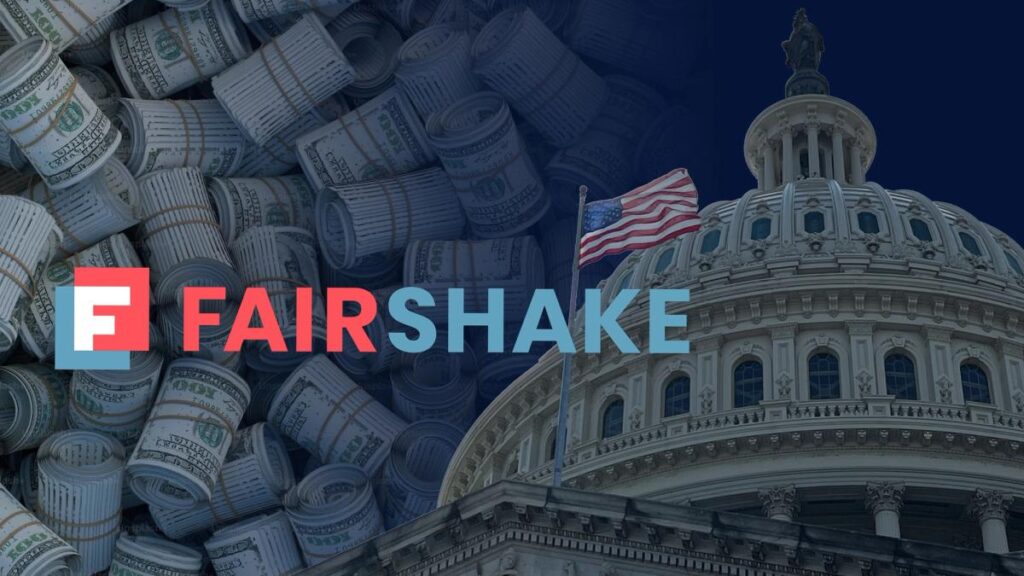
The premier political funding vehicle for the digital asset sector, the Fairshake political action committee, invested a record $56 million attempting to unseat Democratic candidate Sherrod Brown, who ultimately triumphed on Tuesday night by nearly 5%.
Among crypto-backed super PACs, Fairshake and its associated groups have acted as massive forces in legislative races, bursting onto the political scene in 2024 with a pragmatic, single-issue approach determined to spend whatever was necessary to place pro-crypto votes in Congress. The PAC noted it allocated approximately $154 million toward campaign advertisements this season to secure additional supporters on Capitol Hill, yet burned through a third of those funds trying to block Brown, despite clear indications of a strong night for Democrats.
Prior to that, the organization directed $10 million against Juliana Stratton throughout her Democratic primary, but she successfully overcame that opposition to secure her party’s nomination in Illinois and win the general election this week. Former Senate Banking Committee Chairman Brown alongside Stratton will enter the Senate in January backed by a solid Democratic majority, and both will have ample incentive to scrutinize the cryptocurrency sector.
“This was a resounding defeat of the crypto industry’s overall political strategy and, I think, was a broader critique of the tech industry’s political and social playbook by voters across the board,” remarked Mark Hays, who addresses digital asset policies at Americans for Financial Reform, during a conversation with CoinDesk. He noted that the expenditures targeting Brown brought to mind the sequence from the Batman movie, “The Dark Knight,” where the Joker ignites a massive pile of cash.
“The industry definitely has some soul searching to do when it comes to how they approach politics,” Hays stated.
Conversely, Ron Hammond, who serves as the head of policy and advocacy at Wintermute, presented a differing viewpoint:
“Sherrod Brown has a track record of going against a stablecoin bill or going up against a vote when he was banking chair,” Hammond explained. “I think the folks at Fairshake were fully justified in going after him.”
Democrats watched as the industry—comprising Fairshake and other digital asset PACs—made a final push toward Republican backing during the closing weeks of the cycle. That maneuver largely fell flat, with the exception of a productive $11 million investment by Fairshake ensuring Republican Pete Ricketts retained his seat in Nebraska.
“As the biggest spender in the Nebraska Senate race, we’re proud to have helped Sen. Ricketts weather the waves of a hard-fought cycle,” stated Fairshake representative Geoff Vetter via a press release on Wednesday. “Fairshake played a meaningful role in winning competitive races across the country in 2026, and we will do it again in 2028.”
Aside from its major effort against Brown in Ohio, Fairshake concentrated during the general election on a roster of 32 House of Representatives incumbents widely viewed as secure, though the Democratic wave ousted two Republican cryptocurrency supporters who held key positions in industry-friendly legislation: Bryan Steil and Bill Huizenga.
Among the remaining candidates, two North Carolina Republicans managed to keep their positions by very slim margins, and the contests even jeopardized House Financial Services Committee Chairman French Hill, who spearheaded recent congressional crypto initiatives, by forcing a tight race.
Replicating its earlier tactics from two years prior, Fairshake channeled substantial capital and focus into primaries—particularly those where its financial backing could propel a solitary contender to the forefront of a crowded field.
An individual close to Fairshake highlighted the significance of its primary victories for Barry Moore (the Republican from Alabama whom the super PAC backed with $12 million), Christian Menefee (a Texas Democrat supported by the sector in an attempt to unseat crypto-skeptical incumbent Al Green), Adrian Boafo (a Maryland Democrat granted $5.5 million in backing from Fairshake), Andy Barr (a Republican U.S. representative who secured $7 million for his Kentucky Senate campaign) and Jasmine Clark (a Georgia Democrat who collected $4.2 million). All of these individuals secured comfortable victories in their respective general elections.
It remains hard to deny that dozens of congressional members have received campaign assistance via digital asset funds during both this cycle and in 2024. Despite any setbacks, an increasing number of lawmakers favorable to crypto are gathering in both the Senate and the House. Yet, will this counterbalance the critical resistance expected from upcoming leaders of congressional committees whose approval the industry needs to pass bills?
Several vocal crypto opponents, including Maxine Waters in the House and Elizabeth Warren in the Senate, might sustain a solid barrier against major initiatives like the Digital Asset Market Clarity Act introduced this year. Nonetheless, industry members retain hope that more targeted legislative goals, such as crypto taxation reform, might still be pursued.
Throughout 2024, Fairshake established a high-expenditure, results-driven model for an industry political action committee that drew attention from other sectors. The scale of advertising spend accessible to donor-dependent political campaigns is typically dwarfed by the unbounded outlays of corporate super PACs leveraging the 2010 Citizens United ruling by the U.S. Supreme Court. Even so, Fairshake’s aura of electoral invincibility suffered a prominent blow this week due to its costly miscalculation regarding Sherrod Brown.
CoinDesk reached out to representatives for Coinbase, a16z, and Ripple Labs to inquire whether they would re-evaluate their approach as principal financial supporters of Fairshake, though none provided immediate comments.
Stuart Alderoty, the chief legal officer at Ripple, shared on the social media platform X: “Let me be clear — some headlines will call this a setback for crypto. The facts are far more nuanced. Fairshake secured meaningful wins in both the primaries and the general election.” He added that Ripple remains dedicated to “continued investment in political engagement through super PACs.”
Fairshake delivered an optimistic message regarding upcoming electoral cycles: “Newly elected and current members will have a choice: Protect consumers and American jobs or fight progress. We will be watching, and ’28 is a new map.”
The super PAC recently reported holding $56 million in reserve for the upcoming sequence of congressional races. This war chest already positions it ahead of most industry funds even before the political landscape pauses and pivots toward 2028.
Read More: Democrats surge toward Senate, House majorities, with crypto braced for new direction
Originally published at https://www.coindesk.com/news-analysis/2026/11/04/crypto-s-powerhouse-super-pac-fairshake-found-its-kryptonite.