Financial markets are experiencing widespread declines. Everything from equities and commodities to fiat money is facing headwinds, but the asset capturing the most discussion on X is gold, the classic safe-haven store of value.
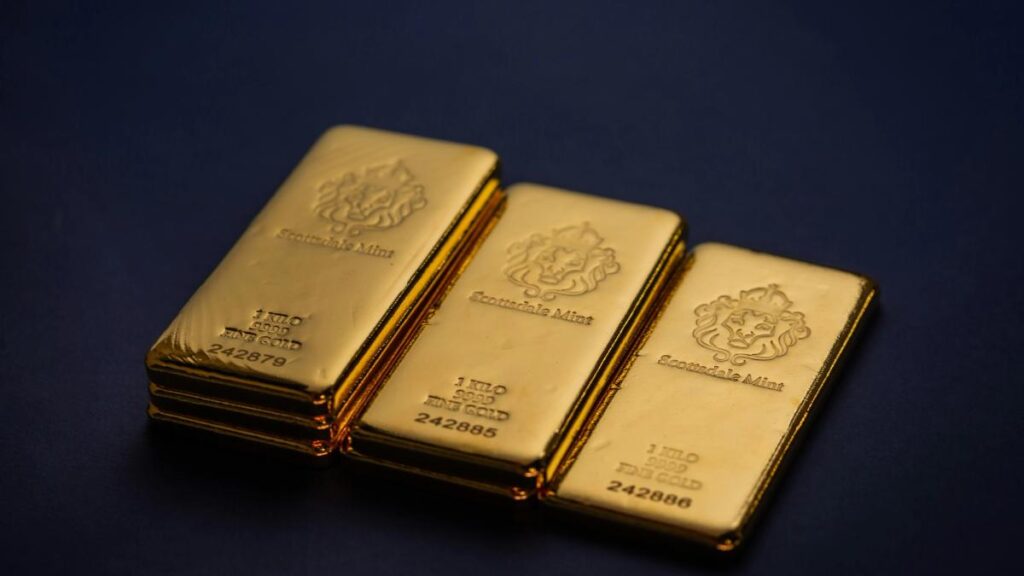
At the time of writing, its value has decreased by nearly 3% to $3,514 per ounce, marking its weakest level since early September 2025. It has slid almost vertically from peaks near $4,150 reached on November 10. Looking at the current quarter, it has now retreated by 15%.
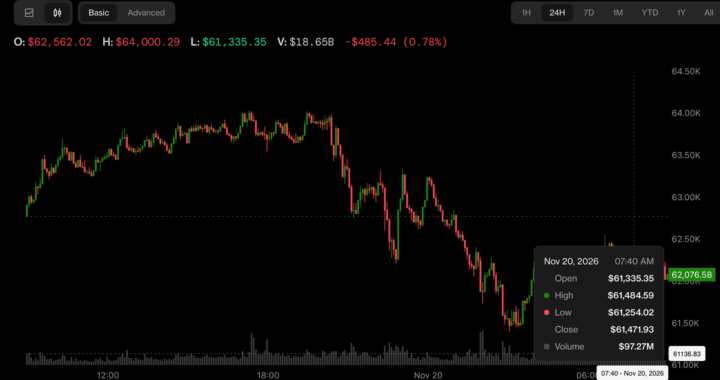
Bitcoin, frequently referred to as digital gold, is changing hands with high volatility around $61,900, having suffered a sharp drop earlier in the month that leaves it down 28% for the quarter.
This softness can be explained by the reality that both assets lack any inherent yield, underlying cash flow, or dividend earnings. This trait makes them especially susceptible when fixed-income products like sovereign bonds deliver increasingly attractive inflation-adjusted returns.
That exact scenario is playing out right now, as real interest rates climb, diminishing the attractiveness of owning bitcoin and gold.
Based on metrics monitored by ING, U.S. two-year real rates—calculated as the spread between swap rates and the zero-coupon inflation swap—are climbing past 2.40%, marking their highest point since 2023.
Data compiled by Robin Brooks, a senior fellow at the Brookings Institution, shows that 10-year and 30-year real yields are elevated even further, lingering at levels not seen in more than twenty years.
Lewis Huang, an analyst at cryptocurrency exchange Bitget, shared in an email to CoinDesk that gold could face continued headwinds if real yields maintain their upward trajectory. For bitcoin, a drop beneath the weekend trough around $62,000 risks deepening the liquidation.
ING noted that increasing real rates are particularly damaging for zero-yielding precious metals, serving as a primary driver behind the downward pressure on gold, silver, and correlated currencies like the Thai baht and South African rand.
These climbing real yields additionally support ongoing strength in the Dollar Index, which measures the American currency against a basket of principal fiat currencies. A powerful dollar increases the opportunity cost associated with maintaining non-yielding assets priced in U.S. dollars, such as bitcoin and gold.
As of this report, the Dollar Index remained close to 103.80, advancing 2.5% for the quarter and hitting its peak level since April 2025.
All of these dynamics are unfolding because the Federal Reserve is maintaining a stance toward higher borrowing costs. Prompted by persistent inflation, major investment bank JPMorgan anticipates quarter-point rate increases in both January and March of next year, supplementing the anticipated December hike.
Originally published at https://www.coindesk.com/markets/2026/11/20/here-s-what-s-crashing-gold-and-likely-weighing-on-bitcoin-too.