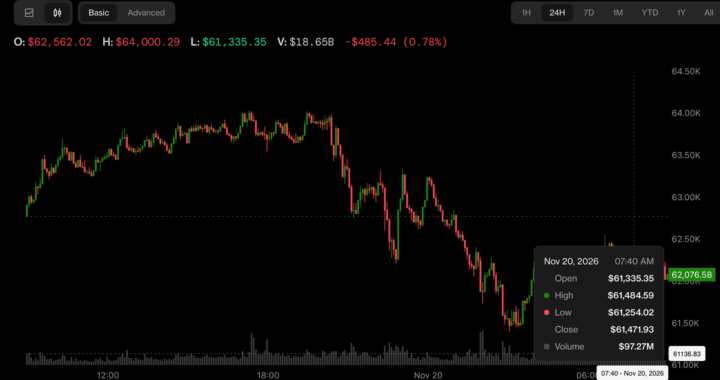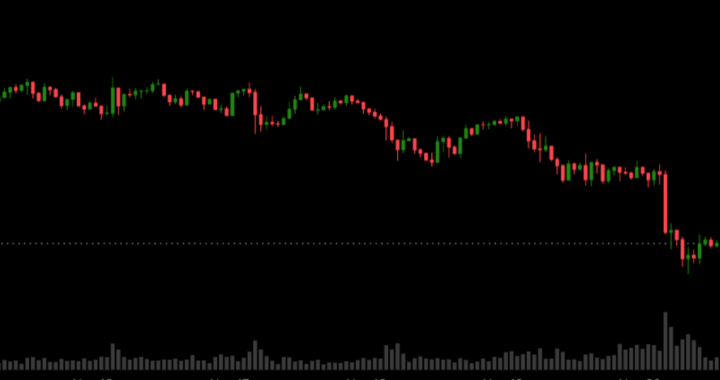
The latest downward movement in bitcoin’s value has expanded the spread between its current market valuation and JPMorgan’s projected production expense of $86,000, creating additional stress for less efficient miners to liquidate their digital asset holdings.
At the time JPMorgan analysts, spearheaded by Nikolaos Panigirtzoglou, released their analysis on Wednesday, bitcoin exchanged hands close to $65,000, sitting roughly $21,000 under their primary expense projection. By Friday, bitcoin dropped past the $60,000 threshold for the initial instance since July, stretching the difference to past $26,000.
According to the analysts, mining entities likely increased market liquidations as this differential grew. Less efficient miners could have liquidated their bitcoin inventories to secure liquidity, maintain business functions, or support a pivot toward artificial intelligence operations.
The analysts noted that this spread should eventually contract due to reductions in the hashrate and adjustments in mining difficulty driven by unprofitable operators shutting down their equipment.
Crypto ETF outflows deepen
The team explained that digital asset valuations plummeted significantly throughout the preceding fortnight alongside declines in technology equities and shifting projections regarding Federal Reserve interest rates.
Spot bitcoin and ether exchange-traded funds, alongside leveraged products tied to Michael Saylor’s Strategy, experienced substantial capital withdrawals across both October and November, mirroring trends from May and June. Weekly metrics indicated that redemptions accelerated during the final two weeks compared to the prior month. Conversely, traditional equity exchange-traded funds attracted net inflows.
The report suggests individual retail traders drove the majority of digital asset fund redemptions, whereas institutional allocations within derivatives markets remained relatively stable. Our Chicago Mercantile Exchange futures indicators show that bitcoin exposure decreased slightly, while ethereum exposure stayed relatively high, performing even more resiliently than bitcoin, the researchers stated.
Regarding retail participants, the analysts theorized they might have liquidated their crypto funds to reallocate capital into equity funds, perceiving superior bargain opportunities within the stock market. Furthermore, they highlighted a reduction in stablecoin market capitalization as an indicator that certain capital has exited the digital asset ecosystem entirely.
Originally published at https://www.theblock.co/news/markets/2026-11-20-jpmorgan-bitcoin-price-correction-gap-86000-production-cost-444763.