While Kraken spent the first 15 years of its existence operating primarily as a cryptocurrency exchange, its parent organization has spent the last two years assembling the components for a much larger venture.
Payward, the Wyoming-headquartered parent entity, poured billions into strategic acquisitions designed to widen its footprint into futures, derivatives, tokenized equities, and expanded banking services across both the United States and Europe.
These strategic moves support a broader ambition to transform Payward into a centralized financial ecosystem where trading operations, banking services, asset management, and enterprise-focused offerings share a unified technological foundation.
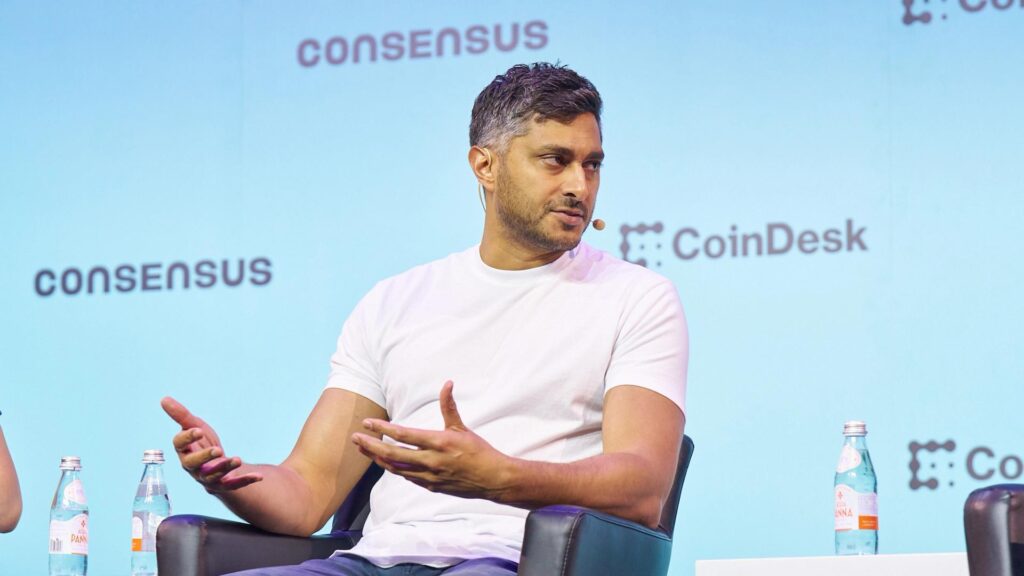
“We’re not a holding company,” its co-CEO Arjun Sethi stated during a discussion with CoinDesk, noting, “It’s one platform, one balance sheet, one regulatory stack.”
At the core of this methodology is what Sethi terms “one ledger,” allowing capital and financial instruments to transfer seamlessly across products without relying on the fragmented web of intermediaries inherent to traditional financial systems.
Payward is certainly not alone in pursuing an expansive financial ecosystem. Coinbase is currently developing an “Everything Exchange” encompassing cryptocurrencies, equities, derivatives, and prediction tools, while Binance is merging trading, payment solutions, investment mechanisms, and yield-generating options into a cohesive framework.
However, digital-assets investment firm Architect Partners notes that Payward is following a distinct trajectory compared to Coinbase. Rather than confining all operations exclusively inside a single Kraken-branded portal, the enterprise is constructing a robust infrastructure capable of supporting multiple distinct brands and serving external financial entities.
“Payward appears to be choosing a different aggregation layer: the regulated infrastructure stack that can power financial products across multiple brands, customer segments, and partner channels,” observed Architect Partners.
They added, “In our view, Payward is helping define the next evolution beyond the ‘Everything Exchange’: an ‘Everything Financial Infrastructure’ model.”
Kraken continues to maintain a smaller market share regarding trading volume. Figures from CoinGecko indicate it averaged roughly $1.1 billion in daily spot transactions during the first four months of 2026, whereas Binance accounted for 38.7% of top-tier centralized exchange spot activity in Q2, and Coinbase posted an 8.6% portion of aggregate crypto trading volume during the first quarter.
One ledger, four businesses
Payward operates under the hypothesis that legacy financial networks remain bogged down by outdated technology and antiquated market norms. Settling securities demands extended timeframes, conventional markets remain shut overnight and during weekends, and banks, brokerage firms, custodians, and clearing houses keep separate, siloed records that necessitate constant manual reconciliation.
Sethi pointed out that each organizational barrier introduces additional intermediaries, processing delays, and extra costs. In contrast, blockchain architectures provide an alternative model by empowering digital assets to function simultaneously as investments, collateralized assets, and programmable utilities built upon a collaborative infrastructure.
Payward has structured this overarching vision into four pillars: trading executed via Kraken, banking services, asset management solutions, and Payward Services, which acts as its business-to-business infrastructure segment.
Sethi notes that Kraken currently supports approximately 6.6 million funded accounts containing between $40 billion and $50 billion in assets spanning upwards of 190 countries and territories.
To scale this comprehensive financial vision, Payward is actively integrating supplementary functionalities around those active accounts, featuring payment cards, lending facilities, derivative products, tokenized shares, alongside features enabling users to leverage assets for loans or deploy them within decentralized finance protocols. Kraken Financial, the firm’s Wyoming-chartered special-purpose depository institution, also anchors this unified stack.
Build, buy or partner
This core philosophy directly dictates the company’s acquisition strategy.
While Payward develops certain capabilities internally, it also purchases external assets that would otherwise require years to duplicate, while partnering with established industry leaders whose market positioning cannot simply be bought.
Sethi noted that Payward disbursed $1.5 billion to acquire NinjaTrader to secure a U.S. futures brokerage arm complete with established technology and regulatory approvals, a feat that would have proven expensive and protracted to build independently. This transaction was followed by a $550 million buyout of Bitnomial, securing regulated derivatives infrastructure encompassing an operational exchange, clearinghouse, and futures brokerage.
Furthermore, the corporation is actively preparing to finalize the purchase of a European banking institution, according to Sethi, who withheld the specific identity of the target. Previously, Bloomberg disclosed in July that Payward mapped out plans to acquire a bank in Lithuania to bolster its continental reach.
Sethi explained that the enterprise avoids maintaining arbitrary acquisition lists or soliciting random pitches from investment bankers. Instead, management employs a rigorous quantitative evaluation matrix to assess whether a target effectively closes an infrastructure void and delivers genuine utility for consumers.
Nonetheless, certain elements of the modern financial architecture cannot be purchased outright. Some of Payward’s most pivotal recent developments involve forging strategic alliances with the exact legacy institutions that early blockchain advocates sought to bypass.
For instance, Nasdaq finalized an agreement this month to inject $100 million into Payward while broadening collaborative efforts surrounding Nasdaq Equity Tokens and market surveillance capabilities. Both organizations project releasing these tokenized assets by the second quarter of 2027, with Payward facilitating distribution, execution, and post-trade support.
Concurrently, the London Stock Exchange has established an independent collaboration with Payward to investigate tokenized public equities. Pending regulatory clearance, the platform intends to introduce xStocks—tokenized equivalents of publicly listed equities—on its anticipated LSE 24 marketplace by 2027.
To Payward, these cooperative ties acknowledge the reality that blockchain frameworks do not completely eradicate everything traditional exchanges have spent decades constructing.
“Trust is their currency,” Sethi remarked, suggesting that Payward functions as a complementary force rather than a disruptive replacement for traditional exchange listing and regulatory frameworks.
In pursuit of this strategic roadmap, Payward refuses to delay its progress while waiting for regulatory bodies to establish a clear framework first.
Sethi views delayed U.S. digital asset policies as a minor hurdle rather than a roadblock. Although the firm backed the Clarity Act and spent years educating political leaders, he emphasized that legislation serves to formalize established sectors rather than invent them.
“Bitcoin has been around for 17 years without a market-structure bill,” he stated, adding, “Rights come first and laws come later and legislation comes downstream.”
Opening its infrastructure to other companies
Payward is also transforming the internal technology stack originally designed for Kraken into an independent commercial enterprise.
Through Payward Services, financial institutions, fintech startups, brokerages, and digital asset venues gain access to a standardized collection of APIs. Sethi noted that at least 25 corporations are currently developing offerings leveraging this infrastructure ahead of projected launches this year, with Hyperliquid listed among the participating partners.
This division evolved organically from foundational infrastructure Payward engineered for its own operations, covering custody, liquidity management, regulatory compliance, risk controls, payment routing, and settlement mechanisms. These integrated utilities are now bundled into a unified integration model for external clients.
Architect Partners highlighted that this structure establishes an alternative distribution channel independent of directly driving traffic to Kraken. Banks, fintech providers, brokerages, and corporate partners can instead embed Payward’s infrastructure directly inside applications bearing their own corporate identities.
“Payward’s model can work even when the end customer never interacts with Kraken directly,” Architect Partners noted.
This approach secures an additional revenue pipeline independent of client trading activity on Kraken, positioning Payward to compete directly with an increasing number of cryptocurrency platforms marketing backend infrastructure to traditional banks and fintech companies.
Bringing asset management onchain
The enterprise is executing a nearly identical playbook concerning investment offerings.
Although Payward has historically maintained custody, staking, and yield offerings, it is now consolidating these capabilities into a comprehensive asset management framework designed to host external fund managers, diverse investment strategies, and expanded asset categories.
Rather than seeking out traditional investment mandates, the firm intends to supply the underlying execution and distribution channels allowing clients to access structured financial products, tokenized shares, credit vehicles, and multi-asset portfolios while retaining funds securely within Payward’s ecosystem.
Initial priorities center on tokenized equities, followed by structured financial instruments that can be fractionalized into smaller units and distributed globally. Payward recently announced a collaboration with Bitwise centered on an institutional-grade investment vehicle and anticipates onboarding additional fund managers and trading methodologies.
Sethi explained that while these instruments will mimic traditional asset management vehicles from an external perspective, they will execute entirely on tokenized rails designed to minimize administrative overhead and counterparty exposure.
This ongoing expansion coincides with Payward’s preparations for an eventual initial public offering, although Sethi stressed that the company does not depend on an IPO to finance its long-term objectives.
Payward confidentially submitted its IPO paperwork back in November 2025, though CoinDesk reported earlier this month that the listing has been delayed until at least the second quarter of 2027.
Sethi declined to elaborate further on the timeline beyond public disclosures, maintaining that Payward remains profitable while continuing to scale its revenue streams. An official public debut will happen whenever the conditions prove optimal for the enterprise, its shareholders, and regulatory authorities, he noted.
Furthermore, Sethi reiterated that Payward requires no external capital injections to sustain daily operations, possessing sufficient balance sheet strength to fund ongoing investments internally.
Instead, recent fundraising rounds have successfully secured strategic partners such as Citadel Securities and Nasdaq, whose specialized expertise assists in scaling the overarching ecosystem.
Payward disclosed $508 million in adjusted revenue for the second quarter of 2026, representing a 17% increase on a year-over-year basis.
Ultimately, Payward’s fundamental mission centers on streamlining global finance utilizing distributed ledger technology, granting retail participants access to the identical financial infrastructure utilized by elite trading houses like Jump Trading and Jane Street.
“Fix money, fix the world,” Sethi concluded.
Originally published at https://www.coindesk.com/business/2026/09/26/kraken-s-parent-payward-is-betting-billions-on-becoming-financial-infrastructure-not-just-a-crypto-exchange.