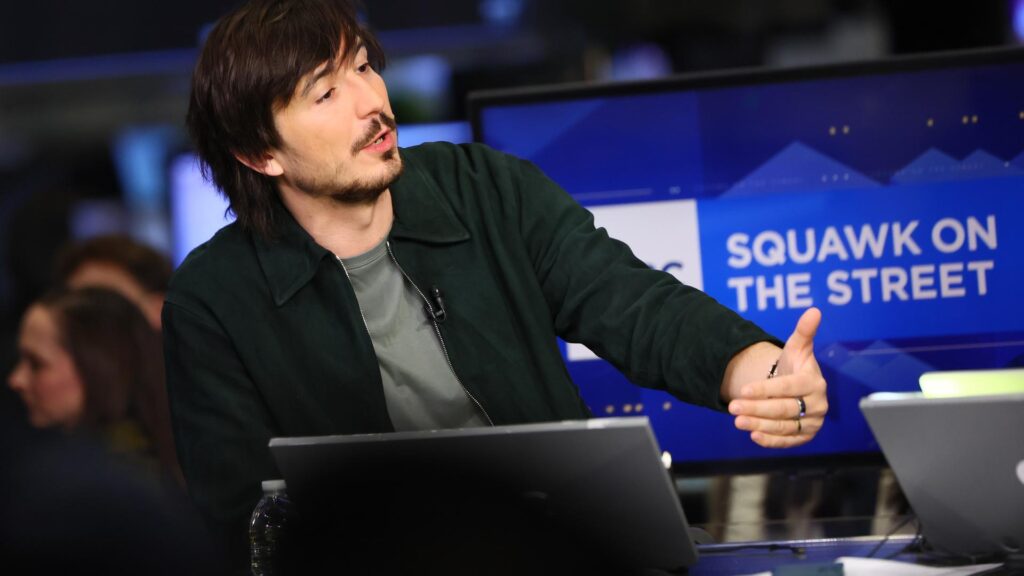
Robinhood CEO Vlad Tenev intensified his defense of digital stock tokens on a recent Friday, maintaining that publicly traded enterprises ought not to have the authority to prevent outside entities from launching blockchain offerings connected to their equity.
The remarks, shared via X, further expand upon Tenev’s ongoing disagreement with AMC Entertainment CEO Adam Aron, who previously insisted that Robinhood halt the distribution of tokens tied to AMC shares. Aron warned last week that he would escalate the conflict to the U.S. Securities and Exchange Commission.
Tenev emphasized that the central issue is not whether a mechanism utilizes distributed ledger technology, but rather the specific legal privileges it establishes.
“A company should control the rights attached to its shares — not every lawful use of those shares once they’re in investors’ hands,” he wrote. “Going onchain shouldn’t give the issuer a veto it never had offchain.”
Robinhood deployed its stock token offerings internationally this year, granting access to hundreds of U.S. equities and exchange-traded funds (ETFs). Tenev stated that these assets function as distinct financial instruments fully backed 1:1 by underlying shares, delivering economic exposure while keeping token holders off corporate shareholder registries and leaving underlying stock rights unmodified.
“If it creates a separate financial instrument that holds or references freely transferable shares without changing the issuer’s rights, obligations, or authoritative shareholder record, issuer consent should not be required,” Tenev wrote.
This exact boundary marks the divergence between Tenev and AMC’s Aron.
Aron has characterized Robinhood’s offering as a “fictitious synthetic equity market,” suggesting it might impair AMC’s fundraising capacity, mislead investors concerning their entitlements, and establish a market utilizing the AMC brand without corporate authorization.
Conversely, Tenev maintained that established financial markets already permit comparable frameworks. Options contracts, unsponsored American depositary receipts, and structured notes can track public stocks without granting the issuing company authority over those financial vehicles.
However, he drew a distinction regarding instruments that modify the underlying equities directly. If a token alters shareholder privileges, supersedes an official corporate ledger, or establishes fresh duties for the issuer or its transfer agent, Tenev acknowledged that the corporation should possess involvement.
“If a product purports to change the rights attached to the underlying shares, replaces the company’s official stock ledger, or imposes new obligations on the company or its transfer agent, the issuer should be involved,” he wrote.
This debate extends well beyond the scope of AMC and Robinhood alone. Financial institutions are currently experimenting with diverse approaches to bring equity exposure onto blockchains, ranging from synthetic variants to traditional shares maintained by custodians and issuer-supported shares tracked natively onchain.
Such architectures can grant purchasers vastly differing entitlements. Tenev noted that Robinhood opted for its particular structure to deploy tokens globally across thousands of instruments without requiring individual corporate sign-offs, while also remaining adaptable to forthcoming regulatory frameworks.
“Investors should know what they own, what rights it carries, and whether the issuer is involved,” Tenev wrote.
Originally published at https://www.coindesk.com/markets/2026/09/11/robinhood-ceo-says-companies-shouldn-t-get-veto-over-stock-tokens-in-amc-feud.