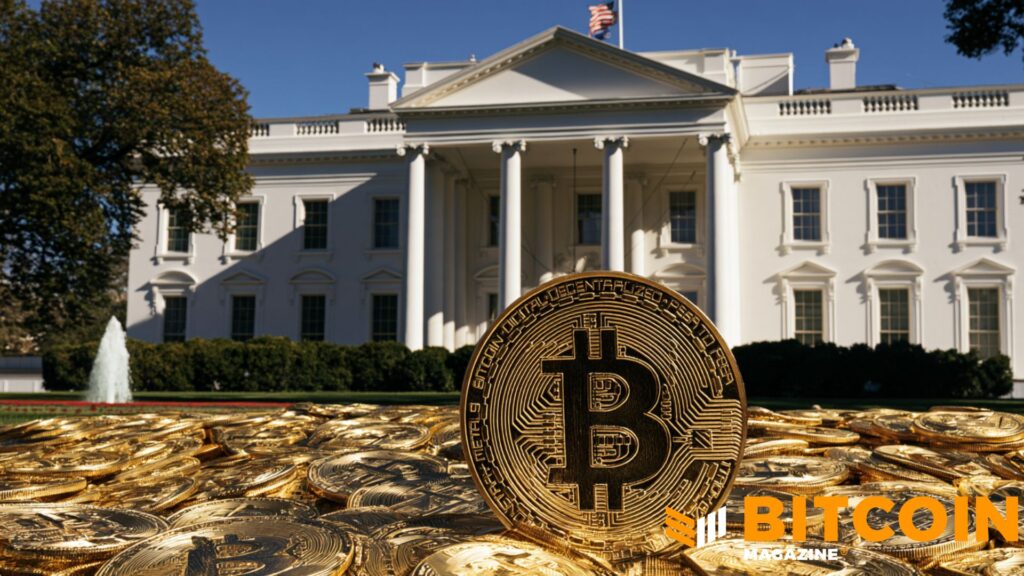
An upcoming Department of Labor regulation designed to introduce alternative assets like cryptocurrency, real estate, and private equity into 401(k) retirement portfolios reached the White House on Thursday for evaluation, according to Bloomberg Law, marking a procedural phase that typically precedes public issuance.
The Office of Information and Regulatory Affairs registered the submission on November 5 under the designation “Fiduciary Duties In Selecting Designated Investment Alternatives,” identified by RIN 1210-AC38. The documentation designates the DOL’s Employee Benefits Security Administration as the drafting agency, labels the phase as a final rule, designates it as economically significant, and points out that no statutory deadline exists for its finalization.
The DOL initially revealed the draft on March 30. Under that version, plan administrators who maintain a recorded procedure when incorporating alternative investments into a 401(k) lineup would receive legal safe harbor protection via the Employee Retirement Income Security Act of 1974.
The six criteria outlined in the proposal include complexity, performance benchmarks, valuation, liquidity, fees, and performance history. Meeting these requirements does not compel plans to provide cryptocurrency, but it decreases litigation exposure for employers choosing to do so.
What the DOL safe harbor covers
President Donald Trump’s executive order from August 7, 2025, titled “Democratizing Access to Alternative Assets for 401(k) Investors,” instructed the Labor Secretary to review ERISA standards anew and formulate regulations containing suitably structured safe harbors where appropriate. That directive classified alternative assets as including private debt and equity, real estate, managed funds dealing in digital assets, commodities, infrastructure projects, and strategies providing lifetime income.
The March draft executes that presidential directive. A DOL fact sheet explained that prudence under ERISA relies on proper procedures, leaving fiduciaries with the discretion to pick any designated investment option as long as they adhere to the specified review process. Deputy Labor Secretary Keith Sonderling characterized this stance as neutral, stating that the era of the department selecting preferred options has concluded.
This position reverses earlier restrictive measures. Back in May 2025, the DOL withdrew its March 2022 compliance directive that advised administrators to exercise extreme caution prior to featuring digital assets within 401(k) portfolios. The agency noted that specific phrasing did not appear within ERISA and reestablished a context-specific evaluation standard.
Subsequently, reports emerged indicating that Senators Elizabeth Warren and Bernie Sanders urged the agency to move away from its crypto-supportive direction. Simultaneously, Republicans in the House have pursued legislative efforts to solidify Trump’s crypto-leaning directive into law.
Why OIRA review matters for bitcoin and crypto
The OIRA assessment under Executive Order 12866 serves as the final interagency hurdle prior to publication of a concluding rule within the Federal Register. Bloomberg Law noted that this submission indicates the regulatory package approaches completion. The identical office cleared the initial draft near the end of March ahead of the agency’s publication, with that prior clearance taking roughly two months following the January submission, according to previous reports regarding the estimated $12 trillion 401(k) sector.
The exact wording of the final text remains private. Details such as whether the six-point safe harbor withstood public feedback unchanged, how digital asset funds are characterized, and the specific enforcement date chosen by the agency will only become apparent once OIRA returns the regulation and the department releases it publicly. Public feedback on the draft was substantial, with labor and industry organizations debating opposing viewpoints regarding the standard of prudence for months.
For bitcoin, the primary impact lies within retirement plan offerings rather than direct spot exchange-traded fund activity. Trump’s August directive helped position digital assets as a retirement inclusion topic for over 90 million participants in defined-contribution accounts. A concluded DOL safe harbor would not instantly integrate bitcoin and digital currencies into every portfolio, but it would provide committees with a clearer framework should they wish to incorporate digital assets through an allocation strategy.
The current question is how quickly OIRA will process the economically significant document, and whether the released final regulation will maintain the procedural protections promised in the March version or if the debate during the comment period altered the safe harbor before White House approval.
Originally published at https://bitcoinmagazine.com/news/dol-rule-crypto-401k-white-house-review.