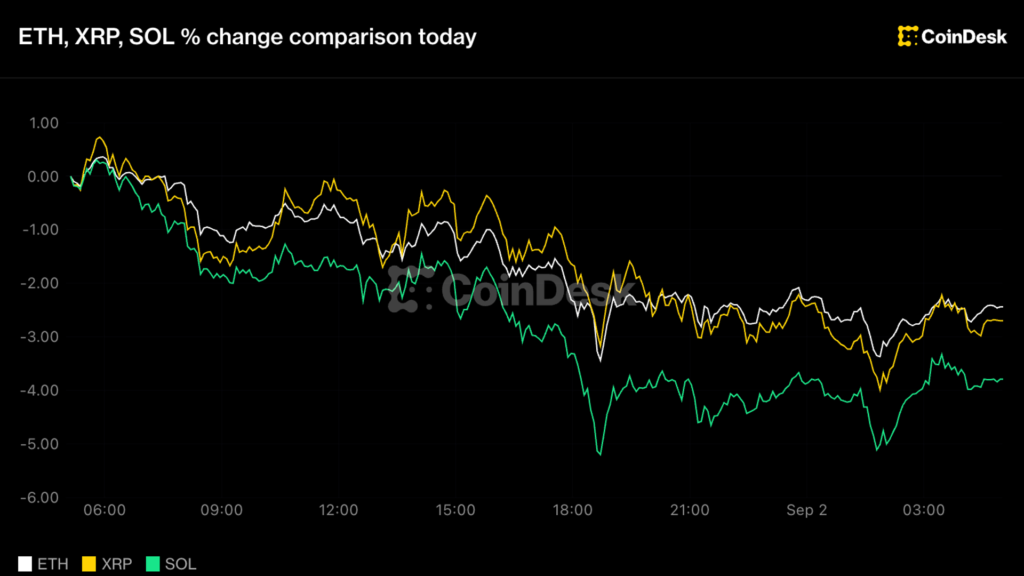
The selling that followed U.S. airstrikes on Iran was not distributed uniformly. Solana and tron each dropped over 3% during the previous 24 hours, whereas bitcoin shed approximately 1%, a distribution indicating that market participants eliminated high-velocity holdings first while preserving core assets.
Bitcoin traded close to $77,500 throughout Wednesday’s Asian trading session.
Solana retreated to around $100 and tron decreased to approximately 32 cents, marking them as the weakest major tokens of the trading period. Ether declined 2% to just above $2,414, and XRP fell nearly 2% to roughly $1.35. Dogecoin decreased by nearly 2% to slightly above 8 cents, while HYPE dropped more than 1% to near $83. BNB proved to be the most resilient among the group, recording a loss of under 1% at $687, according to CoinDesk data.
Nevertheless, every single one of those assets recovered slightly over the prior hour, a rebound that emerged as Asian equity markets suffered their steepest declines.
The macro catalyst stemmed from oil and fixed-income markets rather than internal crypto dynamics. Brent crude moved past $95 because the military strikes reignited anxieties surrounding maritime transport through the Strait of Hormuz, and the United States 10-year Treasury yield touched 4.81% overnight, reaching its peak in about three years.
Japan’s five-year government debt reached a record yield, and the 10-year yield touched 3% for the initial time in thirty years. Concurrently, Japanese equities decreased by over 2%, and South Korea’s Kospi index dropped by more than 3%.
Monetary policy expectations are what transform these conditions into downward pressure on cryptocurrencies. Participants utilizing the CME FedWatch tool priced the probability of a rate increase at the September meeting of the Federal Reserve at 66%, up from roughly 40% a week prior, following comments by Fed Chair Kevin Warsh at Jackson Hole suggesting monetary policy may not yet be restrictive enough to control inflation.
Gold dropped to around $4,296 per ounce during a second consecutive session of declines, eliminating the straightforward interpretation that capital is simply shifting away from risk and toward safe-haven assets.
Analysts at Bitfinex outlined this precondition prior to the strikes, maintaining that bitcoin should consolidate or move higher “unless there is a pullback across all risk assets that drags BTC lower with it.”
Joel Kruger, market strategist at LMAX Group, mentioned via email that “the key upside area remains $80,000 through the May high near $82,820.”
The jobs report scheduled for Friday will determine whether that threshold remains attainable. Economists anticipate roughly 55,000 jobs created following the reduction of 23,000 positions in July, with inflation statistics arriving on September 11. However, a robust employment figure strengthens the argument for a September rate hike and keeps high-beta major tokens under pressure ahead of the Clarity Act vote on September 15 and the subsequent Federal Reserve announcement.
Originally published at https://www.coindesk.com/markets/2026/09/02/solana-ether-xrp-lead-majors-slide-as-iran-strikes-drive-a-broad-risk-selloff.