Cryptocurrency firms have spent years attempting to generate income beyond simple bitcoin purchases and sales. Their recent earnings reports demonstrate how difficult that endeavor can be.
Coinbase and Robinhood posted weaker cryptocurrency trading revenue last week. Circle, the issuer of the USDC stablecoin, disclosed an 8% decline in reserve income, essentially flat USDC supply compared to the prior year, and a 5% workforce reduction in its latest financial statement on Wednesday. Over the past five days, shares across all three enterprises have dropped significantly, led by an 11% decline for Circle.
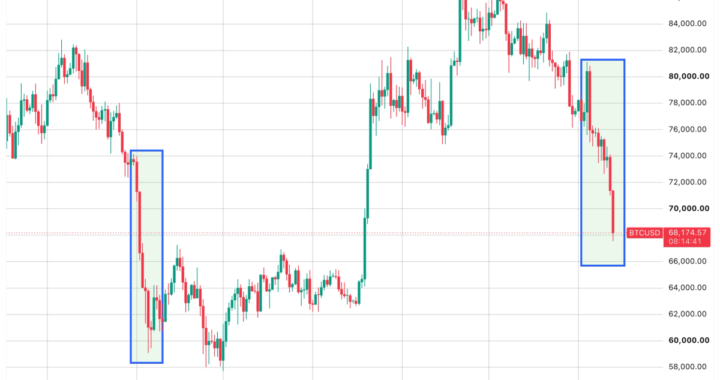
These figures arrive as digital asset values retreat following the midterm elections on Tuesday, compounding difficulties for a sector already navigating a downturn in trading volume.
While Coinbase and Robinhood have branched into alternative financial offerings, Circle has wagered that stablecoins will evolve into a mainstream payment mechanism. Nevertheless, the newest financial disclosures indicate that introducing additional goods does not consistently translate to dependable income.
Mark Palmer, an analyst at StoneX, stated that the third-quarter performance of Coinbase ought to challenge the assumption that the firm acts merely as a leveraged bet on cryptocurrency trading volume.
Conversely, Benjamin Budish, an analyst at Barclays, expressed a less optimistic perspective, cautioning that Coinbase’s dependence on spot crypto trading continues to present a significant hurdle despite its expanding portfolio of offerings.
The trading problem
Coinbase has branched into custody services, stablecoins, lending, and prediction markets. Meanwhile, Robinhood has expanded past its origins as an equity-trading platform to include retirement portfolios, banking items, and alternative financial services. While these initiatives provide both enterprises with additional revenue streams, they have failed to diminish the cyclical nature of cryptocurrency trading.
Third-quarter transaction revenue for Coinbase dropped 23% year-over-year down to $590 million. Spot trading volume from retail customers decreased 9% sequentially, whereas institutional transaction income slipped 8%.
Even so, Coinbase maintained total revenue close to $1.22 billion and elevated adjusted EBITDA by 60% compared to the prior quarter to reach $333 million, supported by reduced operating costs and expansion in newer business lines.
Palmer noted in an October 30 note that the cyclical trough of the digital asset market is performing its typical function by highlighting which organizations have constructed resilient operations.
He highlights record-breaking USDC reserves along with prediction markets that currently yield upwards of $200 million in annualized revenue.
However, the financial enhancement proved less robust than initial impressions suggested. Owen Lau from Clear Street pointed out that the earnings beat stemmed from lower expenditures rather than higher trading activity, whereas Barclays lowered its price target from $149 down to $120, pointing to an uninspiring fourth-quarter outlook.
On the other hand, Rayna Kumar of Oppenheimer increased her price target to $207 based on expansion in stablecoins and prediction markets. Yet Ed Engel from Compass Point warned that while prediction markets are expanding, they deliver lower profit margins.
Stablecoin squeeze
Circle does not rely on frequent customer trading to drive the bulk of its earnings. Instead, it accrues interest on cash reserves and Treasury bonds supporting USDC, its dollar-pegged stablecoin, which simultaneously exposes the company to fluctuations in interest rates.
Reserve income dropped 8% year-over-year down to $658 million because declining rates diminished returns. By the end of September, the circulating supply of USDC remained steady at $73.9 billion, showing virtually no change from the previous year.
Its headline figures appeared more robust, showing a 17% increase in revenue to reach $865 million. However, $182 million of that total originated from presales of tokens associated with Arc, the proprietary blockchain of Circle. Excluding those sales, revenue would have contracted roughly 8% compared to the prior year.
Lau observed that USDC-related revenue for Coinbase generated on its platform grew 16% sequentially, aided by record average balances of $22 billion. Yet the incentives disbursed by Coinbase to attract and retain those funds climbed 9%. Factoring in those rewards, the stablecoin revenue for Coinbase increased a mere 3% sequentially while dropping approximately 16% year-over-year.
Lau remarked that stablecoins represent the most resilient franchise within the business model, yet every incremental dollar of USDC arrives at a reduced margin.
Expanded stablecoin adoption offers no assurance that either enterprise retains a larger share of the capital produced by it.
Sources of growth
Indications suggest that emerging cryptocurrency business units are gaining traction.
Circle reported that USDC transaction volume climbed 49% from the previous year to reach $13.9 trillion. Its payment network achieved $41.3 billion in annualized volume, while wallets holding upwards of $10 worth of USDC expanded by 16%.
Prediction markets have emerged as a primary growth driver for Coinbase. Daily active users for the offering surged past 60% sequentially, with derivatives and prediction markets currently generating roughly one-quarter of total transaction revenue.
Palmer stated that approximately 60% of net revenue for Coinbase presently originates from activities that are either recurring or disconnected from direct spot crypto trading.
Even so, newer offerings introduce distinct concerns regarding profit margins and competitive pressures.
Clear Street estimates that Coinbase retains about 1.5 cents for each prediction market contract routed through Kalshi. Managing those contracts via its proprietary clearing infrastructure could elevate that figure to approximately 2 cents, although the enterprise has not specified a timeline for implementation.
Although payment services are expanding, they continue to represent a minor contribution to Coinbase’s revenue, with Clear Street noting that these segments have yet to generate substantial financial returns.
While Coinbase, Robinhood, and Circle are uncovering innovative avenues to draw in users, generating profits from those users persists as a hurdle. Circle observes increased payment activity, and prediction markets at Coinbase continue to expand, yet neither entity has evaded the headwinds of a sluggish cryptocurrency landscape.
Originally published at https://www.coindesk.com/markets/2026/11/05/the-crypto-industry-has-found-new-ways-to-grow-making-money-from-them-is-another-story.