
Opinion by Katie Harries, head of policy, Europe, Coinbase
Great Britain stands at a major crossroads that could define its monetary destiny: will decentralized finance (DeFi) be permitted to grow through supervised access points, or will it be forced into an isolated bubble?
This matter concerns far more than just digital asset enthusiasts; it touches upon the future of financial markets, the standing of the City, and Britain’s capacity to guide the upcoming wave of monetary architecture.
DeFi consists of software applications that allow individuals to lend, borrow, and exchange assets directly with peers, bypassing traditional middlemen like brokers or banks. It functions less like a conventional financial institution and more like the web itself, delivering faster, cheaper financial services that remain open to everyone at all times.
Even though decentralized finance will consistently stay available via open-source or fully decentralized channels, authorized entities can also present a pathway to DeFi, granting users a way to interact with the protocol while receiving vital details regarding the utilized services and associated risks.
Yet, the proposed cryptographic guidelines from the Financial Conduct Authority (FCA) threaten to render this unachievable. The FCA will mandate that licensed platforms ensure customer transactions are only finalized on an FCA-approved marketplace. While intended to block foreign companies from unlawfully entering the UK marketplace, this framework simultaneously jeopardizes DeFi access because the decentralized exchanges and protocols handling these orders lack an identifiable person capable of seeking authorization.
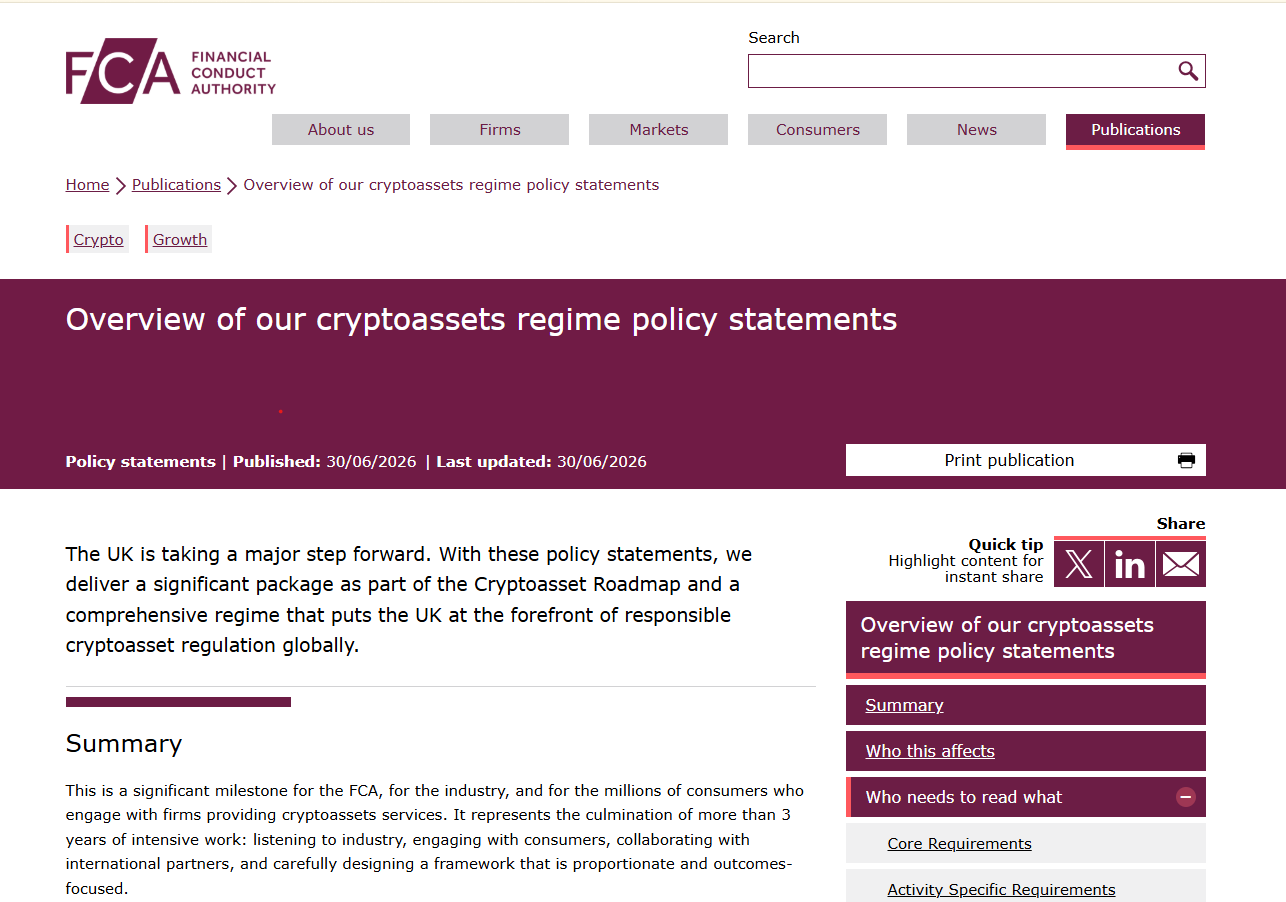
Overview of FCA’s cryptoassets regime policy statements. Source: FCA
While no explicit mandate forbids businesses from offering DeFi integrations to clients, the regulator has clarified its intention not to draft product-specific provisions, choosing instead to enforce standard centralized trading requirements. Consequently, this creates a de facto prohibition.
Starting in October 2027, supervised platforms might lose the ability to supply clientele with DeFi functionality unless the regulator alters its strategy.
State leadership has promised that the nation aims to pioneer the global digital asset space. Fulfilling this goal will prove difficult if domestic firms are severed from the decentralized framework powering modern digital markets.
Related: UK FCA sets crypto authorization guidance ahead of September application window
DeFi is becoming part of the next financial infrastructure
Overseas regulators grasp these opportunities and are actively investigating methods to foster DeFi innovation. Within the European Union, the European Securities and Markets Authority has suggested permitting authorized institutions to supply DeFi access, noting it could cultivate decentralized monetary innovation safely and transparently.
During September, the US Securities and Exchange Commission provided an Innovation Exemption allowing peer-to-peer trading of tokenized equities through automated liquidity pools and trading networks.
Put simply, both the US and the EU are studying methods to integrate legacy finance with decentralized architecture. The UK ought to investigate these same prospects before permanently eliminating the option.
Onchain tokenized finance cannot attain its maximum potential if restricted inside enclosed, fractured systems that struggle to connect with the underlying decentralized technology.
A de facto ban may push DeFi beyond the regulator’s reach
The UK has unveiled its initial comprehensive framework for crypto regulation. Effective Oct. 25, 2027, companies providing digital asset services to local consumers must secure authorization from the FCA. The agency is currently reviewing guidance outlining how its mandates apply to enterprises dealing with or incorporating decentralized finance elements.
Potential worries regarding DeFi integrations fall into three categories. First, retail users utilizing a trusted, authorized platform might not recognize when they transition into a space devoid of standard safeguards. Second, specific organizations might leverage DeFi setups to bypass compliance duties. Third, decentralized finance could introduce threats tied to financial crimes and market stability.

The UK wants to lead the world on digital assets. Source: Gov.uk
Nevertheless, these risks highlight the necessity for transparent consumer disclosures and defined corporate accountability, not outright bans.
An unacknowledged prohibition would achieve the exact opposite of its intended goal. Rather than eliminating DeFi, it would drive greater volume away from regulatory oversight while diminishing the capability of supervised firms to guide user interactions.
Regulated exchanges serve as practical observation posts. They can notify clients whenever they depart a protected environment and secure explicit consent beforehand. Licensed entities can also handpick reliable protocols, evaluate governance and operational exposures, and share usage analytics with watchdogs.
Regulate the gateway, not the technology
In other financial sectors, Britain already acknowledges that licensed entities can facilitate access to products or markets operating under alternate oversight standards.
Numerous retail platforms and multi-service apps currently supply clients with options spanning equities and money funds to foreign exchange and commodities, each carrying distinct regulatory shields. The FCA permits this practice provided applications clearly inform users which protections apply to each specific offering.
This explains why DeFi integrations demand a smarter fix. The watchdog must safeguard users, but it should not pursue protection through complete exclusion.
Responsible incorporation would supply consumers with clearer details, grant authorities enhanced oversight, and afford domestic financial services the opportunity to compete in the next wave of monetary progress.
Related: ESMA seeks evidence tokenized collateral can be cashed out in crisis
Consumers will use DeFi, so the question is where
DeFi networks remain accessible directly without needing any licensed intermediary. The core dilemma is whether users will likewise reach DeFi via regulated access points equipped with clear guardrails and disclosures.
The stakes extend far beyond digital asset trading. Decentralized finance underpins the largest possible savings as financial services transition onchain, minimizing expensive intermediaries and supporting continuous cross-border activity. Regulation offering a clear framework for DeFi is vital to ensure firms maintain the confidence required for long-term domestic investment.
If access barriers persist domestically, tokenized markets and broader financial innovation risk migrating toward nations taking decisive steps to back decentralized infrastructure.
The UK cannot realistically aspire to lead digital finance while shutting out the decentralized backbone upon which future financial systems are being constructed.
About the author: Katie Harries is the head of policy for Europe at Coinbase. Katie leads on international policy, engaging with regulators, governments and industry stakeholders to shape a regulatory environment that fosters growth, competition and responsible oversight for digital assets in the UK and Europe. Prior to joining Coinbase, Katie was a VP at Goldman Sachs. Katie is also heavily involved in the UK Cryptoasset Business Council (UKCBC), the country’s leading crypto trade body.
Magazine: Made an ‘honest’ mistake with crypto taxes? New bill offers way out
Originally published at https://cointelegraph.com/opinion/uk-crypto-rules-regulated-defi-access?utm_source=rss_feed&utm_medium=rss&utm_campaign=rss_partner_inbound.


