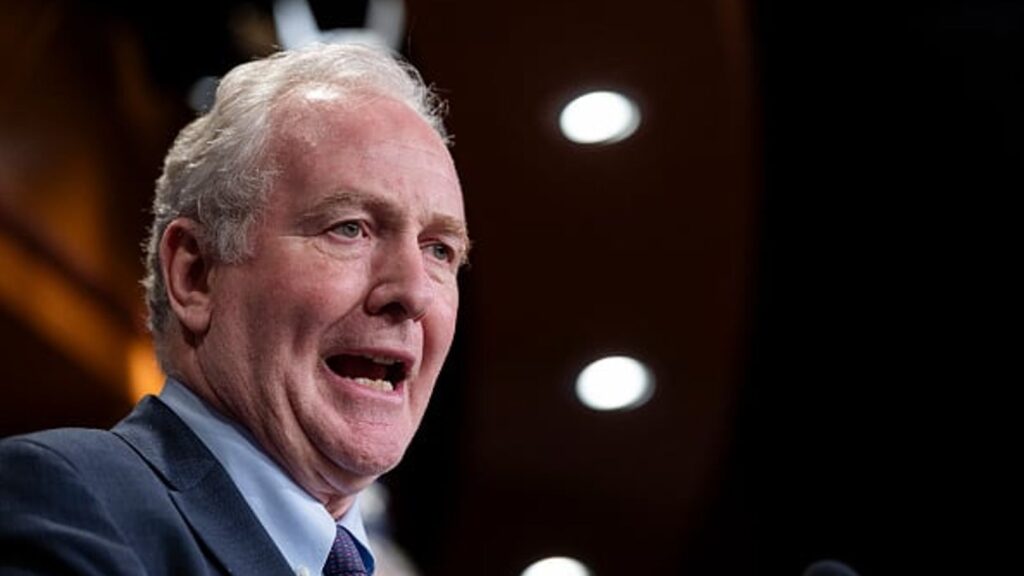
Prominent Democratic Senators Elizabeth Warren and Chris Van Hollen are pressing Securities and Exchange Commission Chair Paul Atkins to rescind the commission’s cryptocurrency rulemaking that dictates how digital asset projects raise capital and how tokenized securities undergo trading.
In a pair of separate missives delivered to Atkins on Tuesday, Senators Warren, Van Hollen, Tina Smith, and additional Senate Banking Committee members argued that the agency’s “Regulation Crypto Assets” would empower digital asset companies to bypass securities laws, weaken state-level jurisdiction, and potentially endanger investors.
“The initiative would establish a novel ‘tailored securities offering regime’ for certain investment contracts involving crypto tokens,” the lawmakers penned. “Nevertheless, the measure merely assists digital assets in evading the SEC’s regulatory framework and grants them preferential treatment—featuring reduced oversight—relative to other traditional securities.”
During August, the SEC introduced crypto offering regulations to establish startup and fundraising exemptions for digital asset sales. The framework incorporates a “startup exemption” that relieves offerings of up to $5 million from registration mandates under the Securities Act of 1933 for a four-year span—a federal statute centered on preventing fraud and mandating specific disclosures. Furthermore, the proposal features a “fundraising exemption” covering offerings of up to $75 million for the duration of one year.
Warren is positioned to assume a much more influential stance following Democratic triumphs in the November midterm elections, which granted her party command of both houses of Congress. Warren has previously maintained a skeptical posture toward crypto, consistently highlighting apprehensions regarding illegal finance and money laundering. Meanwhile, Van Hollen could emerge as the subsequent Senate Majority Leader, having challenged current Senate Minority Leader Chuck Schumer for that position.
‘Innovation exemption’ anxieties
Senators Jack Reed and Tina Smith joined the initial pair in a secondary letter urging the SEC to retract its innovation exemption—a policy unveiled in September intended to bring capital markets onchain via the trading of tokenized equities. It constitutes a five-year waiver that spares particular trading hubs, designated as tokenized securities venues, from classification as an exchange, while also exempting specific liquidity providers from being categorized as dealers under securities regulations when they trade stocks or supply liquidity through automated market makers.
The legislators asserted that the framework would permit platforms to function devoid of essential safeguards, encompassing fair pricing and market transparency mandates.
“The directive would enable TSV platforms to run an unregulated shadow equity market outside of enduring regulatory defenses built to guarantee fair and transparent markets, place fresh burdens on publicly listed firms striving to safeguard their investors, and generate unnecessary dangers of illicit financial behavior,” the senators noted.
The trio of lawmakers additionally cautioned that the innovation exemption might fracture capital markets.
“As worried stakeholders have underscored, splitting our securities markets by establishing a loosely supervised alternative marketplace for tokenized securities needlessly threatens to divide liquidity into segregated pockets and broaden opportunities for detrimental regulatory arbitrage,” they stated.
An independent faction of Senate Democrats has likewise voiced objections concerning the innovation exemption. In the preceding week, Senators Angela Alsobrooks, Ruben Gallego, Mark Warner, and Catherine Cortez Masto warned that it could create pathways for illicit finance participants and expressed anxieties regarding retail investor safeguards related to pricing.
The SEC opted not to provide a statement.
Originally published at https://www.theblock.co/news/regulation/2026-11-25-warren-van-hollen-lead-push-scrap-sec-regulation-crypto-innovation-exemption-446756.