This is an excerpt from CoinDesk’s new Tokenization Weekly newsletter. Sign up here.
Bad actors managed to execute the largest crypto heist in history last week, making off with roughly $6.3 billion from Binance, the leading cryptocurrency exchange globally, within a matter of minutes.
The stolen loot stretched across various blockchains and comprised bitcoin BTC, ether ETH, XRP, along with billions in stablecoins. Binance reported that roughly $3 billion of the impacted holdings had subsequently been frozen, while also committing to use its own capital to reimburse the deficit.
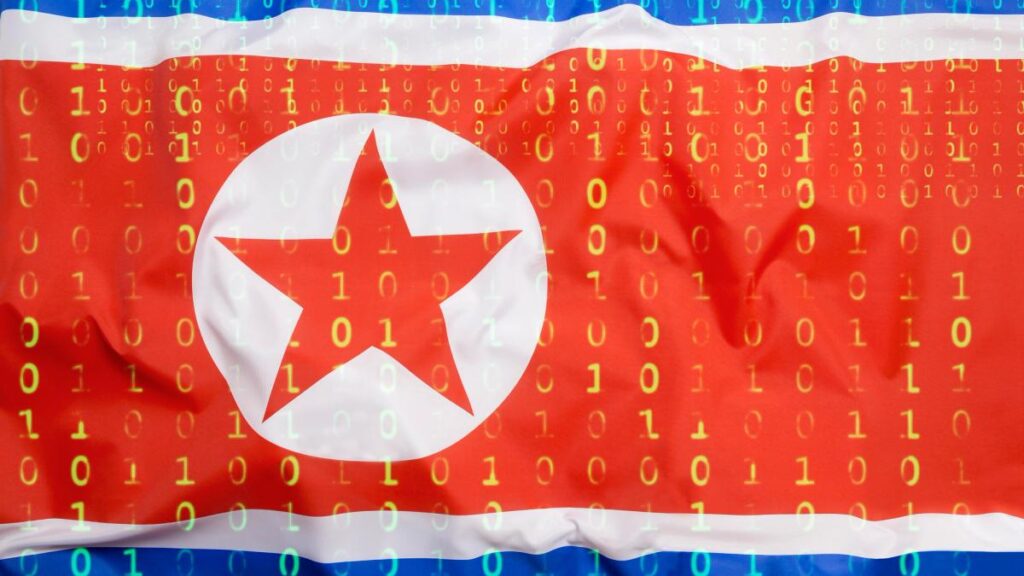
American law enforcement bodies like the FBI, alongside numerous blockchain forensic agencies and the FBI, have connected the assault to TraderTraitor, a hacking cell originating in North Korea.
This served as yet another harsh illustration of the vulnerability issues that have plagued the digital asset sector this year, with over $8 billion in assets taken up to now, according to Chainalysis.
Yet, as a growing portion of traditional finance adopts the identical underlying infrastructure, it provokes an issue stretching far past bitcoin: What occurs when the targeted asset in a future breach is a tokenized U.S. Treasury fund, private-credit holding, or equity share?
Read all of CoinDesk’s coverage of the Binance hack here.
Control and recourse
Financial institutions and investment funds frequently advocate for tokenization utilizing the exact benefits that initially drew people to cryptocurrency: instruments can trade continuously, clear swiftly, and function seamlessly within trading, borrowing, and collateral ecosystems.
The compromise is that tokenized holdings can inherit those very same technological vulnerabilities.
“Key compromise, contract bugs and bridge exploits don’t care what a token represents,” Salman Banaei, general counsel at RWA-focused platform Plume, told me.
Nevertheless, the aftermath following a breach can present a vastly different scenario.
The Binance breach supplied a clear illustration regarding stablecoins. Tether, Circle, Ripple, and World Liberty Financial locked down roughly $2.67 billion of the pilfered tokens in a matter of hours, per data from TRM Labs. Meanwhile, the perpetrator still held approximately $2.4 billion in bitcoin and ether that no single issuer possessed the ability to arbitrarily freeze.
Tokenized securities may feature comparable administrative safeguards, yet they also incorporate legal ownership titles tied directly to the underlying instrument.
Adam Popat, CEO of tokenization tech company SettleMint, noted that a stolen token does not automatically void the legitimate owner’s stake in the underlying equity, fund, or debt instrument. Depending on how the security is architected, an issuer can halt transfers, render stolen tokens void, and issue fresh ones to the verified holder.
“The rightful owner retains that claim even when someone else controls the token,” Popat stated.
Joris Delanoue, CEO of transfer agent Fairmint, framed the distinction much more simply.
“The underlying technology may be the same, but the ownership model is fundamentally different,” he explained. “A stolen key should not erase your shareholder rights.”
A blockchain confirms the entity that authorized a transfer, Delanoue mentioned, whereas a transfer agent supplies the legal accountability determining share ownership.
Still, the degree of protection investors enjoy relies entirely on the underlying structure.
Regarding issuer-sponsored shares, Popat explained, the token can link directly to the official shareholder registry, granting the issuer a straightforward mechanism to reinstate ownership.
Conversely, a synthetic token denotes a claim against the third-party creator, meaning recovery relies completely on that intermediary’s provisions and smart-contract parameters.
That leaves open the dilemma of when an issuer ought to intervene.
Possessing the technical capability to freeze or roll back a transaction differs entirely from holding the legal mandate to execute it instantly. This challenge becomes especially pressing when tokens circulate freely across permissionless trading venues.
Popat noted that where tokenized assets trade on public ledgers devoid of identity verification, a thief might rapidly offload them, potentially transferring them to innocent buyers prior to any intervention from an issuer or legal authority.
Onchain markets operate in seconds, whereas judicial mandates and alternative legal mechanisms demand considerably more time.
“A court order is a clear trigger, but that legal process is far too slow for onchain markets where bad actors can liquidate their positions in seconds,” Banaei observed.
Despite all the industry rhetoric concerning eliminating intermediaries, tokenized securities might still require an intermediary with sufficient authority to step in whenever emergencies arise.
Contagion can still bite
Even if a compromised tokenized asset gets successfully locked or substituted, the surrounding market ecosystem can still collapse in the wake of an exploit.
Anthony DeMartino, co-founder and CEO of $2.6 billion blockchain yield protocol Sentora, pointed out that the greater anxiety centers on whether investors can actually liquidate when necessary.
Numerous tokenized instruments lack deep liquidity pools, meaning issuers depend on market makers and OTC desks to facilitate buying and selling at predetermined quotes.
As an illustration, DeMartino pointed out that a major holder of real-world assets required liquidity during the Binance breach, yet those “market makers reneged on those deals.”
This exposes a flaw inherent in the narrative of 24/7 tokenized markets. An asset might technically trade around the clock, but that guarantees nothing regarding buyer presence during an acute market crisis.
“In my view, this is a big step back for tokenized RWAs,” DeMartino remarked. “Or maybe it’s just the realization that this liquidity was never real in the first place.”
This represents another trial Wall Street must confront as additional assets migrate onchain: ensuring not only that the token itself withstands a security breach, but that the supporting market functions reliably when crypto experiences severe stress.
Originally published at https://www.coindesk.com/business/2026/11/03/what-happens-if-north-korea-steals-wall-street-s-tokenized-assets-next.