Updated 41 min ago | Published 2 hrs ago
2 min read

Summary
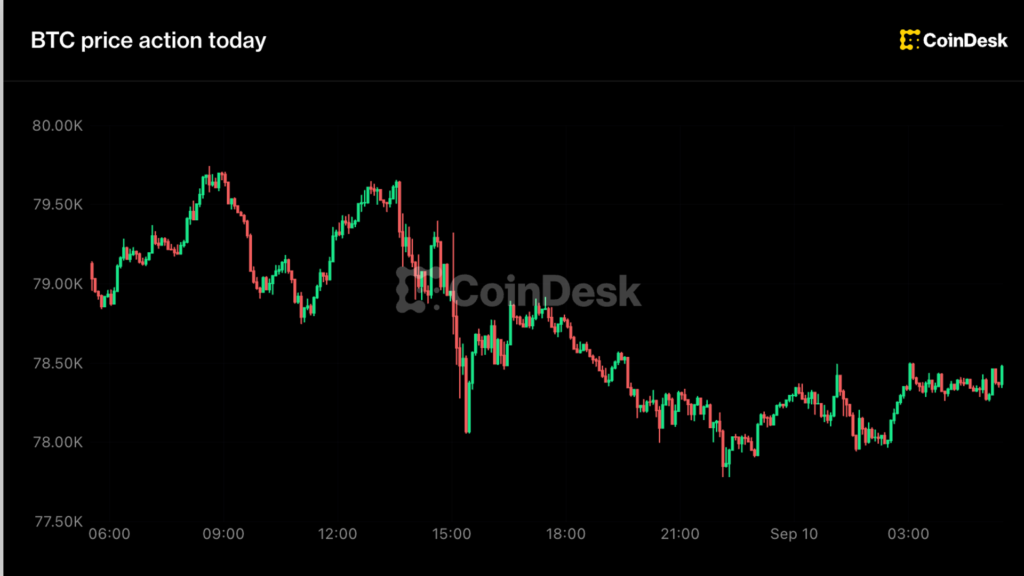
- Bitcoin hovered just over $78,000 on Thursday, declining roughly 1 percent, whereas most top cryptocurrencies experienced deeper pullbacks.
- The 50-day moving average for bitcoin moved past its 200-day moving average, a bullish indicator that experts note parallels a setup from 2019 that preceded a 90 percent price surge.
- Crude oil approached $102 a barrel due to mounting tensions with Iran, driving Treasury yields upward and placing downward pressure on global equities ahead of Friday’s inflation figures.
During Thursday morning hours in Asia, bitcoin changed hands just above $78,000, registering a 24-hour decline of about 1%, while other major digital assets saw heavier drops.
Dogecoin recorded the steepest drop among them, losing upwards of 5%, with BNB down approximately 4% and XRP lower by 3%. Ether, solana, and hyperliquid’s HYPE all decreased between 1% and 3%, bringing ether down just beneath $2,475 and solana close to $102. Tron stood out as the sole gainer, rising under 1% to reach roughly 34 cents, based on CoinDesk figures.
On Tuesday, bitcoin’s 50-day average price climbed above its 200-day average.
Analysts at FxPro explained that similar crossovers in October 2024 and May 2025 yielded no major results, though they noted that the latest occurrence comes on the heels of an extended bull market rather than developing inside a correction.
“The current situation bears a closer resemblance to what we saw in 2019,” they stated, highlighting a 90% rally that unfolded in less than two months following that technical indicator.
Read More: Bitcoin’s golden cross is here
As Asian trading progressed, Brent crude surged as high as nearly $102 per barrel after Tehran announced its readiness for an escalated conflict, with these elevated crude prices directly influencing rate projections.
The 10-year Treasury yield hovered around 4.85%, marking levels not seen since late 2023, following the U.S. government’s announcement of a plan to acquire up to $6 billion in longer-term debt, which fell short of investors’ expectations for a more substantial purchase volume.
Asian equity markets tracked Wall Street lower, sending the MSCI Asia Pacific Index down nearly 1% alongside drops across benchmarks in Japan, South Korea, Taiwan, and Australia. On Wednesday, the S&P 500 finished down approximately 1%, while the Nasdaq 100 experienced a slightly smaller dip. Futures for U.S. and European markets ticked upward.
The dollar index remained in the 98 range as intraday gains failed to hold, indicating that the greenback is no longer drawing the safe-haven demand that high oil prices provided earlier in the geopolitical standoff.
Currency traders focused closely on the Japanese yen, which traded back in the 150 per dollar range following remarks from Treasury Secretary Scott Bessent, as well as the Canadian dollar, which pushed the U.S. dollar under 1.38 as retaliatory tariffs took effect and the U.S. implemented bans on specific Canadian goods.
The upcoming Consumer Price Index release on Friday serves as the next critical catalyst, where an unexpectedly hot inflation reading could reintroduce Federal Reserve rate hike probabilities across all asset classes that suffered declines on Thursday.
Originally published at https://www.coindesk.com/markets/2026/09/10/dogecoin-sinks-5-to-lead-majors-losses-with-bitcoin-holding-usd78-000-level.