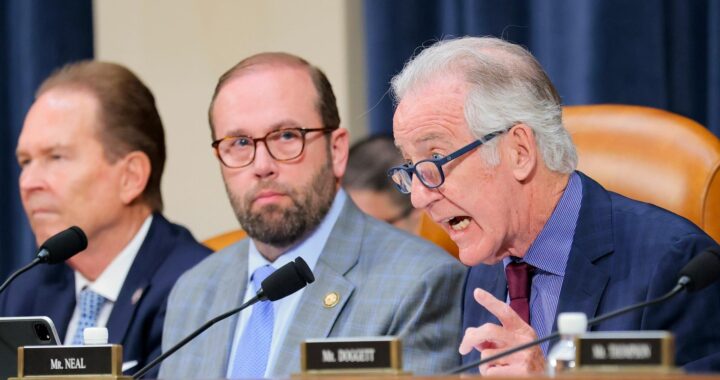
Later on Tuesday, the Senate is set to vote on a cloture motion aimed at advancing the Clarity Act. While a successful cloture outcome would open the floor for debate and push the bill closer to enactment, it does not automatically turn the proposal into law.
Tim Sun, a senior researcher with HashKey Group, notes that the procedural vote carries roughly a fifty-percent chance of passing.
“Currently, the probability of the procedural vote passing is a coin toss, around 50%, while the odds of the bill becoming law by the end of the year are below 20%,” he told CoinDesk.
Bitget Wallet research analyst Lacie Zhang likewise indicated that market participants are not pricing in an absolute certainty of passage.
Digital asset quantitative trading firm TDX Strategies mentioned that it anticipates a strong bullish reaction for bitcoin should the cloture motion succeed.
“An unexpected ‘Yes’ vote would spark an aggressive upside move in [BTC], breaking key $82k resistance and targeting the $88k–$90k range,” the firm stated in a daily note. Rejection of the bill, conversely, could spark a pullback toward $73,000, it added.
Even so, both Sun and Zhang pointed out that bitcoin might underperform relative to others because its regulatory standing, exchange-traded fund availability, and institutional frameworks are already relatively mature. Ether is positioned to capture the strongest relative advantage, according to Zhang, due to persistent regulatory ambiguity around it and its function as a base settlement layer for stablecoins, decentralized finance, and tokenized assets.
“If today’s procedural vote passes smoothly, crypto assets like BTC and ETH will likely see an immediate, direct positive reaction, but the market will soon begin hunting for assets that genuinely benefit from the shifting regulatory framework,” Sun told CoinDesk.
He further observed that Solana (SOL) and XRP (XRP) could also gain from more distinct jurisdictional boundaries separating the SEC and the CFTC, potentially easing institutional adoption, new product creation, and long-term capital inflows.
Zhang noted that XRP could experience a substantial reaction, though a portion of the regulatory optimism may already be accounted for in current prices.
Decentralized finance tokens UNI and AAVE offer higher-beta potential if the legislation solidifies legal safeguards for non-custodial software developers and decentralized networks, according to Zhang and Sun.
At the same time, Zhang cautioned that today’s proceeding is merely a cloture vote rather than final legislation. A quick price surge followed by a retreat would point to a strictly headline-driven trade, she explained. A lasting valuation shift would demand that ETH outperform BTC, consistent strength from UNI and AAVE, expansion in spot trading volumes rather than leveraged futures activity, and sustained momentum across multiple sessions.
Sun also cautioned that macroeconomic factors continue to play a crucial role. A potential interest rate hike by the Federal Reserve on Wednesday could counteract regulatory tailwinds by constricting market liquidity, he advised. Stay alert!
Read more: For analysis of today’s activity in altcoins and derivatives, see Crypto Markets Today . For a comprehensive list of events this week, see CoinDesk’s “Crypto Week Ahead.”
What’s trending
- Democrats send counteroffer to Republicans over Clarity Act provisions (CoinDesk): Late Monday, ahead of an essential procedural vote, Senate Democrats delivered a revised proposal regarding vital market structure legislation to Republican lawmakers, a source close to the matter informed CoinDesk.
- XRP Ledger is one vote away from starting its next big payments upgrade (CoinDesk): Ripple’s decentralized payments network, the XRP Ledger, stands a single vote away from enabling transaction bundling into a unified action, streamlining multi-step transfers. The Batch V1.1 upgrade would permit users to execute up to eight transactions at once.
- Bond selloff drives US benchmark beyond 5%; stocks rattled (Reuters): On Tuesday, government debt yields moved higher, spearheaded by the 10-year U.S. Treasury note reaching a nearly twenty-year high. Meanwhile, Japan’s 10-year sovereign yield touched a 30-year peak. Germany’s 10-year benchmark climbed to levels unseen since 2009, and French yields approached an 18-year high.
- Oil extends gains, Brent crude nears $108 following Houthi strikes on Saudi Arabia (CNBC): Crude prices extended their advance on Tuesday amidst reports of Houthi missile strikes targeting Saudi Arabia alongside Iranian vessel attacks within the Gulf region. Brent crude hovered near $107.72, while West Texas Intermediate climbed to $103.30 per barrel.
Today’s signal
The accompanying chart displays the weekly price action of bitcoin using candlestick representation. The overlaid yellow curve corresponds to the 50-week average price, commonly referred to as the 50-week simple moving average (SMA).
For three consecutive weeks, bitcoin valuations have failed to push past this 50-week SMA barrier, which historically acts as a critical market threshold.
According to Galaxy Research, this line serves as the persistent resistance ceiling that has capped every bear market recovery phase since November 2025. A failure to clear this barrier could ignite a fresh wave of selling pressure, swiftly accelerating downside momentum.
In summary, not only does today feature a decisive procedural Senate vote, but it also coincides with bitcoin testing a strictly defined technical pivot point.
Originally published at https://www.coindesk.com/daybook-us/2026/09/15/ether-solana-xrp-likely-to-gain-if-clarity-act-progresses.