Four years ago, the digital asset sector enjoyed minimal backing in the United States capital. It possessed a small core of dedicated supporters, a public image harmed by its worst actors, and an enforcement-driven regulatory environment that drained nearly half a billion dollars into legal fees and investigations—funds that should have built the next wave of American enterprises. The sector recognized that courtroom battles would never deliver true regulatory certainty. It needed to present its case directly to Congress, initiating a careful, long-term educational campaign that has now lasted several years.
This outreach strategy began with individual candidates. Starting in 2022, cryptocurrency advocates briefed and collaborated with congressional hopefuls across both major parties regarding what digital assets are, the benefits they offer everyday citizens, and the hurdles blocking their progress. Every subsequent election cycle introduced leaders capable of tackling the absence of transparent guidelines and halting another hostile, enforcement-first agenda.
The sector also drove a coordinated initiative to build permanent institutions inside the Beltway. The Blockchain Association, DeFi Education Fund, Stand With Crypto, Crypto Council for Innovation, American Innovation Project, Solana Policy Institute, and various other groups routinely brief lawmakers and staff, contribute constructive feedback on legislative drafts, and submit hundreds of formal comment letters. Companies, coalitions, and networks such as Solana, previously unknown in many circles, have established a permanent presence in Washington.
This broad method of bipartisan instruction, direct outreach, and institutional development yielded tangible results. Voting records validate this success. Republicans laid the groundwork by delivering near-unanimous majorities across every digital asset vote over the preceding two years. Democrats fueled the expansion: 21 House Democrats voted to overturn SAB 121, and a year later, 76 supported repealing the broker rule, demonstrating an understanding that software functions differently from a centralized intermediary. A substantial block of House Democrats subsequently backed both the CLARITY and GENIUS acts. Inside the Senate, 18 Democrats helped push the GENIUS legislation past the filibuster. The elimination of the broker rule marked the first cryptocurrency-focused law in U.S. history, while GENIUS became the premier federal stablecoin statute. Last month, the Ways and Means Committee advanced a digital asset tax measure by a 38-5 margin and defeated an amendment designed to revive the broker rule during a bipartisan vote.
Absent a comprehensive market framework from Congress, regulators have temporarily stepped in to fill the vacuum. The SEC recently rolled out its anticipated Regulation Crypto alongside an innovation exemption, the CFTC introduced a fresh framework for trading digital assets on regulated platforms, and regulators drafted rules to execute the GENIUS statute, all under Republican guidance.
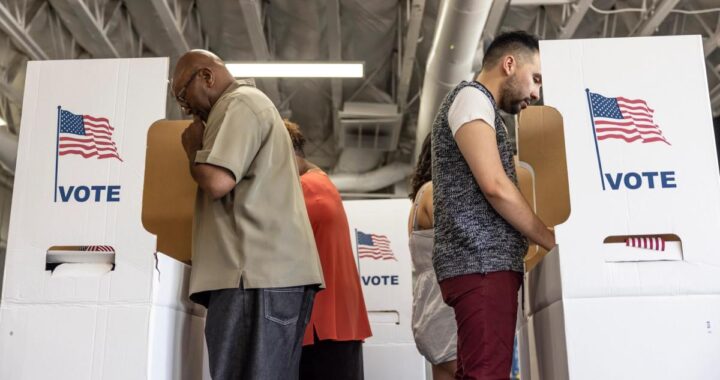
Nevertheless, the current congressional makeup that backed these major industry victories is poised to transition toward a more unpredictable environment. Financial markets, polling data, and political analysts indicate that Democrats are likely to capture the House and potentially the Senate. This shift introduces two competing dynamics for the digital asset space. The first is moderation driven by necessity. Democrats would secure the House by winning districts that supported President Trump, some traditionally very conservative, requiring those officeholders to answer to moderate, business-friendly voters. Significantly, these moderate Democrats comprised the majority of lawmakers who stepped up to make crypto legislation bipartisan during the 118th and 119th Congresses.
The second dynamic involves progressive energy originating in liberal districts nationwide. An expanding faction that remains skeptical of traditional financial services and disruptive technologies will likely push for harsher punitive rules.
Within the Senate, neither political faction is expected to command a supermajority capable of pushing through sweeping overhauls independently. While this makes industry-backed laws difficult to enact, it simultaneously gives crypto advocates the tools to stop hostile regulatory approaches from becoming law. Over the next two years, the SEC, CFTC, and alternative regulatory bodies will steer the bulk of the digital asset agenda through rulemaking and independent agency measures.
2028 is approaching rapidly
This reality directs our attention toward 2028, which will likely stand as the most pivotal election for the survival of the technology, with campaigning effectively launching the day after November 3.
Without explicit market-structure legislation enacted, leaders appointed by the upcoming presidential administration will dictate policy and could potentially dismantle previous achievements. Both political parties feature crowded fields of potential contenders without an obvious frontrunner, making immediate engagement essential.
Within the Democratic field, we must cultivate allies and identify potential candidates to head the SEC, CFTC, and Treasury Department. Democratic presidential hopefuls will display stark differences regarding cryptocurrency and technology policy. Several have already signaled their stances through legislative voting records, bills approved while serving as governors, and other public pronouncements. Clear pathways exist to encourage neutrality and backing at the highest level of the ticket. A technology-forward Democratic administration might not embrace digital assets with the same enthusiasm as the current White House, but early communication could prevent the appointment of an anti-crypto SEC chair reminiscent of Gary Gensler or a similar successor. On the Republican side, we must guarantee that the pro-innovation leadership model established by SEC Chair Paul Atkins and CFTC Chair Michael Selig extends deep into the next administration rather than concluding with the present one.
Regardless of how midterm election results materialize or which political party captures the presidency in 2028, our industry must stay committed to its proven strategy. Newly elected officials from across the political spectrum will grapple with these foundational policy questions over the coming decade. The sector serves its own interests best by planning along a multi-decade horizon rather than focusing strictly on short-term election cycles or isolated bills. The upcoming phase of digital asset policy will not hinge on a single election, but rather on the connections we establish, the arguments we articulate, and the preparation we undertake long before ballots are cast.
Note: The views expressed in this column are those of the author and do not necessarily reflect those of CoinDesk, Inc. or its owners and affiliates.
Originally published at https://www.coindesk.com/opinion/2026/11/02/crypto-s-washington-playbook-is-working-don-t-abandon-it-now.