October 31, 2026, 10:00 a.m. EDT
3 min read

Summary
- Services such as GoMining, KuMining and Sazmining are offering individuals access to industrial-style bitcoin mining, but high equipment and operating costs make profits difficult.
- Large miners’ shift toward artificial intelligence data centers has not significantly reduced bitcoin’s computing power, limiting the potential benefit for smaller operators.
- One Sazmining board could take more than six years to recoup its initial cost under current assumptions, and the next bitcoin halving is expected to extend that timeline.
Back in the formative era of bitcoin BTC $77,261.24 during 2009, retail participants could mint the digital currency utilizing standard desktop computers, collecting payouts for assisting with transaction validation across the proof-of-work blockchain. Several early miners amassed thousands of tokens prior to the introduction of dedicated hardware that eventually crowded out hobbyists.
Nearly twenty years later, corporations are attempting to re-engage retail users, presenting mechanisms to accumulate BTC without the necessity of purchasing and running costly hardware at home. Nonetheless, generating a net gain continues to present hurdles, even though select prominent industrial operations are leaving the sector to concentrate on artificial intelligence (AI) server facilities in pursuit of superior financial yields.
“It’s still hard to make money as an individual miner, and it’s not going to get any easier,” noted Ivo Georgiev, founder and chief executive officer of digital wallet provider Ambire, who mined bitcoin back in 2011 while attending high school.
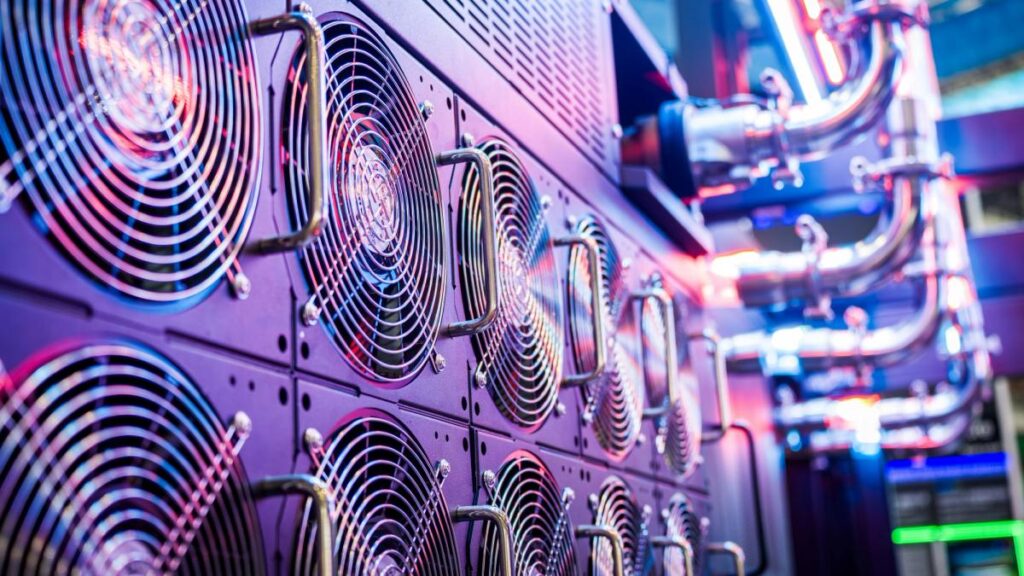
Throughout subsequent years, mining evolved into an enterprise dominated by entities operating vast arrays of units within specialized data centers featuring advanced hardware, custom cooling architectures, and specialized electricity agreements. For independent operators, platforms including GoMining, KuMining, and Sazmining introduced pathways into that same enterprise infrastructure.
Presently, larger bitcoin mining corporations are shifting toward AI computing, leasing out computational capacity to tech enterprises rather than depending entirely upon block subsidies, which has sparked speculation that any subsequent decrease in network difficulty might enhance profitability for smaller players.
That outcome, however, hinges upon whether mining infrastructure is genuinely decommissioned or simply relocated elsewhere. The hashrate, which quantifies the aggregate computational processing applied to the ledger, hovered recently around 1.09 zetahash per second, remaining largely unchanged compared to roughly 1.13 ZH/s a year prior, according to data from Hashrate Index. It has demonstrated an upward trajectory over the past couple of months.
“If equipment is sold to another mining operator, it may continue competing for the same rewards,” explained GoMining chief executive officer Mark Zalan.
Mining remains fiercely competitive and is projected to experience reduced margins in about 18 months, when the BTC granted per mined block decreases by half. Even so, acquiring tokens through hardware might prove more economical than purchasing them at prevailing market rates, according to Nick Perchey, director of revenue at Sazmining.
Earlier this month, Sazmining, established in 2018, commenced sales of mining boards engineered by Jack Dorsey’s firm Block (XYZ). Each individual unit is priced at $4,187. Electricity and upkeep demand an extra $153 monthly, alongside a management fee equivalent to 15% of the mined bitcoin. The firm has logged roughly 50 purchases, with about half originating from novice miners, Perchey stated.
The business, which reports supporting nearly 500 clients controlling approximately 4,000 active devices, estimates that the generated bitcoin will prove at least 20% cheaper than acquiring it on an open exchange across the hardware’s minimum three-year operational lifespan.
“Returns aren’t guaranteed, and we tell every buyer that before they purchase,” he noted.
Using Sazmining’s projection of 0.035 BTC in yearly yield per board alongside a bitcoin valuation of $83,000, gross income would approximate $2,905 annually. Following $1,836 in yearly operational expenses and the 15% administrative fee, roughly $633 would remain toward amortizing the initial hardware expenditure. At that pace, surpassing six years would be necessary to completely recover the upfront outlay, provided that bitcoin valuation, block rewards, and operational expenses remain constant. The upcoming halving event, which decreases the reward to 1.5625 BTC, will prolong that schedule.
“Receiving bitcoin regularly and recovering the full investment are different milestones,” remarked Zalan of GoMining.
Jolie Du, chief operating officer at KuMining, presented a separate scenario. She calculated that an S23 XP Hyd device would require 23 months to amortize its cost given complimentary power, or alternatively 29 months with electricity priced at 4 cents per kilowatt-hour, prior to factoring in supplementary expenditures.
“Daily mining income alone is not a sufficient measure of profitability,” Du stated.
Originally published at https://www.coindesk.com/tech/2026/10/31/as-big-bitcoin-miners-chase-ai-profits-individuals-get-another-shot-at-the-rewards.