Although the Securities and Exchange Commission’s tokenized-stock pilot program remains limited for the time being, market researchers are already identifying Coinbase (COIN), Robinhood (HOOD), and Circle (CRCL) as prime beneficiaries should additional American securities migrate onto public ledgers.
The SEC’s five-year innovation exemption establishes a regulatory pathway enabling tokenized American equities to be transacted via automated market makers on public blockchains. To meet compliance standards, these tokens must retain standard shareholder privileges like voting capabilities and payouts, while trading platforms encounter strict ceilings regarding overall volume and the total quantity of listed equities.
According to Goldman Sachs, Coinbase stands to gain across multiple divisions of its enterprise.
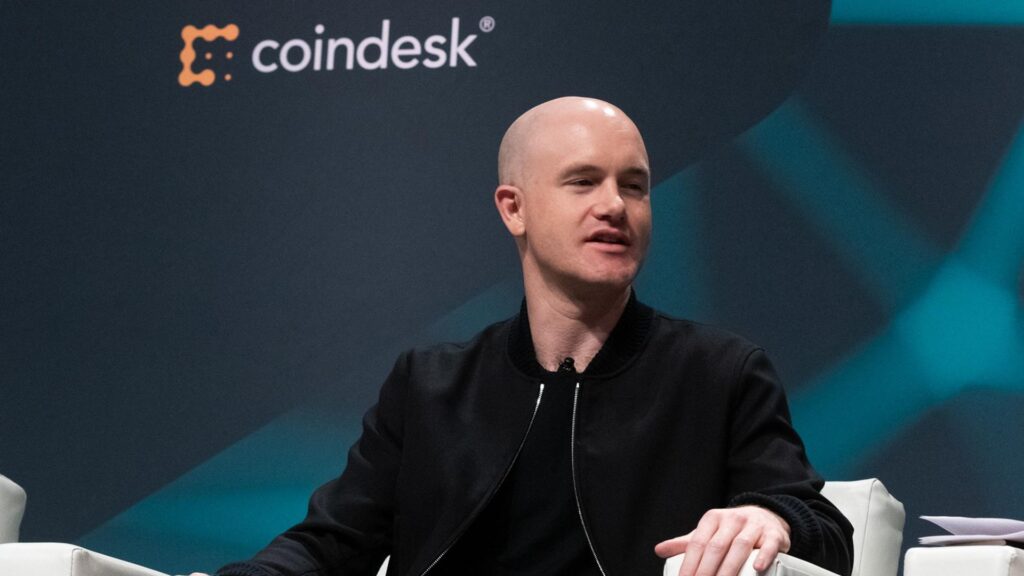
The analysts pointed out that its current tokenized-equity product already incorporates numerous criteria mandated by the SEC, including dividend distribution and voting structures comparable to the base security. Furthermore, Coinbase CEO Brian Armstrong revealed earlier in the week that voting privileges are arriving shortly, fulfilling a vital component to grant tokenholders identical standing as standard equity investors.
The Goldman assessment additionally noted that Coinbase maintains an institutional custody division alongside Coinbase Tokenize, a service offering technical backing for external organizations bringing assets onto the blockchain.
In a parallel assessment, analysts at Citizens underscored Coinbase’s extensive footprint spanning vault custody, tokenized instruments, digital coins, and its Layer-2 Ethereum network, Base.
One obstacle remains if Coinbase wishes to operate a marketplace directly under the exemption, given that its exchanges rely on central limit order books, whereas the regulatory framework centers around automated market makers (AMMs).
As a result, Goldman’s findings indicate that Coinbase would require fresh operational systems or alternatively channel traffic through decentralized exchanges utilizing AMMs, such as protocols hosted on Base.
Robinhood expected to adjust for U.S. market
Robinhood could likewise reap advantages, despite the fact that its existing international stock tokens do not align with the SEC regulatory guidelines.
Those instruments deliver price exposure to American equities via derivatives rather than supplying the comprehensive ownership prerogatives mandated by the exemption. Goldman analysts explained that Robinhood would necessitate further engineering to deploy a fully compliant offering within the United States.
This became a contentious topic earlier in the month when AMC Entertainment CEO condemned Robinhood for issuing AMC-tied stock tokens without corporate authorization. The fresh regulatory structure grants issuing firms the authority to veto third-party tokenized representations of their shares before public trading can commence.
Nevertheless, Citizens analysts anticipate that Robinhood will act swiftly given the strong adoption of its tokenized-share offerings overseas alongside its broader development around the Arbitrum-powered Robinhood Chain.
Robinhood CEO Vlad Tenev already indicated this week that additional shareholder functionalities, encompassing share buybacks and voting rights, will soon be integrated into the equity tokens.
Stablecoins could be another winner
An expansion in tokenized asset trading may additionally generate heightened demand for blockchain-based liquidity.
Reports from both Goldman and Citizens identified Circle as an indirect beneficiary, noting that USDC could see utilization in clearing transactions, serving as collateral, and supporting other functions within on-chain ecosystems.
Coinbase stands to capture value here as well through financial participation, deep integration with USDC, and its active involvement in circulation.
Meanwhile, legacy exchanges such as Nasdaq (NDAQ) and the New York Stock Exchange parent Intercontinental Exchange (ICE) appear insulated for the moment. Goldman stated that these new trading hubs are unlikely to siphon significant volume away from established operators due to regulatory volume thresholds, corporate veto options, and the structural constraints of automated market makers within deep liquidity markets.
Originally published at https://www.coindesk.com/business/2026/09/20/coinbase-robinhood-circle-could-be-early-winners-of-sec-s-tokenized-stock-push-analysts-say.