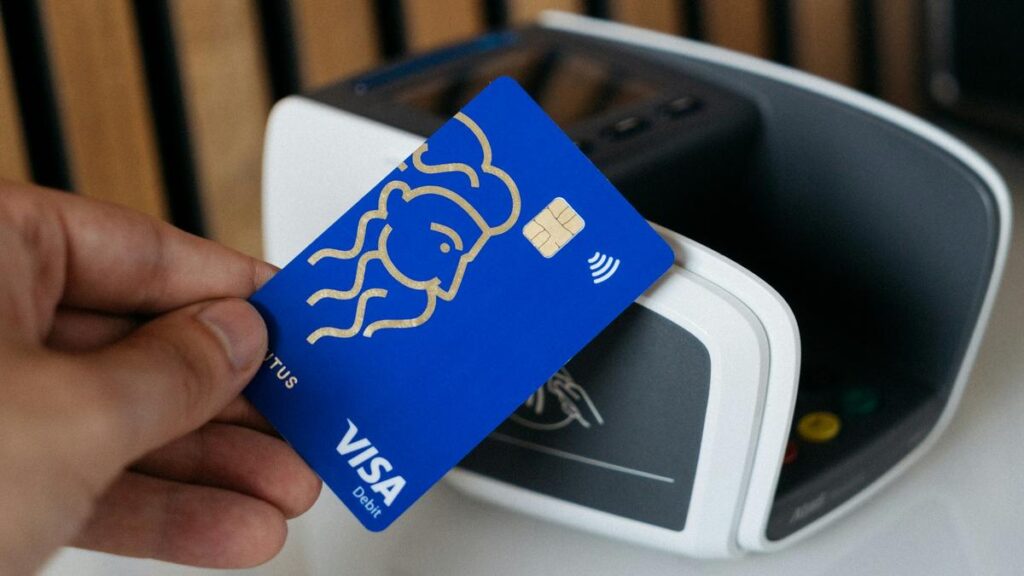
Increasing cashback thresholds, substantial returns on funds, and massive discounts on select purchases make crypto-enabled payment cards deliver perks that appear nearly impossible to match.
The central difficulty for certain card platforms is that the expenses incurred for user acquisition exceed the value those same customers generate.
Take KAST as an example. The stablecoin-driven financial network, which releases cards via the Visa infrastructure, shifted from a near break-even status into negative margins as marketing outlays escalated, CEO Raagulan Pathy shared with CoinDesk during a conversation.
Similarly, Bleap provides up to 15% on returns concerning digital asset holdings alongside 20% cashback for transactions. If users merely spend through its Mastercard and gather cashback, they risk remaining unprofitable, noted Bleap Latvia CEO Eduards Timofejevs during a separate discussion.
These companies are banking on the assumption that users will eventually engage in trading, borrow funds, or pay for additional offerings, thereby converting initial promotional expenditures into sustainable revenue streams. Until that occurs, a larger user base and heightened costs translate to an increased subsidy burden.
Pathy stated, “You take a loss on acquiring the customer at the beginning, but then you sell them more and more features.”
KAST exemplifies this financial delta. The enterprise advertises reward rates on its Reserve account ranging from 8% to 12%, depending on the specific membership tier. Nevertheless, the capital supporting the service yields merely 3.5% to 4%, leaving KAST to cover the difference.
Pathy noted that Reserve captured tens of millions of dollars by September, and the associated subsidies proved quite costly for the business. He explained that he regarded this expenditure as a strategy to capture market share.
He noted, “Previously we were nearly break even. Now we’re loss-making.”
Such a strategy demands both significant capital and time. This framework suits KAST well, given that it secured $80 million in March via a funding initiative spearheaded by QED Investors and Left Lane Capital. Pathy mentioned in the interview, held last month, that the firm maintained four to five years of operational runway while investors exerted no pressure to hasten profitability.
He referenced subscription fees, corporate services, and upcoming offerings like tokenized equities as methods to extract greater value from users. An expanded enterprise should additionally negotiate favorable terms with infrastructure suppliers, he added.
KAST refrained from disclosing the exact amount allocated toward subsidies, neglected to provide an updated Reserve balance, and avoided directly confirming whether the company remained unprofitable when recently queried.
At Bleap, Timofejevs similarly highlighted economies of scale and extra services, such as trading, as mechanisms to enhance unit economics. The organization has been investing in expansion while striving to fulfill a broader range of financial requirements for its clientele, he explained.
Its published terms present a baseline 1% cashback on qualified purchases, bounded by transaction limits of 500 euros ($560) and a monthly ceiling of 3,000 euros. Enhanced percentages, such as 20% on targeted subscriptions, enforce separate restrictions.
When the rewards change
The greater challenge lies in whether consumers remain loyal when perks inevitably shrink as firms transition from aggressive expansion to profit generation.
Crypto exchange Bybit EU, provider of a prepay Mastercard, has already altered the proposition for standard cardholders. Via a June publication, it substituted non-VIP cashback tiers spanning 2%-10%—previously subject to monthly caps—with an unrestricted flat rate of 1%. This modification went live for existing participants on August 4.
Recurring subscription bonuses also transitioned into a first-month perk limited to 50 euros across eligible offerings, abandoning their status as a continuous benefit for high spenders. Bybit indicated that this streamlined layout would render the card useful beyond individuals with high purchasing volumes.
Bleap’s product has likewise evolved. An earlier 2% cashback structure made way for the current 1% default rate paired with elevated rewards across designated verticals. Its February revision discarded a prior $10 restriction, meaning the alteration proved more intricate than a simple reduction of every user’s incentives by half.
Neither Bybit nor Bleap replied to inquiries regarding how these adjustments impacted active user metrics, overall spending, or customer retention.
The underlying financial mechanics clarify why service operators seek avenues beyond mere consumer spending. European Union regulations restrict interchange—the fee awarded to card providers—at 0.2% for applicable consumer debit transactions.
Within the United States, the fee varies according to the specific card and issuer. Federal Reserve figures demonstrate that debit transactions exempted from federal limits averaged 1.21% of purchase values throughout 2024. Credit cards maintain alternative conditions and frequently exceed 2%.
Indications suggest that card usage can develop into a behavioral habit. A representative for Krak, a financial application managed by digital asset exchange Kraken operating on the Mastercard network, informed CoinDesk in August that users averaged roughly 8.3 card transactions weekly. Retail purchases and local stores represented 59.3% of total operations.
The representative noted, “Krak customers aren’t just swiping more; they’re using Krak more days a week and more times per day.”
The company stated it approached 200,000 cardholders while aiming to secure the position of primary financial hub for its users.
An app spokesperson told CoinDesk, “We evaluate the economics of Krak across the broader customer relationship, rather than treating the card as a standalone product.”
The spokesperson noted that users who maintain asset balances and conduct spending remain valuable even if they abstain from active trading on the crypto platform.
Rival exchange OKX draws a parallel conclusion. Through an August commentary piece, Europe CEO Erald Ghoos stated that the platform’s debit card enables users to make purchases without first transferring funds from OKX into a conventional banking institution, whereas VIP status can unlock richer cashback and expanded benefits.
Such frameworks supply providers with justification for incentivizing consumer transactions: retaining users’ financial activities strictly inside proprietary ecosystems.
Success ultimately hinges upon clients remaining active and utilizing enough revenue-generating services to offset customer acquisition costs. If individuals depart when incentives decline, the acquisition expense remains unpaid.
Different models
Rivalry amongst digital asset card operators is driving innovation throughout the broader payment sector.
Startup Cero Finance pursues an alternative incentive framework. Founder Markuss Jonans communicated to CoinDesk during an interview at the UN:BLOCK conference situated in Riga that the system merges yield generation with transaction-driven revenues to support gamified perks, with credit and lending designated to become primary income sources.
An anticipated card will allow consumers to establish borrowing profiles cultivated via spending, account integration, and debt repayment when utilized.
Another seemingly novel framework belongs to crypto neobank Ether.fi. Its Cash credit card operates alongside staking infrastructure and managed decentralized finance vaults, with all three elements interconnected. Individuals utilizing the card may borrow against qualified staked assets on the network that simultaneously generate yield. Borrowers incur interest charges, and their posted collateral remains subject to liquidation if necessary.
Evidence confirms that users engage with offerings beyond merely the card. A March study from Alea Research revealed that roughly 80% of Cash participants additionally interacted with Liquid, the decentralized finance yield offering.
Ether.fi additionally manages reward expenditures via its cashback layout. Personal card percentages commence at 3% and decrease as monthly spending surpasses thresholds determined by membership status and currency type. Reduced rates apply exclusively to purchases exceeding each threshold, while accumulated cashback already secured, distributed in ETHFI, remains unaffected.
Whether funded via trading activities, lending mechanisms, or staking protocols, incentives must ultimately find coverage through incoming revenue. Until then, crypto card participants capture advantageous acquisition terms with every single swipe.
Originally published at https://www.coindesk.com/business/2026/11/01/crypto-card-startups-are-racking-up-losses-just-to-buy-your-loyalty-with-big-rewards.