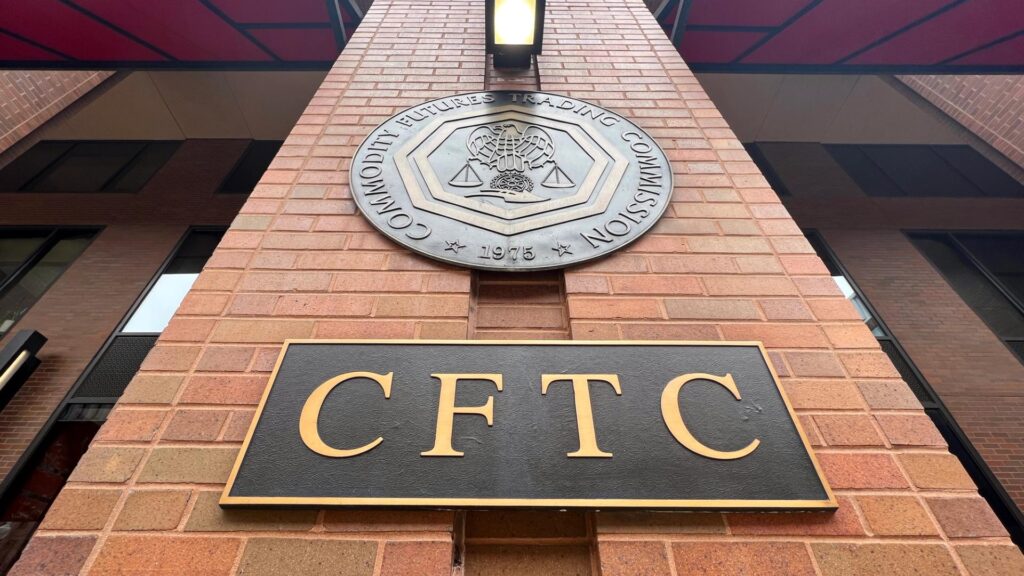
The U.S. Commodity Futures Trading Commission released an advisory warning prediction market operators about “mention markets” that could be susceptible to manipulation.
While the agency is not prohibiting these specific trading contracts, it is setting a remarkably high threshold for approving such wagers.
Financial speculation regarding specific statements or actions by individuals, frequently termed “mention markets,” carries distinct vulnerabilities according to the American regulatory body that monitors forecasting platforms like Polymarket and Kalshi.
Published on Tuesday, an advisory issued by the Commodity Futures Trading Commission (CFTC) might restrict the approval timeline for event contracts that would typically pass regulatory oversight.
Unlike other markets driven by “independently generated, externally verifiable outcomes that are outside the control of any single person,” this classification of betting behaves differently, explained the CFTC staff advisory. Instead, the administration highlighted that the final result depends on “the discrete conduct of a named person, and that conduct may be neither independently generated nor externally verifiable.”
Essentially, the individual in question or associates close to them could manipulate the results using insider knowledge of the active wagers. Based on the advisory, the CFTC’s Division of Market Oversight, which tracks the forecasting market industry, views these contracts as “presumptively readily susceptible to manipulation.” Consequently, the CFTC reminded prediction platform organizers that they are solely permitted to facilitate trading for “derivative contracts that are not readily susceptible to manipulation.”
Rather than entirely banning mention markets—such as the current Kalshi trading concerning remarks by U.S. President Donald Trump at the United Nations—the regulator advocated for strict supervision. It enumerated several conditions that could validate a contract built adequately to minimize manipulation risks. For such markets to gain approval, the organization indicated they must incorporate “independent verifiability and substantial public scrutiny as essential attributes.”
The CFTC detailed specific criteria that could strengthen a contract, recommending they be evaluated and included within the platform’s official regulatory documentation:
- External factors that create significant difficulty or prohibitive expenses for the person trying to manipulate the market;
- The wagering topic cannot be subject to external public pressures;
- The betting activity centers on a formal, public environment involving a public figure;
- The prediction scenario undergoes close observation to detect any indicators of manipulation.
The regulatory body has previously addressed illegal wagering within these markets via a recent enforcement action, penalizing a former White House teleprompter operator who worked for Trump and placed bets based on his prior knowledge of presidential speeches.
Highlighting another prominent case of an individual swaying markets through personal actions, Kalshi recently imposed a lifetime trading ban on former U.S. Representative George Santos following allegations that he wagered money on his own appearance during the State of the Union address.
Originally published at https://www.coindesk.com/policy/2026/09/22/u-s-regulator-warns-about-cheating-risks-in-mention-markets-on-prediction-platforms.