Maharashtra is formulating a framework to place state assets on a blockchain network, which includes potentially tokenizing electricity transmission systems to gather capital for constructing new power grids and energy storage facilities.
Praveen Pardeshi, the CEO of MITRA (Maharashtra Institution for Transformation), a state government advisory agency, stated that Maharashtra is actively designing policies to facilitate the tokenization of government-owned assets.
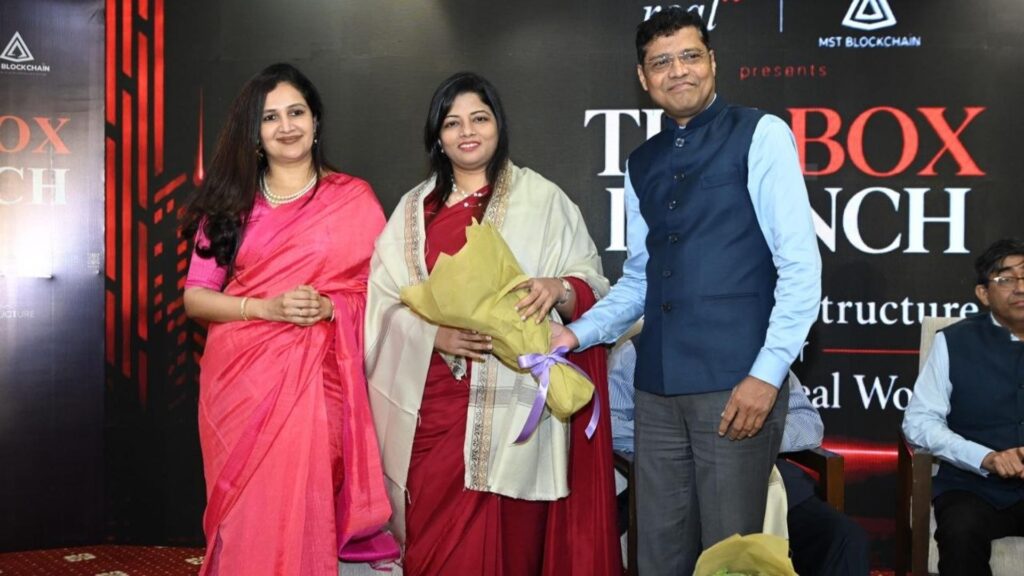
Pardeshi, who additionally acts as the chief economic consultant to the chief minister, detailed this strategy during a keynote address at “The Box Launch,” an exclusive gathering organized by real estate tokenization platform RealX and MST Blockchain at the World Trade Center in Mumbai.
He pointed to the state’s electricity transmission infrastructure as a primary candidate to benefit from this initiative.
At present, power transmission lines generate consistent fee revenue by moving electricity across the electrical grid, but the funds tied up in their construction remain stagnant and cannot be easily repurposed for fresh projects. He connected this situation to a current challenge faced by Maharashtra: the region produces surplus solar energy but lacks sufficient grid capacity to transport it to locations where and when it is needed.
Pardeshi explained that the government could address this limitation by tokenizing a segment of its transmission infrastructure, enabling investors to earn a portion of the generated revenue while supplying the state with immediate capital for new public works.
According to Pardeshi, transmission assets do not need to be fully tokenized, as even 40% or 50% could be sufficient. He noted that token holders could receive a share of the earnings collected by the Maharashtra Transco Company, while the newly raised funds from token purchases would assist in constructing additional transmission lines and solar energy storage facilities.
Tokenization involves bringing conventional assets onto a distributed ledger, a method designed to increase transparency, expand investor involvement, and upgrade financial market infrastructure. Data from RWA.xyz shows that the tokenized asset sector currently stands at roughly $38 billion, with the vast majority concentrated in private credit and U.S. Treasury bonds.
As India’s wealthiest state, Maharashtra produces about 14% of the nation’s nominal GDP and hosts roughly 130 million residents. The region is seeking to utilize this technology to extend beyond traditional bonds into economic assets that directly stimulate growth.
A win-win arrangement
Pardeshi emphasized the significance of the proposal by highlighting an existing price disparity within the electricity sector.
He noted that electricity distribution companies, or discoms, incur high expenses to acquire power during peak hours, despite electricity frequently trading at much lower prices on the open exchange during surplus periods, provided it can be transmitted and stored effectively.
During peak times, discoms pay between 16 and 18 rupees per unit, whereas prices drop to roughly 2 paisa on the power exchange during times of excess supply. He suggested that improved transmission and storage infrastructure, supported by tokenized funding, could help bridge that gap.
Pardeshi also mentioned real estate as an existing example of how tokenization functions in practice.
He referenced Express Towers, a commercial property located near his Mumbai office that was previously sold by its original owner and subsequently tokenized via a REIT architecture. He described this arrangement as a mutually beneficial solution for both the seller and the retail investors who now collect rental distributions.
A broader push for tokenization
This proposal forms part of a wider government initiative to expand tokenization practices throughout the state.
During the event, RealX and MST Blockchain debuted their respective ‘REDbox’ and ‘WHITEbox’ platforms, which serve as localized frameworks intended to standardize Real World Asset (RWA) tokenization in India. Institutional digital asset custody provider Liminal Custody acted as a core partner for the launch, supplying the underlying secure wallet and storage infrastructure.
Simultaneously, the regional government is drafting separate legislation tailored to this sector. In July, Chief Minister Devendra Fadnavis instructed state officials to formulate the Maharashtra Digitisation and Exchange of Land Token Assets Act, commonly known as the DELTA Act, which would establish Maharashtra as the inaugural Indian state featuring a specialized legal framework for blockchain property tokenization.
The legislation remains in the development phase and has not yet been passed into law.
Tokenization versus privatization
Pardeshi also addressed concerns regarding whether tokenization equates to the wholesale privatization of state-owned property.
He dismissed that interpretation.
He emphasized that tokenization does not represent full privatization, but rather circulates capital among a broader group of participants.
While the exact classification may rely on how these tokenized instruments are structured, Pardeshi characterized the regional administration’s strategy as a method to widen public involvement in infrastructure financing while maintaining government ownership over the underlying assets.
He concluded that the administration views this initiative not as liquidating public property, but rather as enabling a greater number of citizens to engage in regional development and public asset creation.
Originally published at https://www.coindesk.com/markets/2026/09/11/india-s-richest-state-is-exploring-tokenizing-its-own-assets-to-fund-new-infrastructure.