
Summary
- Bank for International Settlements leader Pablo Hernandez cautioned that rapid, debt-funded artificial intelligence investments might endanger financial stability if profits fall short of expectations.
- The top five technology firms intend to allocate upwards of $1 trillion toward AI initiatives throughout 2025 and 2026, while worldwide artificial intelligence funding could scale to $3 trillion or $4 trillion by 2030.
- Hernandez noted that a downturn in highly concentrated AI equities could dampen consumer spending and propagate internationally, though he acknowledged that AI has proven capacity to boost productivity.
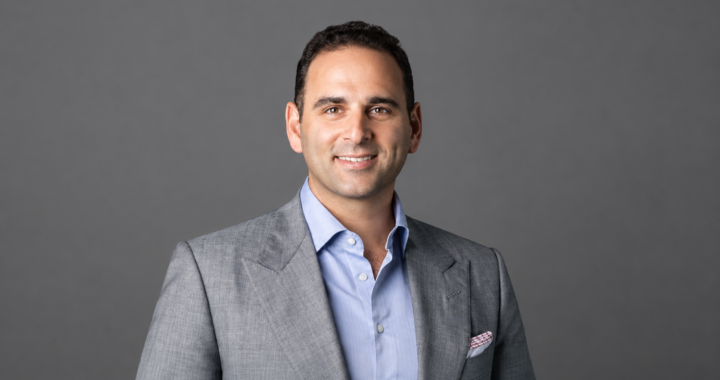
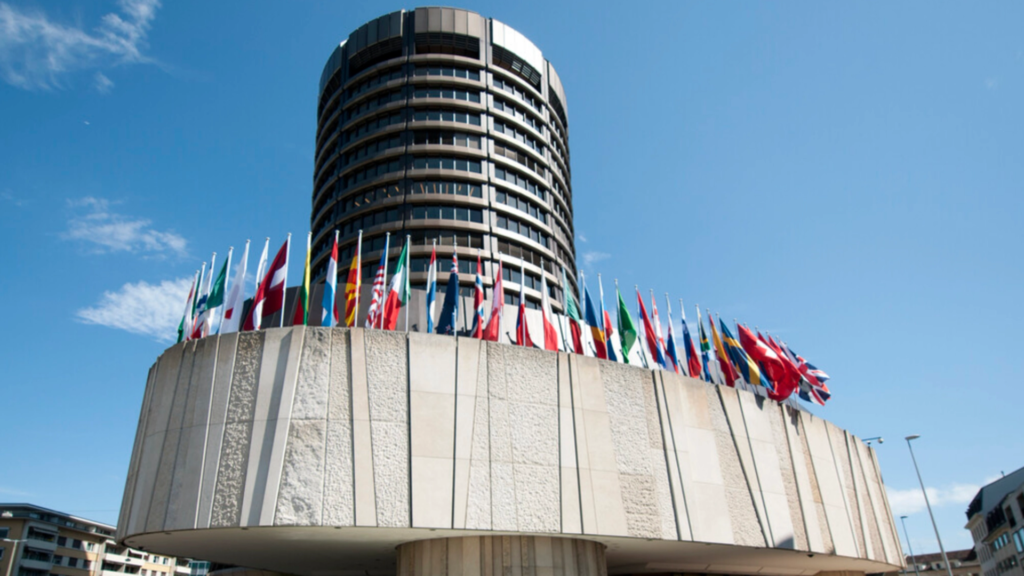
The swift expansion of investments in artificial intelligence (AI) could introduce threats to financial stability if companies fail to deliver the financial returns investors anticipate, Pablo Hernandez, the leader of the Bank for International Settlements (BIS) stated on Thursday.
Hernandez pointed out that capital expenditures by leading AI companies are increasingly outpacing cash inflows, relying instead on debt and private credit as part of an aggressive investment rivalry among major corporations. He referenced historical precedents such as the canal mania of the 1830s, the British railway boom of the 1840s, the electrification expansion of the 1920s, and the dot-com surge of the late 1990s, all of which centered around profound technological innovations.
"All attracted more capital than eventual returns could justify. In each of these instances, the subsequent correction carried economy-wide consequences," Hernandez observed.
Semiconductor producers, hyperscalers, and AI developers are interconnected through financial agreements that can remain obscure and difficult to appraise, rendering the financial system vulnerable if future profitability forecasts are missed, he continued. A correction within highly concentrated AI stocks could influence consumer consumption, while the heavy weighting of U.S. equities within international markets could transmit a downturn past United States borders.
Hernandez highlighted that the five largest technology giants alone project spending in excess of one trillion dollars on AI-focused projects between 2025 and 2026, alongside projections that global artificial intelligence spending will climb from roughly $500 billion currently to between $3 trillion and $4 trillion by 2030. Bridgewater Associates recently observed that Microsoft MSFT$490.13, Alphabet GOOG$326.60, Meta META$648.56, and Amazon (AMZ), possessing a collective market capitalization of approximately $12 trillion, anticipate pooling $650 billion together toward AI infrastructure within this year alone.
Apprehensions regarding an artificial intelligence bubble have surfaced throughout the year, including Citrini Research‘s pessimistic 2028 outlook which disrupted technology equities in February.
"Given that American stocks represent a massive portion of worldwide equity markets, these ramifications could spread globally. Across certain regions, windfall profits derived from growing AI-related exports might also fuel domestic asset bubbles, further compounding financial stability worries," he remarked.
"I am not claiming this is the guaranteed trajectory of the AI boom. However, the magnitude and velocity of the current investment surge, combined with the weight of anticipated commercial payoffs, certainly justify a degree of prudence."
The BIS executive stated that the potential of artificial intelligence is genuine, citing evidence of productivity improvements across software programming, consulting, and professional writing, though he added that ultimate economic outcomes will rely on how broadly those advantages are distributed and whether public officials invest properly in workforce skills, infrastructure, and market competition.
AI leaves the fundamental responsibilities of central banks unchanged, Hernandez concluded, although it may complicate the interpretation and oversight of the global economy.
Originally published at https://www.coindesk.com/business/2026/09/10/ai-s-rapid-rise-poses-global-financial-stability-risks-says-head-of-the-bis.