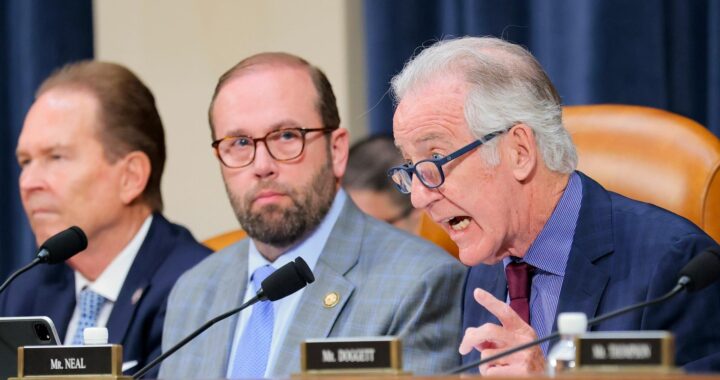
As the scheduled Tuesday afternoon opening vote approaches, the U.S. Senate has not secured sufficient backing to advance the Digital Asset Market Clarity Act toward enactment, with both political parties voicing discontent regarding opposing stances.
GOP legislators published an iteration of the cryptocurrency market-structure framework over the weekend, labeling it their ultimate proposal. Nevertheless, the compromise adjustments integrated into crucial segments of the measure encountered a Monday counter offer from Democrats that likewise failed to gain traction.
“Senate Democrats’ counter offer looks identical to their opening position at the start of recess,” stated Senator Cynthia Lummis, a principal Republican negotiator, expressing frustration that “Democrats have not budged an inch” despite Republicans having “moved substantially on every front.”
“If Democrats are serious about reaching a deal, they need to actually start negotiating instead of resubmitting the same demands and calling it progress,” Lummis concluded.
Although remaining outside direct discussions, Senator Elizabeth Warren, the senior Democrat on the Senate Banking Committee, informed reporters on Tuesday that the text advanced over the weekend by Republicans “was not negotiated with the Democrats.”
“It was between the Republicans and White House, and the changes were nonsense,” asserted Warren, a consistent critic of the measure and the digital asset sector. “In each case, they put in some new words that pretended to solve the problem, and then just either left the problem intact or expanded it later on.”
‘Narrow’ pathway
Policy experts in Washington assigned distant probabilities to the voting procedure on Tuesday.
“With Democrats largely skeptical of the GOP’s latest offer, it’s unlikely they will provide the necessary votes to advance the bill later today, barring significant changes,” noted Beacon Policy Advisors in a memo to clients. “While the party could hypothetically vote to advance the bill to continue negotiations — reserving the ability to vote it down if things move further in their direction this month — we think that pathway is narrow.”
A few hours remain prior to the anticipated 2:15 p.m. ballot, and such legislative talks have historically generated agreements in the final moments. Still, several sector participants remain uncertain whether the dialogue can be rescued, while figures such as Coinbase CEO Brian Armstrong have spent recent days suggesting that an unsuccessful bill will not halt regulatory momentum.
During a Washington industry gathering on Monday, White House digital asset advisor Patrick Witt remarked that both the U.S. Securities and Exchange Commission and the Commodity Futures Trading Commission maintain robust regulatory calendars designed for virtual assets.
“They’ve got a job to do one way or the other,” he noted. “There’s still good news coming for the industry.”
Nevertheless, SEC Chairman Paul Atkins has frequently conceded that his agency’s directives require legislative backing to achieve permanence. Furthermore, the authority of the CFTC contains a significant limitation regarding direct supervision over cryptocurrency spot markets—such as transactions involving bitcoin (BTC) and Ethereum’s ether (ETH).
It remains possible that senators opposed to the newest iteration of the Clarity Act could opt to vote affirmatively to keep the legislative mechanism moving forward. The upper chamber’s standard method for approving measures, known as cloture, represents a multi-phase procedure where the initial vote technically initiates debate on a proposal and permits an amendment phase. Consequently, an affirmative vote in the primary test does not guarantee ultimate passage.
Additionally, despite Republican negotiators concentrating on Democratic resistance, several GOP members have indicated they will withhold support from the Clarity Act if banking institutions remain apprehensive that stablecoin reward initiatives could threaten their core interest-bearing deposit base.
The banking sector indicated on Monday that the final Republican revision of the legislation failed to alleviate its anxieties. This stance sustains uncertainty regarding whether the Republican party can successfully consolidate internal support for the act.
The White House addressed the banking sector’s worries on Tuesday by publishing economic statistics indicating those concerns are unfounded.
Jaret Seiberg, a policy analyst at TD Cowen, estimated the probability of a failed initial vote at 60%. Under that outcome, he noted, “Democrats, including those who are crypto friendly, decide the GOP changes are insufficient. It also likely means several Republicans vote no over stablecoin yield or law enforcement concerns.”
Keeping the process going
Meanwhile, the cryptocurrency sector urges lawmakers to sustain the legislative procedure through an initial affirmative vote that enables ongoing dialogue.
“A yes vote is critical and keeps the process moving,” major crypto advocacy coalitions asserted in a collective statement on Tuesday. “Doing so will ensure that senators have opportunities to debate and move this much-needed legislation to the Senate floor.”
Should the vote proceed as scheduled on Tuesday and ultimately fail, that outcome likely concludes the Clarity Act narrative for the current congressional term. Moreover, probabilities remain elevated that Democrats might recapture a majority in the House of Representatives during the November elections, implying that subsequent regulatory initiatives could fall under the control of Democratic committee chairs.
Without a viable digital asset measure, Democrats are expected to emphasize accusations of corruption regarding President Donald Trump and his administration. Consequently, political action committees within the industry will need to evaluate whether certain crypto-friendly Democrats ought to be treated as political adversaries.
Originally published at https://www.coindesk.com/policy/2026/09/15/crypto-clarity-act-barrels-toward-disappointment-barring-last-minute-senate-turnaround.