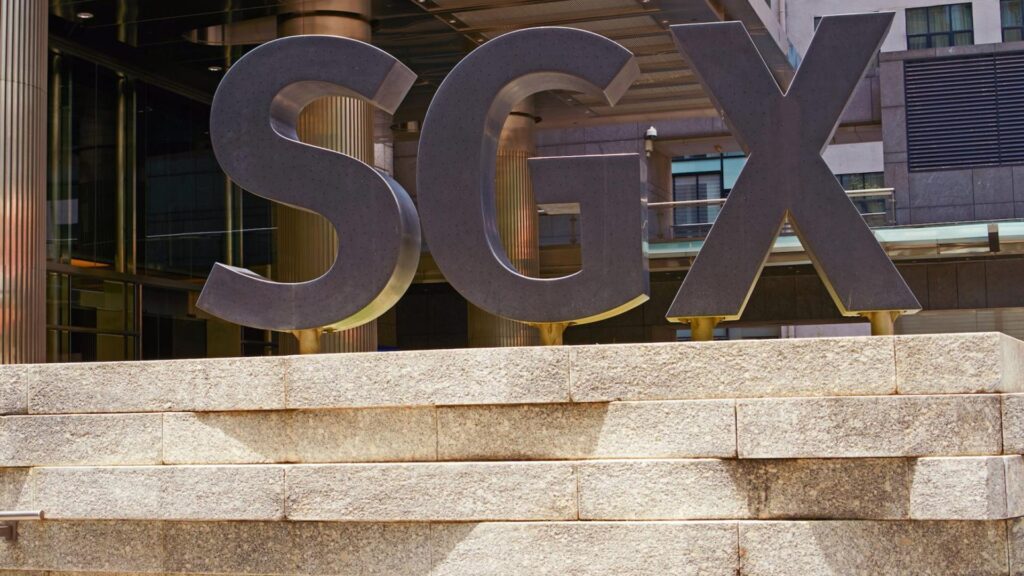
The Singapore Exchange (SGX) has secured CFTC approval to grant U.S. institutional investors access to its crypto perpetual futures, marking a step the exchange states connects American trading desks with liquidity pools in Asia.
“Through the Regulation 48.10 determination, we have gained CFTC clearance to offer our digital asset products to U.S. institutions. Previously, American participants were barred from trading these instruments, but that restriction is now lifted,” KC Lam, head of crypto derivatives at SGX Group, shared with CoinDesk.
Regulation 48.10 functions as the regulatory mechanism enabling the U.S. Commodity Futures Trading Commission to permit a registered Foreign Board of Trade (FBOT), which is an international exchange acknowledged by the CFTC, to provide U.S. users direct entry into its marketplace without demanding the exchange to undergo independent registration as a fully U.S.-regulated platform.
Practically, this allows eligible overseas venues to open their current order books to U.S. institutional market participants under the supervision of the CFTC, rather than necessitating a separate, standalone American listing.
Lam described the development as “a significant milestone,” pointing out that it “connects U.S. traditional finance participants trading crypto futures with Asian liquidity pools” and “validates crypto derivatives as a regulated asset class.”
Since debuting in late November 2025, SGX’s crypto perpetual futures tracking bitcoin (BTP) and ether (ETP) have amassed $5.8 billion, equivalent to about 400,000 lots, in aggregate trading volume. Average daily volume across both instruments registered at 1.3k lots ($19 million) as of August, with bitcoin representing 66% of open interest and 83% of daily average volume since launch. The peak single-day metric reached 11.5k lots, or $145 million in nominal value.
When questioned about whether volumes accelerated following the crypto and bitcoin rally in August, Lam highlighted onboarding schedules as the primary driver of pace.
Fresh clients must navigate clearing members for know-your-customer verifications, funds deposits, and application programming interface connectivity, a procedure typically spanning two to four weeks regardless of geographic location.
“With our Financial Information Services-enabled back-office framework now fully operational, we are actively readying our U.S. clearing members to bring clients onboard across the coming month or two,” stated Lam.
Perpetuals on SGX are currently deployed by traders for both macro-directional speculation and arbitrage-oriented tactics. Market participants leverage the perpetual contracts to express directional stances on bitcoin and ether tied to broader macroeconomic themes, such as worries over currency devaluation, alongside mechanical cash-and-carry trades that capitalize on funding-rate and pricing gaps between platforms.
The SGX product design differs from native crypto perpetuals. It features no expiration date, matching the crypto-native structure, but depends on auto-liquidation alternatives featuring margin calls and top-up collateral rather than standard auto-liquidations.
Liquidations remain a constant challenge for leveraged investors. These occur when market prices shift against a user’s position, producing a margin deficit. Unless the participant deposits extra collateral, the exchange ultimately liquidates the holding. This frequently triggers self-reinforcing liquidations cascading across the broader market, escalating volatility far past the initial price movement. Last October, the liquidation wave intensified further, exacerbated by auto-deleveraging, which saw platforms distribute losses among both profitable and unprofitable bets.
“Unlike crypto-native exchanges where sudden price swings can provoke automatic liquidations, our traditional risk management framework utilizes margin calls and additional collateral requests to avoid involuntary position closures during market surges,” Lam explained.
Furthermore, the exchange maintains a separation between trading and clearing operations, contrasting with crypto-native platforms that frequently merge the exchange, clearinghouse, and market-maker functions. “By routing orders via clearing members serving as an intermediate risk safeguard, we replicate the established infrastructure seen in legacy futures and commodities markets,” noted Lam.
Significantly, stablecoins are barred as acceptable collateral, according to Lam, “since they can lose their peg during turbulent market phases.”
The contracts utilize benchmarks jointly created alongside CoinDesk Indices and governed via the European Union Benchmark Regulation, as stated by Mohit Baheti, head of iEdge Indices at SGX Group.
Looking forward, SGX intends to expand into dated futures alongside options for bitcoin and ether next.
“The upcoming phase in our roadmap involves introducing dated futures and options for Bitcoin and Ethereum. Constructing that robust infrastructure represents the heavy lifting; once established, incorporating additional major coins may turn into a straightforward procedure similar to introducing another contract. We intend to expand our product suite while maintaining a disciplined, incremental strategy,” Lam concluded.
Originally published at https://www.coindesk.com/markets/2026/09/10/sgx-s-bitcoin-and-ether-perpetual-futures-are-now-open-to-u-s-institutions.